
Home › Blog › Treating Receding Gums with Gum Grafting
TreatmentsTreating Receding Gums with Gum Grafting
When Your Gums Pull Back
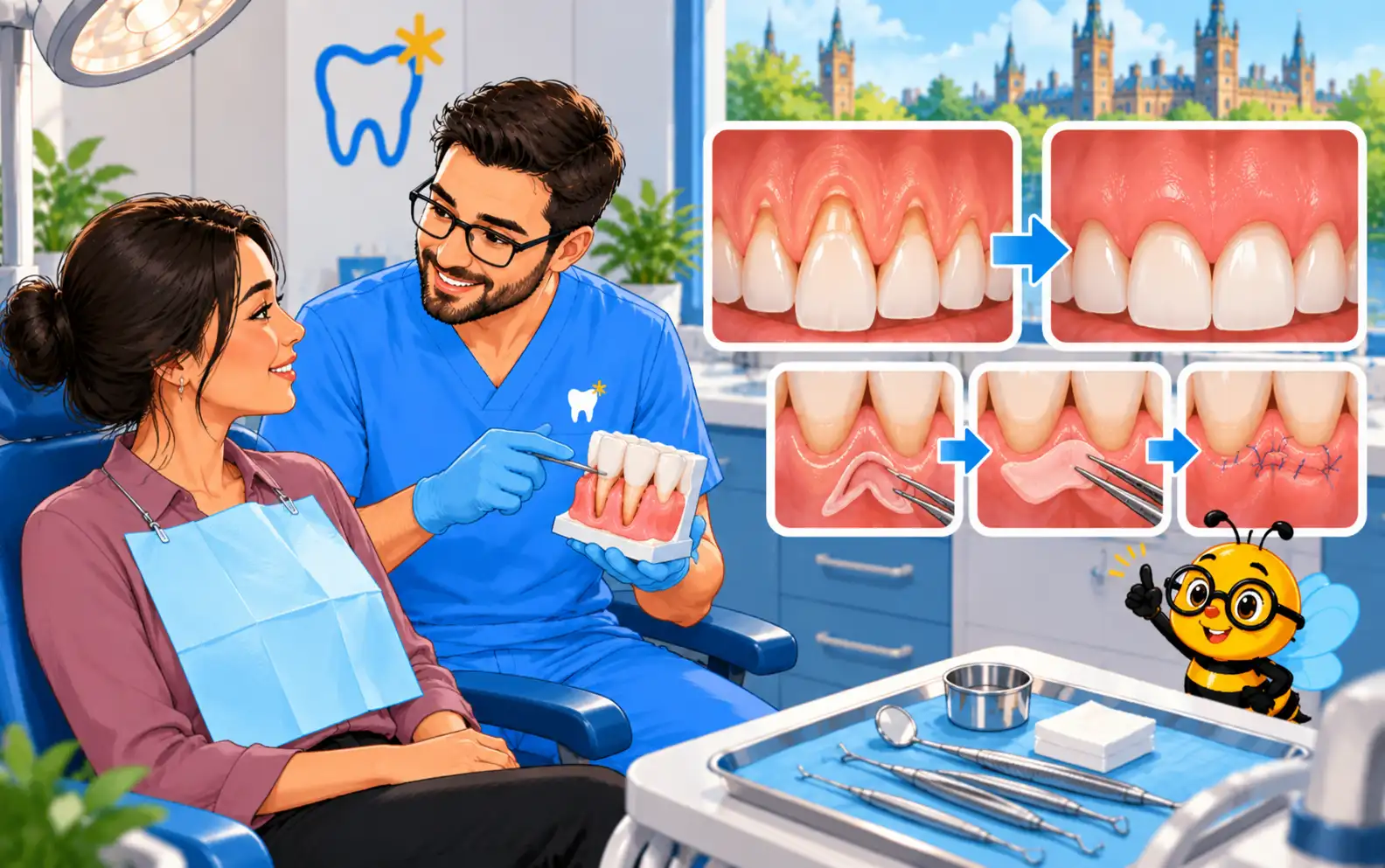
Gum recession is easy to overlook until a tooth starts to look "long" or turns sensitive to hot and cold. As the gum pulls back, it exposes the tooth's root - which isn't protected by enamel - leaving it prone to sensitivity, decay, and further recession. Gum grafting is the procedure that restores that lost tissue, covers the exposed root, and protects the tooth. Here's how it works with your Ottawa dentist.
Why Gums Recede
Recession has several common causes, and often more than one is at play: gum disease, which destroys gum and bone tissue; brushing too hard or with a stiff brush; naturally thin gum tissue you inherit; teeth grinding; misaligned teeth; and tobacco use. Identifying the cause matters, because treating it is what keeps recession from coming back after a graft.
Signs You Might Need a Graft
Watch for receding gums that show up as visible tooth roots, teeth that suddenly look longer, sensitivity to hot, cold, or touch, a notch you can feel at the gumline, or recession that's clearly getting worse over time.
What Gum Grafting Involves
Grafting restores tissue where it's been lost. There are a few techniques - the most common takes a small amount of tissue from the roof of your mouth and places it over the exposed root, while donor-tissue options avoid a second site altogether. The procedure is done under local anesthesia and usually takes one to two hours, with sedation available if you'd like to be more relaxed. We'll recommend the approach that suits your gums and the extent of recession.
Recovery and Results
Recovery is generally straightforward. Expect some swelling and to stick with soft foods for about a week, avoiding the graft site while it heals; full healing takes roughly one to three months as the new tissue matures and blends in. Gum grafting has a high success rate - graft tissue survives in the large majority of cases - and the results are root coverage, less sensitivity, a healthier gumline, and protection from further recession.
Preventing Future Recession
Protecting your result comes down to addressing what caused the recession in the first place: brush gently with a soft brush, wear a night guard if you grind, keep up with professional cleanings, avoid tobacco, and stay on top of any gum disease.
Do You Always Need a Graft?
Not always. For very mild recession, better brushing technique, desensitizing treatments, or bonding over an exposed root may be enough, and we'll monitor for any progression. Grafting is recommended when recession is significant or advancing - and we'll always start with the least invasive option that will actually solve the problem.
Protect Your Gumline
If your gums are receding, don't wait for it to worsen. Book a consultation at BluSky Dental and we'll assess it and lay out your options. Complete your new patient forms online to get started.
Protect Your Gumline
If your gums are receding, don't wait for it to worsen. Book a consultation at BluSky Dental and we'll assess it and lay out your options.

Wisdom Teeth Removal in Ottawa: What to Expect
Wisdom teeth removal in Ottawa: when they need to come out, what the procedure and sedation options are like, recovery tips, and cost. A clear guide from BluSky Dental.
Read more →
Tooth-Coloured, Mercury-Free Fillings in Ottawa
Tooth-coloured, mercury-free composite fillings in Ottawa - natural-looking cavity repairs that bond to your tooth, how they compare to silver amalgam, cost, and replacing old fillings.
Read more →
Dentures vs. Dental Implants: Which Is Right for You?
Dentures or dental implants? A clear, honest comparison for Ottawa patients - cost, comfort, bone health, and longevity - to help you decide which is right for you.
Read more →