Home › Blog › Inlays and Onlays: The Middle Ground Between a Filling and a Crown
TreatmentsInlays and Onlays: The Middle Ground Between a Filling and a Crown
When a Filling Isn't Enough and a Crown Is Too Much
Dental damage doesn't only come in "small" and "severe." Plenty of teeth fall in between - too broken down for a simple filling, but healthy enough that a full crown would mean removing more tooth than necessary. That's exactly where inlays and onlays shine: custom-made restorations that repair moderate damage while keeping as much of your natural tooth as possible. Here's how they work with a dentist in Ottawa.
Inlay vs. Onlay: What's the Difference?
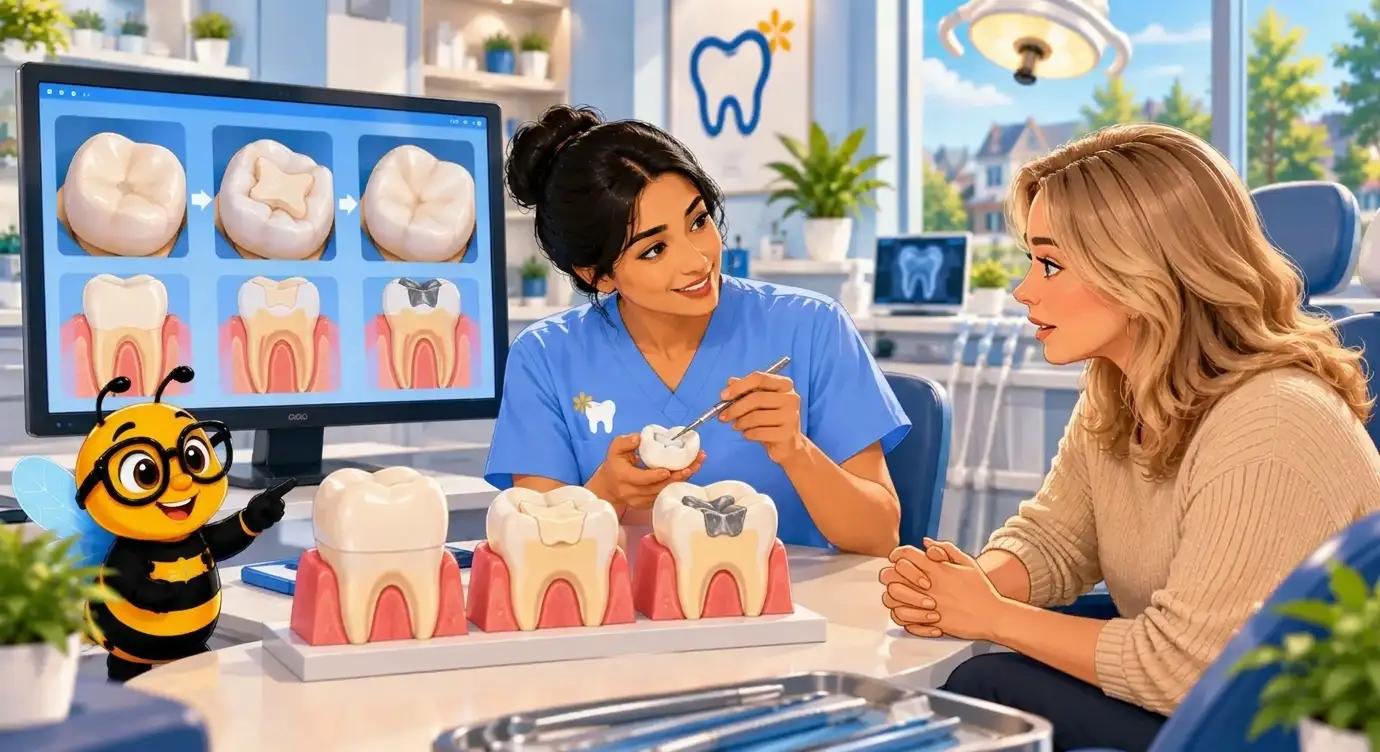
The two are close cousins. An inlay fits neatly within the grooves of a tooth's chewing surface, between the raised points (cusps) - think of it as a custom puzzle piece. An onlay extends over one or more of those cusps, covering more of the tooth; it's sometimes called a "partial crown." Both are crafted to fit precisely and bonded into place.
Why Conservative Matters
The big advantage over a crown is how much natural tooth you keep. Fitting a crown typically means reshaping a large share of the tooth, while an inlay or onlay only replaces the damaged part. More of your own healthy tooth stays put, which is better for the tooth's long-term strength - and unlike a large filling, a bonded inlay or onlay actually reinforces what remains.
Materials
Inlays and onlays can be made from a few materials. Porcelain and ceramic are the most popular for their natural, tooth-coloured look and stain resistance; composite resin is a lower-cost tooth-coloured option; zirconia offers exceptional strength; and gold, while visible, is remarkably durable and gentle on opposing teeth. We'll recommend the right one for the tooth and its visibility.
Two Visits, or Just One
Traditionally, an inlay or onlay takes two visits - one to prepare the tooth and take an impression, and a second to bond the finished restoration after the lab makes it. With CAD/CAM technology, though, we can often design and mill the restoration in-house and complete it in a single appointment, similar to a same-day crown.
How Long They Last, and What They Cost
Inlays and onlays are built to last - often 15 to 30 years with good care, frequently outlasting crowns. In Ottawa, an inlay generally runs $700 to $1,500 and an onlay about $1,000 to $2,000, similar to a crown. Most insurance plans cover them as major restorations, often around 50%. These are general ranges; we provide a clear estimate first and verify your coverage.
Inlay, Onlay, or Crown?
If the damage is moderate and enough healthy tooth remains, we'll almost always favour an inlay or onlay. A crown becomes the better choice when the tooth is extensively broken down, has had a root canal, or needs maximum strength. During your exam we'll show you what we see and recommend the most conservative option that will hold up.
Preserve More of Your Natural Tooth
If you've been told you need a crown, it's worth asking whether an inlay or onlay would do. Book a consultation at BluSky Dental and we'll assess the tooth and lay out your options. Start with your new patient forms online.
Keep More of Your Natural Tooth
If you've been told you need a crown, an inlay or onlay may be the more conservative option. Book a consultation at BluSky Dental to find out.
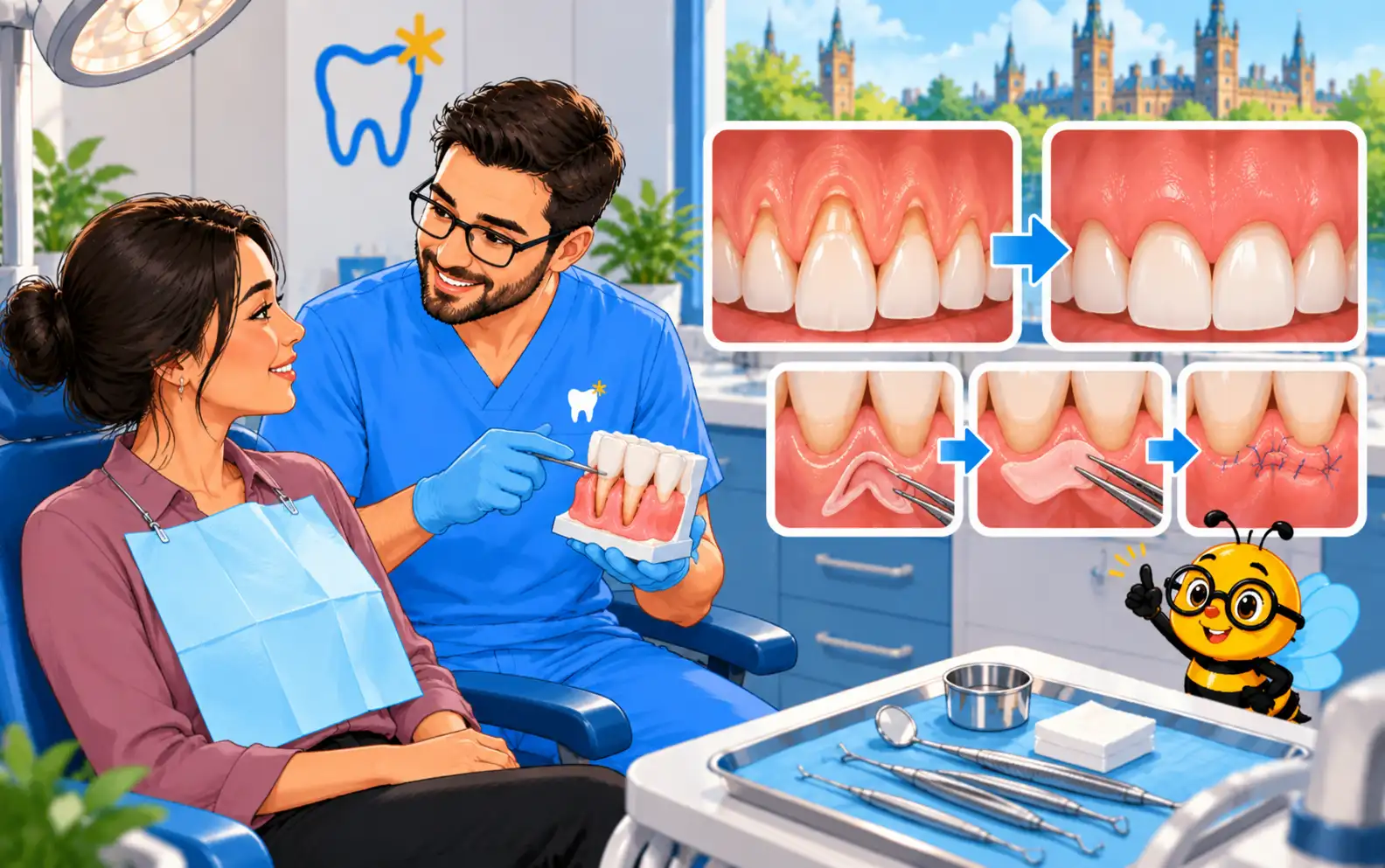
Treating Receding Gums with Gum Grafting
Receding gums exposing your tooth roots? Gum grafting in Ottawa restores the gumline, reduces sensitivity, and protects your teeth. Causes, types, recovery, and results.
Read more →
Wisdom Teeth Removal in Ottawa: What to Expect
Wisdom teeth removal in Ottawa: when they need to come out, what the procedure and sedation options are like, recovery tips, and cost. A clear guide from BluSky Dental.
Read more →
Tooth-Coloured, Mercury-Free Fillings in Ottawa
Tooth-coloured, mercury-free composite fillings in Ottawa - natural-looking cavity repairs that bond to your tooth, how they compare to silver amalgam, cost, and replacing old fillings.
Read more →