Home › Blog › Why Preventive Dentistry Saves Thousands
Oral Health TipsWhy Preventive Dentistry Saves Thousands
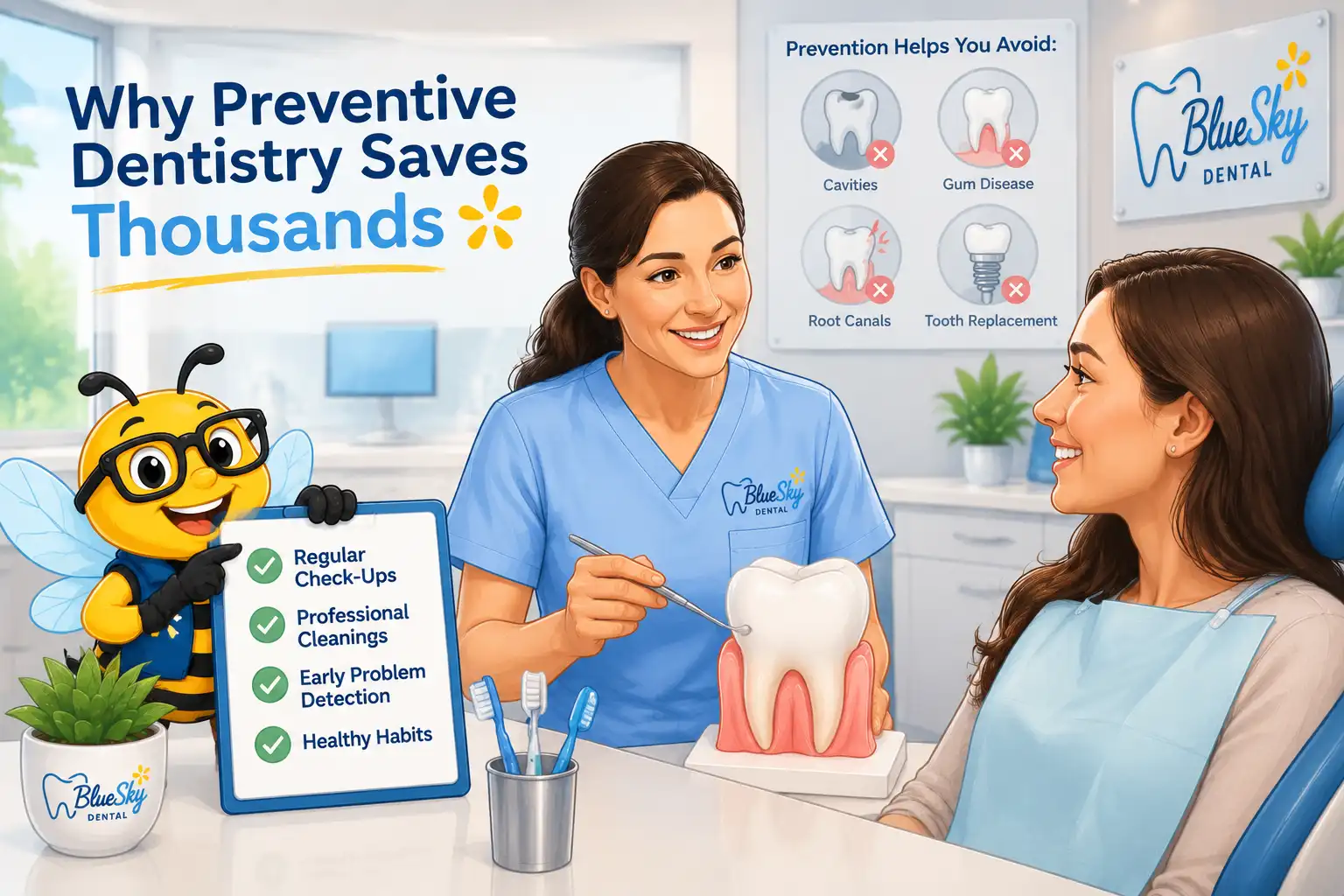
The Most Expensive Dental Care Is the Kind You Put Off
Every dental professional has seen it: a patient who skipped check-ups for three, five, or ten years walks in with a toothache and leaves with a treatment plan that costs thousands of dollars. The cavity that could have been caught early as a $250 filling has become a $1,500 crown. The gum inflammation that a $200 cleaning would have resolved has progressed to periodontal disease requiring $3,000 in treatment. The tooth that could have been saved is now beyond repair and needs a $5,000 implant.
This isn't fear-mongering - it's arithmetic. Preventive dentistry is, by an overwhelming margin, the most cost-effective approach to dental care. Any experienced Ottawa dentist will tell you the same thing. The money you invest in regular dental cleanings and examinations is a fraction of what you'd spend on the treatments required when problems are left to progress.
In this article, we'll lay out the real numbers, explain exactly what a thorough preventive visit includes, and show you how modern diagnostic tools help your dentist catch problems when they're small, simple, and inexpensive to fix.
The Real Cost of Skipping Preventive Care
Let's follow the progression of two common dental problems to see how costs escalate when prevention is neglected.
Scenario 1: The Cavity That Could Have Been Caught Early
A small cavity between two molars starts out painless and invisible. Caught at a routine exam, it is a simple tooth-coloured filling and the tooth is as good as new.
Left unchecked, the decay spreads into the deeper layers of the tooth. Within a year or two it reaches the nerve, and now the tooth needs root canal therapy followed by a dental crown to protect it. The crown alone runs $1,200 to $2,500, and the root canal is an additional fee on top.
Ignored longer still, the tooth cracks or the infection destroys too much structure to save it. The only remaining option is extraction and replacement with a dental implant, which runs $3,000 to $5,000 once the post and crown are complete, and more if a bone graft is needed first. The same tooth that could have been a modest filling has become a several-thousand-dollar rebuild, purely by waiting.
Scenario 2: The Gum Inflammation That Spread
Gum disease follows the same pattern. In its early stage, gingivitis, the gums are red, puffy, and bleed a little when you brush, but no permanent damage has been done. At this point it is completely reversible: a professional cleaning and better home care usually turn it around.
Left untreated, gingivitis progresses to periodontitis. The infection moves below the gumline and the body begins destroying the bone that holds teeth in place, and that damage is permanent. Treating it means deep cleaning (scaling and root planing), sometimes gum or bone grafts, and periodontal maintenance every three to four months, often running to several thousand dollars. Untreated periodontitis is, in fact, the leading cause of tooth loss in adults, which lands you right back at the extraction-and-implant end of the scale. A reversible problem, caught for the price of a cleaning, becomes a permanent one that costs many times more.
What a Thorough Preventive Visit Actually Includes
A preventive dental appointment at BluSky Dental is far more comprehensive than most patients realise. It's not just "a cleaning" - it's a systematic evaluation of your entire oral health. Here's what happens during a complete preventive visit:
- A full dental exam. Every tooth is checked for decay, cracks, and worn or failing fillings, and your bite and jaw joints are assessed.
- A gum (periodontal) assessment. Your gums are checked for inflammation and recession, and the pocket depths around each tooth are measured, since 4mm and deeper signals disease.
- An oral cancer screening. The tongue, cheeks, throat, and other soft tissues are examined, a quick check that genuinely saves lives.
- Digital X-rays. These reveal what the eye can't see: decay between teeth, bone loss, infections, and impacted teeth, while the problems are still small.
- A professional cleaning. Plaque and hardened tartar are removed above and below the gumline, followed by polishing and flossing, using gentle Airflow technology.
- Optional fluoride. A quick varnish that strengthens enamel and can reverse the earliest decay before it becomes a cavity.
- A clear plan. Findings are explained, any issues are prioritised, and you get a written estimate before anything is scheduled.
How Modern Diagnostics Catch Problems Earlier
The dentistry of thirty years ago relied primarily on visual inspection and two-dimensional X-rays. Today's diagnostic toolkit is vastly more sophisticated, and this technology translates directly into earlier detection and less invasive treatment.
Catching a problem early almost always means a smaller, cheaper fix. Several tools make that possible:
- Digital X-rays use far less radiation than old film and can be enhanced on screen, showing decay between teeth, bone loss, and infections while they are still minor.
- Intraoral cameras let you see exactly what the dentist sees, so a hairline crack or an early cavity becomes obvious rather than abstract.
- Periodontal probing measures the pockets around each tooth, catching gum disease at the reversible stage, before any bone is lost.
- 3D imaging builds a three-dimensional view of teeth, roots, and bone for the situations a flat X-ray can't fully capture.
- Oral bacteria testing identifies the specific bacteria driving a gum infection, so treatment can be targeted rather than guessed.
Preventive Care for the Whole Family
The financial impact of preventive dentistry is amplified across a family. When parents and children all maintain regular dental visits, the compound savings are substantial.
For children, prevention starts early and offers some of the highest returns:
- Dental sealants, a thin coating painted over the grooves of the back teeth, reduce cavities by about 80% in the first two years and can protect for up to 10, at roughly $30 to $60 per tooth.
- Fluoride treatments, about $25 to $50, strengthen enamel and can reverse the earliest decay, and are typically applied at the six-month check-up.
- Early exams and cleanings, every six months for children, catch problems while they are tiny and set habits that last a lifetime.
- The payoff is real: children without sealants have about three times more cavities in their molars, so a $30 to $60 sealant routinely prevents a filling, and everything a filling can turn into later.
The same logic applies to the adults in the household: the cleanings and exams that catch problems early are the least expensive care you will ever receive, and most insurance plans cover them at the highest rate.
Making Preventive Care Affordable
One of the most common reasons Ottawa families skip visiting their Ottawa dental practice is cost. Ironically, skipping preventive care almost always leads to higher costs down the road. But we understand that budgets are real, and we work to make preventive dentistry as accessible as possible.
Dental insurance is actually built to reward prevention. Most plans cover preventive care in full or close to it, while the major work you need after years of neglect is covered at a much lower rate:
| Type of care | Typical insurance coverage |
|---|---|
| Preventive (exams, cleanings, X-rays, fluoride) | 80 to 100% |
| Basic (fillings, extractions, root canals) | 70 to 80% |
| Major (crowns, bridges, dentures) | 50% |
| Implants | Varies, sometimes not covered at all |
In other words, the cheapest care is also the best covered. Beyond insurance, we make prevention accessible in a few more ways: we direct bill most major insurers so you pay only your portion; all four of our locations participate in the Canadian Dental Care Plan (CDCP), which can cover preventive and restorative care for eligible residents without insurance; and for larger treatments we offer in-house payment plans (often interest-free) and can phase treatment across benefit years. One tip worth remembering: most plans reset every year and don't carry over, so the covered cleanings and exams you skip are simply money left on the table.
The Ten-Year Comparison
Let's look at what two hypothetical Ottawa patients might spend over a decade, assuming both start with healthy teeth:
Patient A: Consistent Preventive Care
Patient A comes in twice a year for a cleaning and exam, and adds fluoride when it's recommended. Because insurance covers preventive care at 80 to 100%, the out-of-pocket cost is small, often little more than a yearly deductible of around $25 to $50. When a tiny cavity turns up at a check-up, it's caught as a single filling before it can spread. Over ten years, Patient A spends very little out of pocket and, just as importantly, keeps every natural tooth.
Patient B: Deferred Care
Patient B skips visits to save money, so no one is there to catch small problems while they're still small. A cavity that would have been a quick filling becomes a root canal and a crown ($1,200 to $2,500 for the crown alone). A second neglected tooth is eventually lost and replaced with an implant ($3,000 to $5,000). Meanwhile, untreated gingivitis quietly becomes periodontitis, adding deep cleanings, possible grafts, and ongoing maintenance. And because major work is covered at only about 50%, with implants often not covered at all, Patient B pays a far larger share out of pocket. Ten years of "saving" on prevention can easily add up to five figures of treatment, plus a few teeth that can't be gotten back.
Same starting point, two very different decades, decided almost entirely by whether the small, well-covered visits actually happened.
It's Never Too Late to Start - But Today Is Better Than Tomorrow
If you've been away from the dentist for a while, please don't let embarrassment keep you from coming back. Our team at BluSky Dental sees patients every day who haven't been in years, and we're not here to judge - we're here to help you get back on track with the least amount of treatment possible.
Your first visit back will include a comprehensive examination to establish where things stand. From there, we'll create a prioritised treatment plan that addresses any urgent issues first and builds toward long-term preventive maintenance. Many patients who've been away are pleasantly surprised to learn that their situation isn't as dire as they feared.
With four convenient locations across Ottawa - including clinics in Westboro near Tunney's Pasture LRT, Nepean near Centrepointe Drive, South Ottawa near South Keys, and Ottawa West near Britannia - finding a BluSky Dental office close to your home or workplace is easy. Our multilingual team speaks over 18 languages, and we welcome new patients of all ages.
The best time to start preventive dental care was years ago. The second-best time is today.
Invest in Prevention, Not Repair
Every dollar you spend on preventive dental care saves you many more in future treatment. Book your cleaning and examination at BluSky Dental today - your teeth and your wallet will thank you.
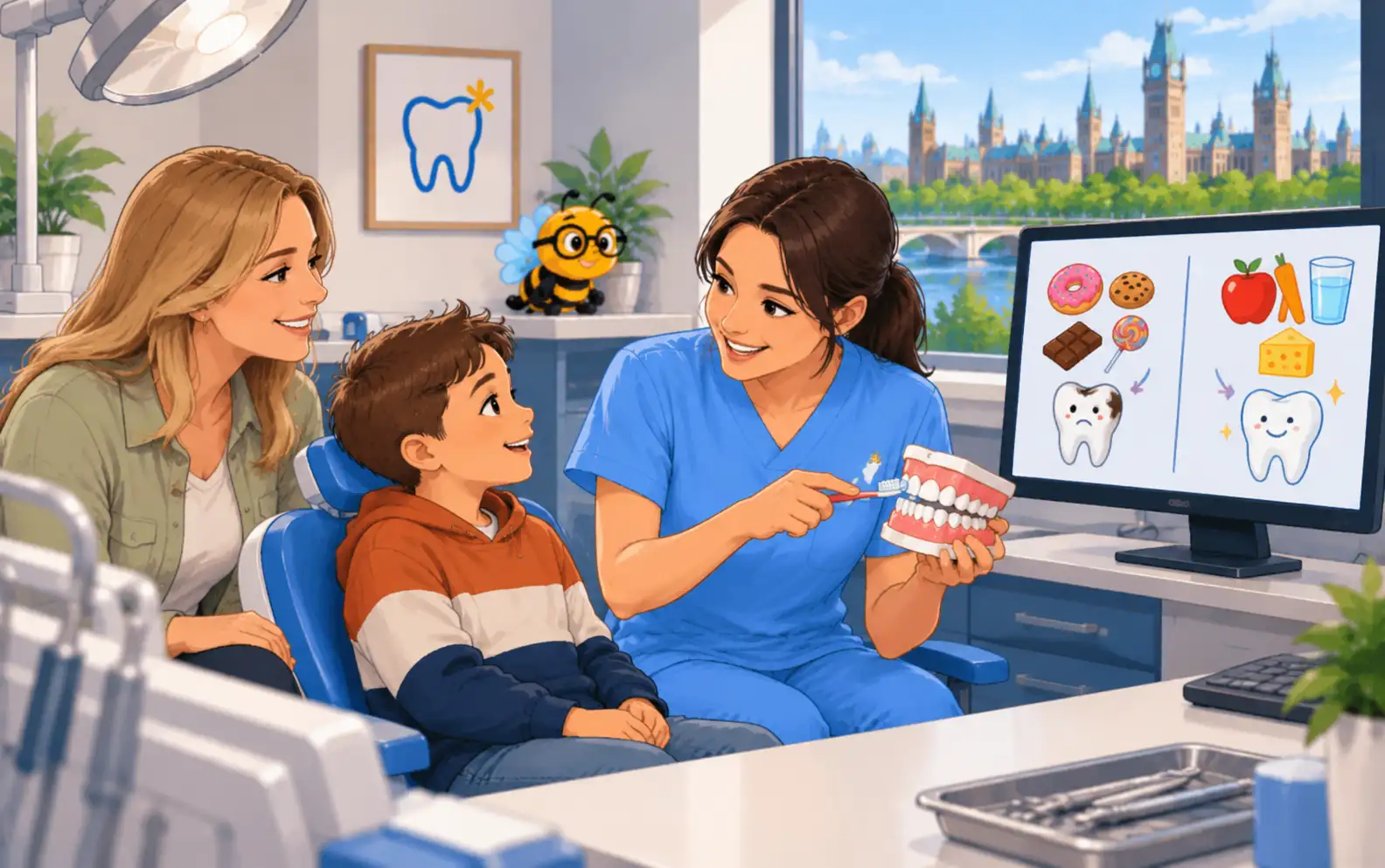
Love Sweets? 7 Ways to Protect Your Teeth
Love dessert? You don't have to give it up to protect your teeth - 7 simple, dentist-backed habits to enjoy sweets with less risk to your smile.
Read more →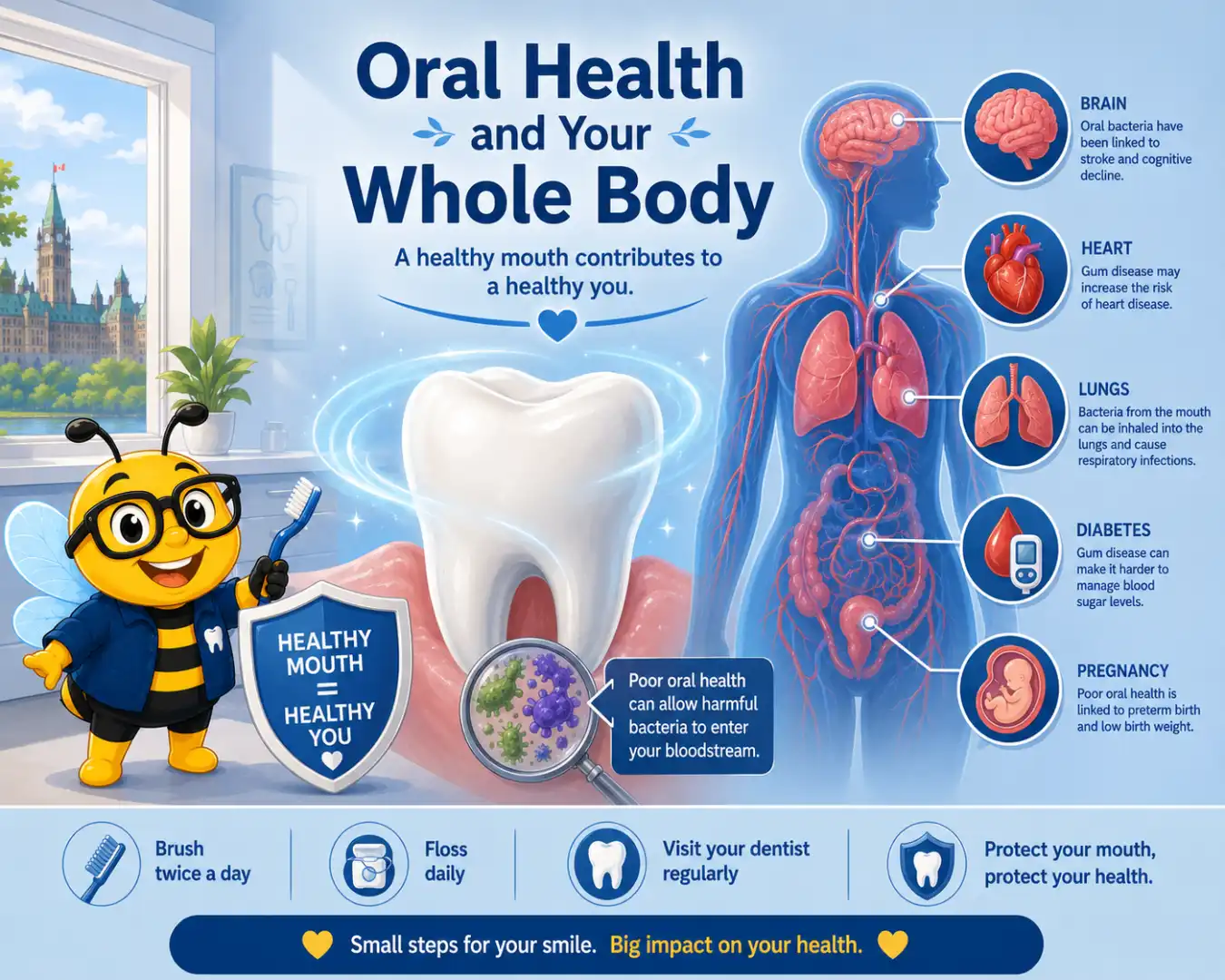
Oral Health and Your Whole Body
The proven links between gum disease and your heart, diabetes, and pregnancy: how the health of your mouth affects your whole body.
Read more →
Benefits of Regular Dental Cleanings
More than just a polish—see how routine professional cleanings protect your whole-body health.
Read more →