Home › Blog › How Often Do You Really Need Dental X-Rays?
Technology & InnovationHow Often Do You Really Need Dental X-Rays?
The Question Behind the Question
It comes up at nearly every dental examination: "Do I really need X-rays again?" It's one of the most common questions patients ask their Ottawa dentist, and behind it is a legitimate concern about radiation exposure, fuelled by conflicting information online - some sources suggest annual X-rays are unnecessary, others warn that skipping them is dangerous. The truth, as with most things in healthcare, is nuanced.
Dental X-rays are one of the most important diagnostic tools your dentist has. They reveal cavities between teeth that are invisible to the naked eye, bone loss from periodontal disease, infections at the root tips, cysts, tumours, and developmental abnormalities. Without them, your dentist is working blind in areas that account for roughly 40 percent of each tooth's surface.
But that doesn't mean every patient needs the same images on the same schedule. Current evidence-based guidelines - from the Canadian Dental Association (CDA), the American Dental Association (ADA), and Health Canada - all emphasise that imaging frequency should be individualised based on risk, not applied as a one-size-fits-all protocol.
Understanding the Different Types of Dental X-Rays
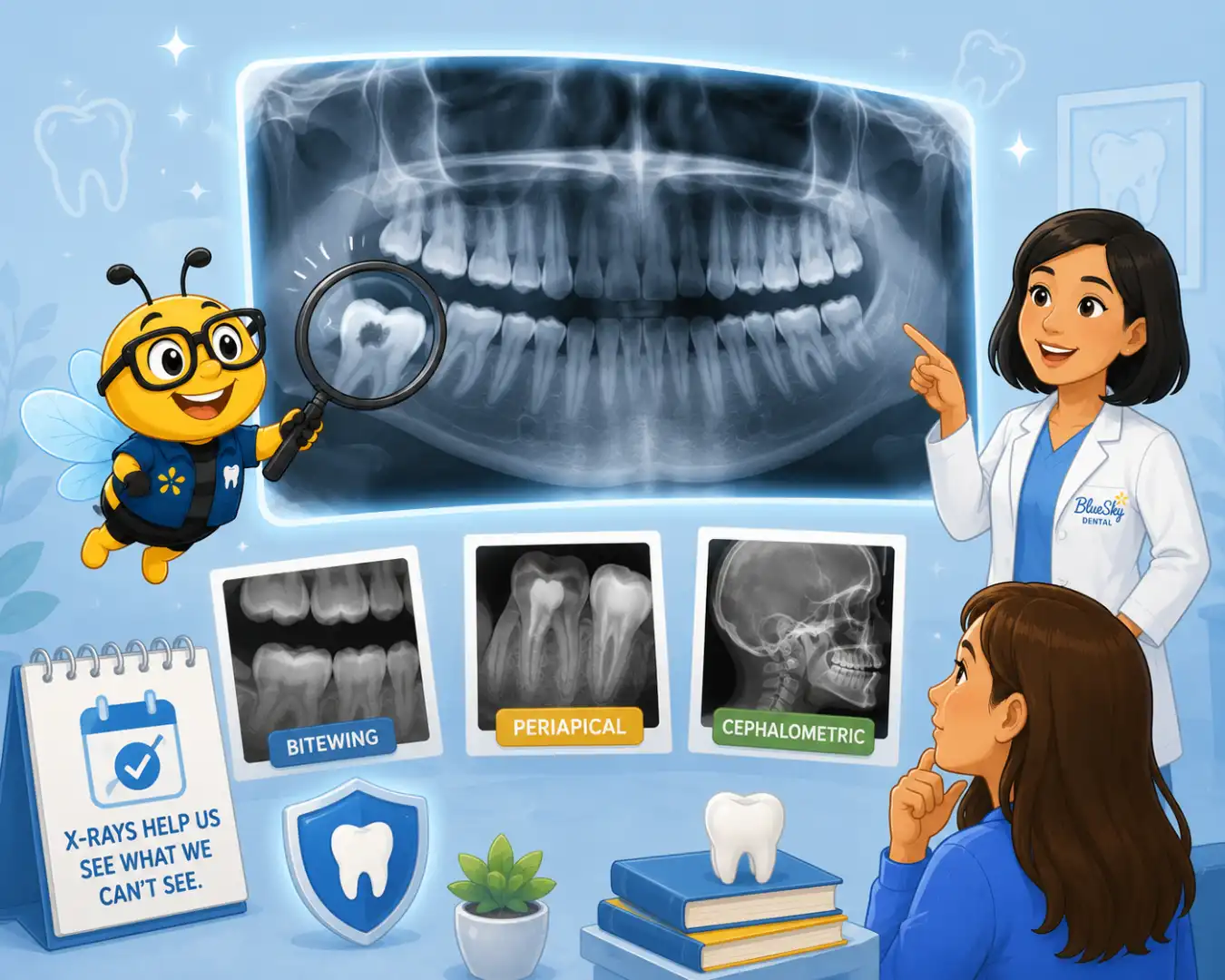
Not all dental X-rays are created equal. Each type serves a specific diagnostic purpose, and understanding the differences helps you appreciate why your dentist may recommend one type over another.
Bitewing X-Rays
Bitewings are the most common diagnostic X-rays taken during routine check-ups. You bite down on a small tab while a sensor captures images of the upper and lower back teeth simultaneously. A full set of bitewings (usually two to four images) reveals cavities between teeth, decay under existing fillings, tartar buildup below the gumline, and early signs of bone loss.
For adults with low cavity risk, bitewings are generally recommended every 24 to 36 months. For patients with a higher risk of decay - due to a history of cavities, dry mouth, or heavy restorative work - annual bitewings are more appropriate.
Periapical X-Rays
A periapical image shows the full length of a single tooth, from crown to root tip, including the surrounding bone. These are taken when a specific tooth is causing symptoms or when your dentist needs to evaluate the bone around an implant, assess the results of a root canal, or investigate an abscess.
Panoramic X-Rays (Orthopantomograms)
A panoramic X-ray captures the entire mouth - all teeth, both jaws, the sinuses, and the temporomandibular joints - in a single image. The machine rotates around your head while you stand still. Panoramic images are useful for assessing wisdom teeth, planning orthodontic treatment, evaluating jaw pathology, and getting a broad overview of oral health. They are typically taken every three to five years, or as clinically needed.
3D Cone-Beam Computed Tomography (CBCT)
CBCT imaging represents the most advanced diagnostic imaging available in dental offices. It produces a three-dimensional view of teeth, bone, nerve pathways, and soft tissues with extraordinary precision. At BluSky Dental, our advanced technology suite includes CBCT imaging, which is particularly valuable for 3D-guided implant surgery, complex root canal planning, and evaluating impacted teeth. CBCT is not a routine screening tool - it's reserved for cases where three-dimensional information changes the treatment plan.
What the Canadian Dental Association Actually Recommends
The CDA does not prescribe a rigid X-ray schedule. Instead, it endorses a risk-based approach consistent with the ALARA principle - As Low As Reasonably Achievable. This means using the minimum amount of radiation necessary to obtain the diagnostic information needed for good patient care.
In practice, guidelines from the CDA, ADA, and the U.S. Food and Drug Administration suggest the following general framework:
- Adults with a low risk of decay: bitewing X-rays roughly every 24 to 36 months.
- Adults at higher risk (a history of cavities, dry mouth, or extensive restorative work): about once a year.
- Children with a low risk of decay: bitewings every 18 to 24 months, and more often when the risk is higher.
- Panoramic imaging: every three to five years, or when a specific need arises such as wisdom teeth or orthodontic planning.
- 3D cone-beam CT: reserved for cases where three-dimensional detail will change the treatment plan, rather than routine screening.
Putting Dental Radiation in Perspective
Concerns about radiation from dental X-rays are understandable but, when placed in context, the actual exposure is remarkably low. Modern digital X-ray sensors - the type used at BluSky Dental - require up to 80 percent less radiation than traditional film X-rays, and the doses involved are a fraction of what you encounter in daily life.
Consider these comparisons:
- A full set of digital dental X-rays exposes you to about the same radiation as a few hours of natural background radiation, the low-level exposure everyone receives every day from the sun, soil, and air.
- It is roughly comparable to the extra radiation you absorb on a short airplane flight.
- It is approximately the same as eating 50 bananas, which are naturally and slightly radioactive.
When More Frequent Imaging Is Needed
Certain clinical situations warrant X-rays more often than the standard low-risk schedule. If any of the following apply to you, more frequent imaging is not excessive - it's prudent:
- A history of frequent cavities, or a lot of existing restorative work to keep an eye on.
- Active or past gum (periodontal) disease.
- Dry mouth, which raises the risk of decay.
- Diabetes or a weakened immune system.
- Smoking or other tobacco use.
- A tooth with symptoms such as pain, swelling, or a suspected infection.
- Ongoing treatment that needs monitoring, such as orthodontics or a dental implant.
Can You Decline Dental X-Rays?
Yes - you always have the right to decline any recommended diagnostic procedure. However, it's important to understand the trade-offs. Without current imaging, your dentist may not be able to detect problems that exist below the surface. Cavities between teeth, in particular, are virtually impossible to identify through visual examination alone until they're large enough to cause symptoms - at which point a simple filling may no longer be an option.
If you're uncomfortable with a particular imaging recommendation, talk to your dentist about it openly. They may be able to explain exactly why the images are needed for your specific situation, or they may agree that deferring is reasonable given your risk profile. At BluSky Dental, we never take X-rays simply because "it's been a while." Every imaging decision is based on clinical need.
Your next dental cleaning appointment is a great opportunity to discuss your personal X-ray schedule with your hygienist and dentist. They can review your history, assess your current risk, and explain their imaging recommendation in plain terms.
Dental X-Rays for Children: Special Considerations
Parents are naturally cautious about radiation exposure for their children, and that caution is well-placed. Children are more sensitive to radiation than adults because their cells are dividing more rapidly. At the same time, children are often at higher risk for dental problems precisely because their teeth are still developing.
The CDA recommends that imaging for children be based on individual risk assessment, just as it is for adults. A child with no history of cavities and excellent oral hygiene may need bitewings only every 18 to 24 months. A child with a history of early childhood caries, crowded teeth, or developmental concerns may benefit from more frequent imaging.
Panoramic X-rays are commonly recommended for children around age seven to assess the development and position of permanent teeth, and again in the early teen years to evaluate wisdom teeth. These images provide invaluable information about whether teeth are developing normally, whether there's adequate space for permanent teeth, and whether orthodontic intervention may be needed.
BluSky Dental's pediatric dental team takes particular care with young patients, using child-sized sensors and the lowest possible settings. We also take time to explain the process to kids in a way that makes them comfortable - because a child who isn't anxious stays still, and a still patient means a clearer image with fewer retakes. Learn more about family dental care at our Ottawa locations.
The BluSky Dental Approach to Diagnostic Imaging
At BluSky Dental, our imaging philosophy is guided by three principles: clinical necessity, patient safety, and diagnostic excellence. We invest in the latest digital imaging technology - not because it's flashy, but because it delivers better images at lower radiation doses.
Across our four Ottawa locations, you'll find digital X-ray systems, panoramic imaging, and, at our Holland Cross location, 3D cone-beam CT capability for complex cases. Every image is taken for a reason, reviewed thoroughly, and explained to you in plain language during your appointment.
If you've been avoiding dental visits because you're concerned about X-ray frequency, we'd encourage you to visit our Ottawa dental clinic for a conversation. Understanding your risk profile helps us create an imaging plan you're comfortable with - and that gives us the information we need to keep your mouth healthy for the long term.
Questions About Your X-Ray Schedule?
Every patient's imaging needs are different. Book an appointment at BluSky Dental and we'll create a personalised plan that balances diagnostic thoroughness with your comfort and safety.
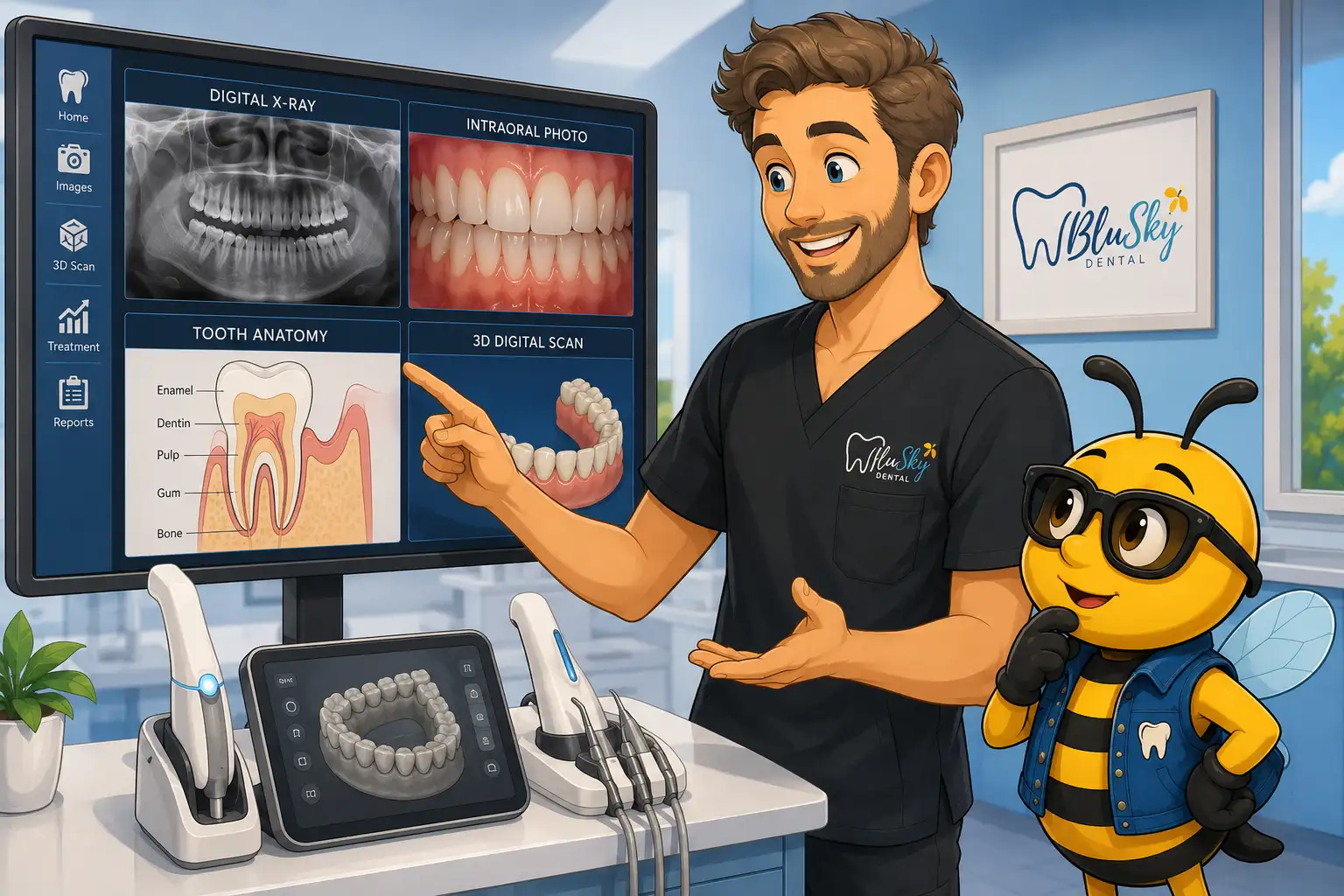
Why Your Dentist's Technology Matters More Than You Think
How 3D imaging, CAD/CAM same-day crowns, and microscope-assisted care lead to better outcomes, comfort, and fewer visits.
Read more →
Chronic Bad Breath: Real Causes and Solutions
Bad breath that won't quit? Mints only mask it. The real dental and health causes of chronic bad breath - and how to actually fix it - from your Ottawa dentist.
Read more →
Dental Bridges in Ottawa: A Practical Guide
Considering a dental bridge in Ottawa? Learn the types, the two-visit process, real costs, how bridges compare to implants, and how to care for one - from BluSky Dental.
Read more →