
What Happens During a Dental Cleaning?
Know what to expect at your hygiene appointment

Your Step-by-Step Guide
If it's been a while since your last cleaning—or you're just curious—here's exactly what happens during a professional dental cleaning. Knowing what to expect makes the visit easier and less stressful.
Overview
A typical dental cleaning takes 30-60 minutes and includes:
- Examination
- Plaque and tartar removal
- Cleaning and polishing
- Flossing
- Rinse
- Fluoride treatment (optional)
- Recommendations
Let's walk through each step.
Step 1: Initial Examination
Your hygienist starts by examining your mouth:
What they're looking for:
- Overall oral health
- Signs of gum disease
- Cavities or decay
- Oral cancer screening
- Any changes since your last visit
Tools used:
- Small mirror to see all surfaces
- Explorer (thin metal instrument) to check for problems
- Periodontal probe to measure gum pockets
If there's a concern, the dentist may examine you before cleaning continues.
Step 2: Removing Plaque and Tartar
This is the main event—removing buildup from your teeth.
What's Being Removed?
Plaque: Soft, sticky film of bacteria that forms daily. You can remove plaque with brushing and flossing.
Tartar (calculus): Hardened plaque that's calcified and can only be removed professionally. Tartar forms when plaque isn't removed and mineralizes.
How It's Removed
Scaling – Using instruments to scrape tartar from tooth surfaces:
- Hand scalers: Traditional metal instruments
- Ultrasonic scaler: Vibrating tip that breaks up tartar with water spray
- AIRFLOW®: Air and powder spray that removes biofilm (available at BluSky)
The sound: You may hear scraping sounds—this is normal and means the tartar is coming off.
Does it hurt? Usually not, though you may feel pressure or sensitivity in certain areas. Let your hygienist know if you're uncomfortable.
Step 3: Cleaning and Polishing
After tartar is removed, teeth are polished:
Polishing paste: Gritty toothpaste-like substance applied with a rotating rubber cup.
Purpose:
- Removes remaining stains
- Smooths tooth surfaces
- Makes teeth feel clean and smooth
The sensation: Vibrating, gentle pressure. The gritty paste may feel unusual but isn't uncomfortable.
Step 4: Professional Flossing
Even if you floss at home, professional flossing is different:
- Reaches areas you might miss
- Removes debris loosened during cleaning
- Identifies tight spots or bleeding areas
- Demonstrates proper technique
Your hygienist may offer tips if they notice areas that need attention.
Step 5: Rinse
You'll rinse your mouth to remove:
- Debris from scaling
- Polishing paste residue
- Any remaining particles
This might be water or an antibacterial rinse.
Step 6: Fluoride Treatment (Optional)
Many adults and most children receive fluoride after cleaning:
How it's applied:
- Gel, foam, or varnish
- Applied to teeth for 1-4 minutes
- Asked not to eat or drink for 30 minutes after
Why it helps:
- Strengthens enamel
- Fights cavity-causing bacteria
- Provides extra protection between visits
Step 7: Dentist Examination
The dentist typically examines you after the cleaning:
- Reviews hygienist's findings
- Checks for cavities, gum disease, oral cancer
- Examines any areas of concern
- Discusses treatment needs if any
This is your opportunity to ask questions or discuss concerns.
Step 8: Recommendations
Before you leave:
- Next appointment: Typically in 6 months (or sooner if needed)
- Home care tips: Based on what they observed
- Treatment recommendations: If any issues were found
- Questions answered: Anything you want to know
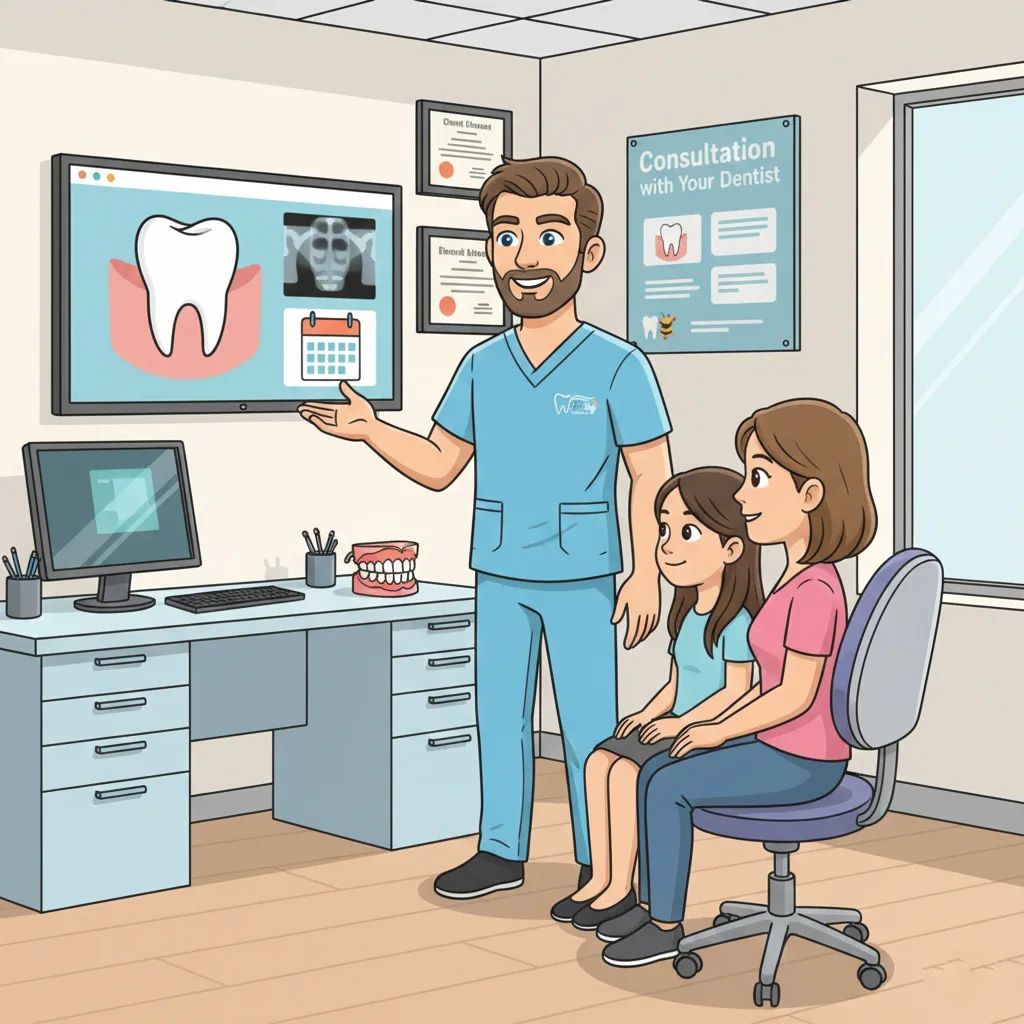
What If You Need More?
Deep Cleaning (Scaling and Root Planing)
If gum disease is present, you may need a deep cleaning:
- Goes below the gumline
- Cleans root surfaces
- Usually done with local anesthesia
- May require multiple appointments
Periodontal Maintenance
If you've had gum disease treatment, maintenance cleanings every 3-4 months may be recommended instead of every 6 months.
Tips for Your Cleaning
Before
- Brush and floss before your appointment
- List any concerns or questions
- Update us on health changes or new medications
During
- Raise your hand if you need a break
- Let us know if something is uncomfortable
- Ask questions—we're happy to explain
After
- Wait 30 minutes to eat if you had fluoride
- Notice how clean your teeth feel!
- Maintain that clean feeling with good home care
Frequently Asked Questions
Most people benefit from cleanings every 6 months. Those with gum disease may need visits every 3-4 months.
Bleeding usually indicates gum inflammation from plaque buildup. Regular cleanings and improved home care reduce bleeding over time.
Yes, unless you had fluoride treatment (wait 30 minutes). Your teeth might feel sensitive, so avoid very hot or cold foods initially.
No. Cleaning removes plaque, tartar, and surface stains but doesn't change tooth color. Whitening is a separate cosmetic procedure.
Schedule Your Cleaning
Ready for That Fresh, Clean Feeling?
Regular cleanings are the foundation of great oral health. Our gentle hygienists make the experience comfortable and thorough.

Book Your Next Cleaning
Don't wait until there's a problem. Regular cleanings keep your smile healthy and catch issues early.
At BluSky we BEElieve in bringing life to your smile. 🐝