
Tooth Extraction
Gentle, comfortable tooth removal with sedation options

When a tooth can't be saved, extraction may be the best option to protect your oral health. At BluSky Dental, we make extractions as comfortable as possible with gentle techniques and sedation options.
When Is Extraction Necessary?
Common Reasons
Severe Decay
When decay is too extensive for a filling, crown, or root canal, extraction prevents infection spread.
Advanced Gum Disease
Periodontal disease can loosen teeth to the point where they can't be saved.
Fractured Tooth
Some fractures extend too deep for repair, especially vertical root fractures.
Failed Root Canal
If a root canal-treated tooth becomes reinfected and can't be retreated, extraction may be needed.
Crowding
Sometimes teeth are extracted to create space for orthodontic treatment.
Impacted Wisdom Teeth
Wisdom teeth that can't emerge properly often need extraction.
Preparation for Dentures
Some teeth may need extraction before denture placement.
We Try to Save Teeth First
Extraction is always a last resort. We explore all options—fillings, crowns, root canals—before recommending removal. But when a tooth truly can't be saved, extraction protects your other teeth and overall health.
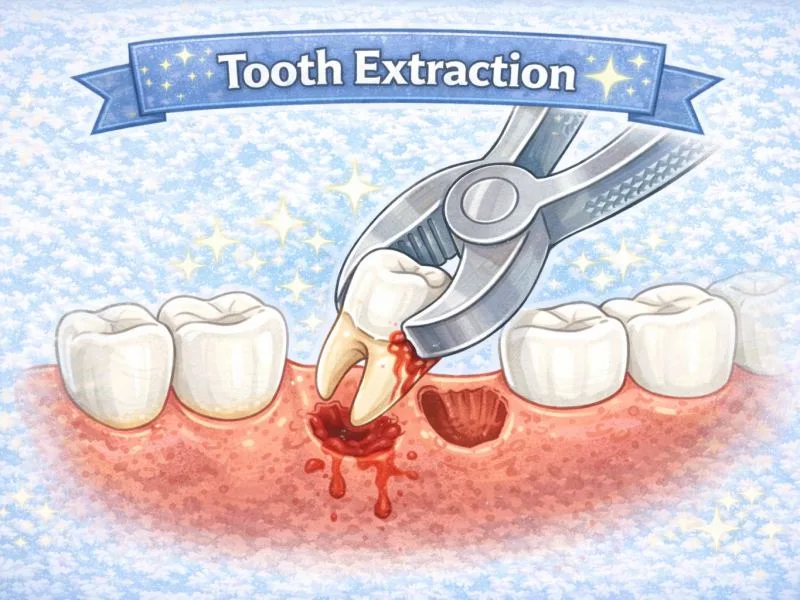
Types of Extractions
Simple Extraction
For teeth that are:
- Visible above the gumline
- Have single or simple roots
- Not broken or severely damaged
Process:
- Local anesthesia
- Tooth loosened with specialized instruments
- Tooth removed
- Socket managed for healing
Surgical Extraction
For teeth that are:
- Broken at the gumline
- Impacted (not fully emerged)
- Have curved or complex roots
- Need sectioning (cutting into pieces)
Process:
- Local anesthesia (sedation often recommended)
- Small incision in gum if needed
- Bone removal if blocking tooth
- Tooth may be sectioned
- Tooth removed
- Site sutured
The Extraction Process
Before the Procedure
- Review of medical history
- X-rays to plan approach
- Discussion of sedation options
- Pre-operative instructions
During the Procedure
- Anesthesia – Local anesthetic numbs the area completely
- Loosening – Specialized instruments gently rock the tooth
- Removal – Tooth is lifted from the socket
- Socket care – Site is cleaned and managed
- Gauze – Pressure applied to control bleeding
What You'll Feel:
- Pressure during extraction (not pain)
- Some movement sensation
- No sharp pain (you're numb!)
Duration: Simple extractions take 20-40 minutes. Surgical extractions take longer.
After the Procedure
We provide detailed aftercare instructions:
- Bite on gauze for 30-45 minutes
- Apply ice to reduce swelling
- Take medications as prescribed
- Eat soft foods
- Don't smoke or use straws
- Rest for the remainder of the day
Sedation Options
For Anxious Patients
We offer sedation to make extractions more comfortable:
Nitrous Oxide (Laughing Gas)
- Mild relaxation
- Wears off quickly
- Drive yourself home
Oral Sedation
- Deeper relaxation
- Take a pill before appointment
- Need a driver
IV Sedation
- Deep sedation
- Little memory of procedure
- Need a driver
Recovery
First 24 Hours
- Bleeding: Some oozing is normal; bite on gauze as needed
- Swelling: Apply ice 20 minutes on, 20 off
- Pain: Take medications as prescribed
- Activity: Rest, avoid exertion
- Diet: Soft, cool foods only
Days 2-7
- Swelling peaks around day 2-3, then decreases
- Switch from ice to warm compresses after 48 hours
- Gradually return to normal foods
- Continue pain medication as needed
- Gentle salt water rinses
Full Healing
The socket closes within 1-2 weeks. Complete bone healing takes several months, though you'll feel normal much sooner.
Replacing Extracted Teeth
Except for wisdom teeth, extracted teeth should usually be replaced to:
- Prevent teeth from shifting
- Maintain chewing function
- Preserve jawbone
- Protect your bite
Replacement Options
Dental Implants
- Permanent, natural-looking
- Preserves bone
- Best long-term option
Dental Bridge
- Fixed restoration
- Uses adjacent teeth for support
- Quicker than implants
Partial Denture
- Removable option
- Cost-effective
- Replaces multiple teeth
Frequently Asked Questions
No. Local anesthesia numbs the area completely. You'll feel pressure and movement, but not pain. Sedation adds additional comfort.
Most people feel significantly better within a few days. The socket is mostly healed within 1-2 weeks.
Soft foods for the first few days: yogurt, smoothies (no straws!), mashed potatoes, scrambled eggs, soup (lukewarm, not hot).
It varies. Sometimes implants can be placed immediately; other times we wait 3-6 months for healing. We'll advise based on your situation.
Dry socket occurs when the blood clot is lost from the socket. To prevent it: don't smoke, don't use straws, follow aftercare instructions carefully.
Cost and Insurance
Extraction Cost
- Simple extraction: $150-$300
- Surgical extraction: $250-$500+
Costs vary based on complexity and sedation choices.
Insurance Coverage
Most dental plans cover extractions when medically necessary. Coverage levels vary—we verify your benefits.
Why Choose BluSky Dental
Gentle Extractions at BluSky
We understand extraction can feel intimidating. Our gentle approach and sedation options ensure your comfort throughout the procedure.
- Experienced oral surgery team
- Multiple sedation options
- Gentle, caring approach
- Comprehensive aftercare support

Gentle Extractions at BluSky
We understand extraction can feel intimidating. Our gentle approach and sedation options ensure your comfort.
At BluSky we BEElieve in bringing life to your smile. 🐝