Benefits of Sedation Dentistry
For many people, the thought of dental treatment causes anxiety, fear, or avoidance. Sedation dentistry changes that—making dental care comfortable, manageable, and even pleasant.

Who Benefits from Sedation?
Dental Anxiety & Phobia
The most common reason for sedation:
- Fear of needles or drills
- Past traumatic dental experiences
- Embarrassment about dental condition
- Generalized anxiety disorder
Sedation lets anxious patients get the care they need.
Low Pain Tolerance
Some patients feel sensations more intensely. Sedation provides an extra layer of comfort beyond local anesthesia.
Strong Gag Reflex
A sensitive gag reflex makes dental work difficult. Sedation suppresses the gag reflex, making treatment easier.
Difficulty Sitting Still
Some patients struggle to remain still:
- Physical conditions limiting stillness
- Anxiety causing restlessness
- Long procedures requiring extended immobility
Sedation helps patients remain calm and still.
Need for Extensive Treatment
When multiple procedures are needed:
- Complete more treatment per visit
- Fewer total appointments
- Efficient use of time
Special Needs
Patients with developmental disabilities, autism spectrum disorders, cognitive impairments, or physical limitations find that sedation makes dental care accessible and less stressful.
The Key Benefits
1. Anxiety Relief
The biggest benefit. Sedation reduces or eliminates fear, creates a calm, relaxed state, removes the "dread" of dental visits, and makes the unthinkable possible. Patients who avoided dentistry for years finally get care.
2. Pain-Free Experience
Sedation works alongside local anesthesia. You're relaxed before numbing, don't feel or remember injections, and experience enhanced comfort throughout.
3. Reduced Memory of Procedure
With moderate sedation, you'll have little or no memory of the procedure. Time seems to pass quickly, negative associations don't form, and future visits feel less daunting.
4. More Treatment Per Visit
Sedation enables longer appointments—complete multiple procedures at once, fewer total visits needed, less time off work/school.
5. Suppressed Gag Reflex
Sedation naturally reduces gag reflex—easier for patient, easier for dentist, better quality work.
6. Better Quality Care
When you're relaxed, the dentist can work more efficiently with more precise treatment and optimal outcomes.
7. Breaks the Avoidance Cycle
Dental avoidance creates a cycle: fear leads to avoidance, avoidance leads to worsening problems, worse problems increase fear. Sedation breaks this cycle. Positive experiences replace negative associations.
8. Reduced Physical Responses
Stress causes elevated blood pressure, increased heart rate, muscle tension, and hyperventilation. Sedation minimizes these responses, making treatment safer.
Our Sedation Options
| Type | Level | Ideal For |
|---|---|---|
| Nitrous Oxide | Minimal | Mild anxiety, routine procedures |
| Oral Sedation | Moderate | Moderate anxiety, longer procedures |
| IV Sedation | Deep | Severe anxiety, extensive treatment |
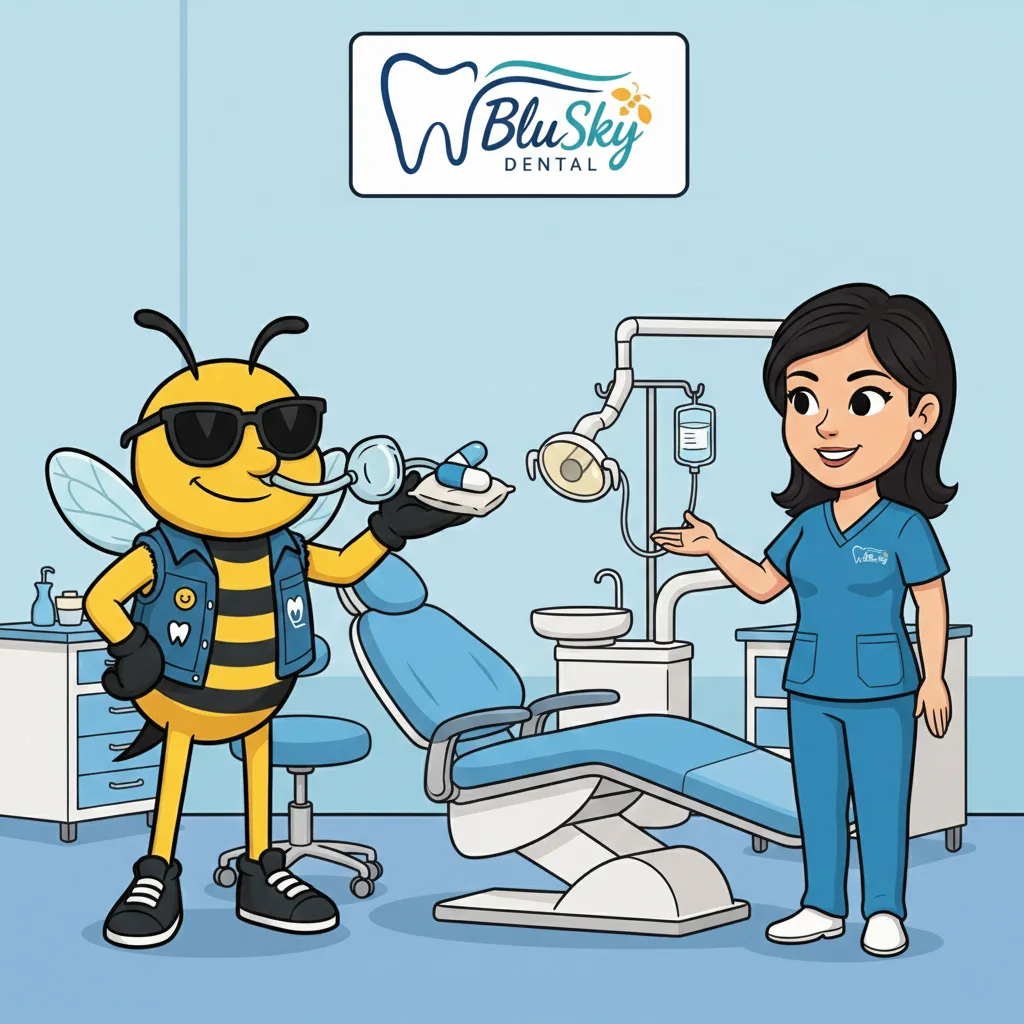
Is Sedation Safe?
Yes, when administered by trained professionals:
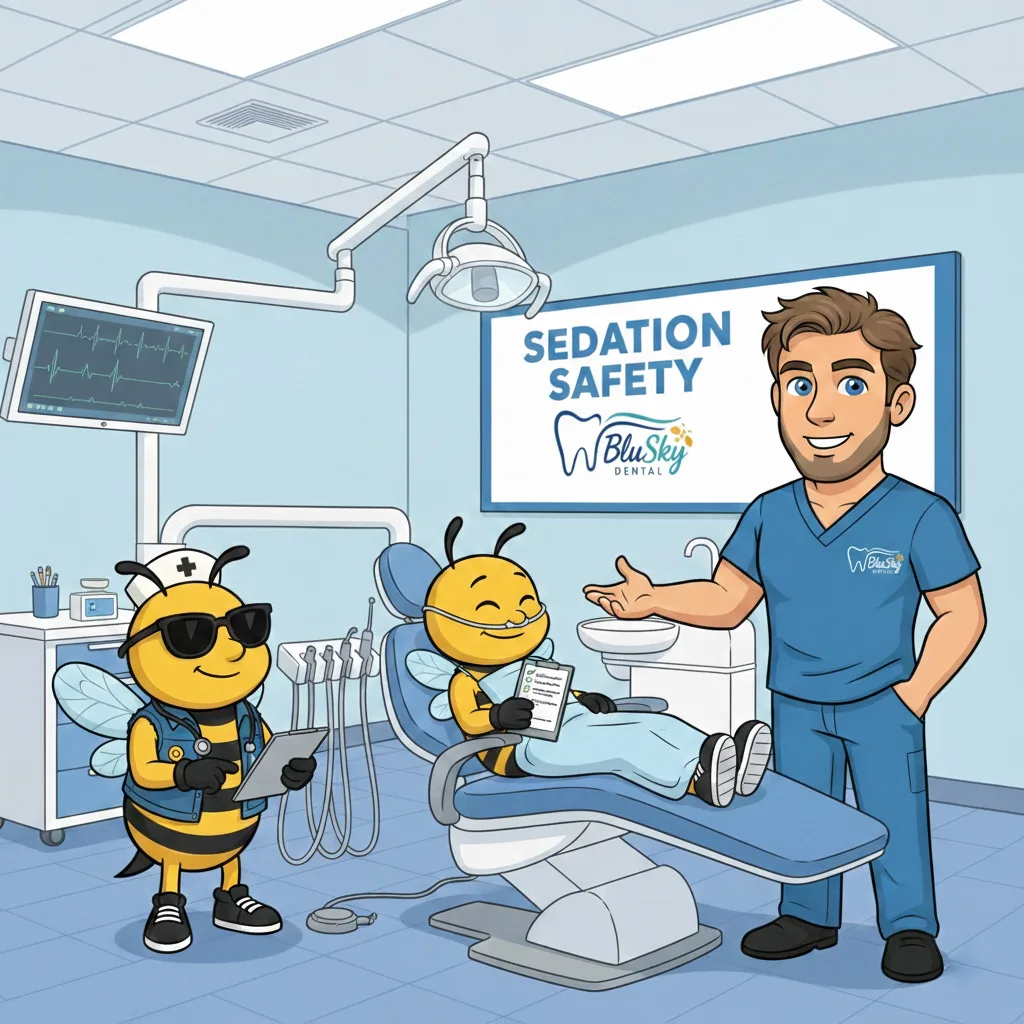
- Thorough health screening
- Appropriate monitoring
- Emergency protocols in place
- Experienced team
We'll review your medical history and ensure sedation is safe for you.
Frequently Asked Questions
With most dental sedation, you remain conscious but deeply relaxed. You can respond to requests but likely won't remember much.
Most healthy adults can have sedation. Certain medical conditions require evaluation. We'll review your health history thoroughly.
You'll also receive local anesthesia, so you shouldn't feel pain. Sedation adds relaxation and reduces awareness.
Varies by type. Nitrous wears off quickly; oral and IV sedation require recovery time and a driver home.
Experience Comfortable Dentistry
Ready to try sedation? We'll discuss options and find the right approach for you.
At BluSky we BEElieve in bringing life to your smile. 🐝