Gum Grafting: Restoring Your Gumline
Protect your teeth and rejuvenate your smile

What Is Gum Grafting?
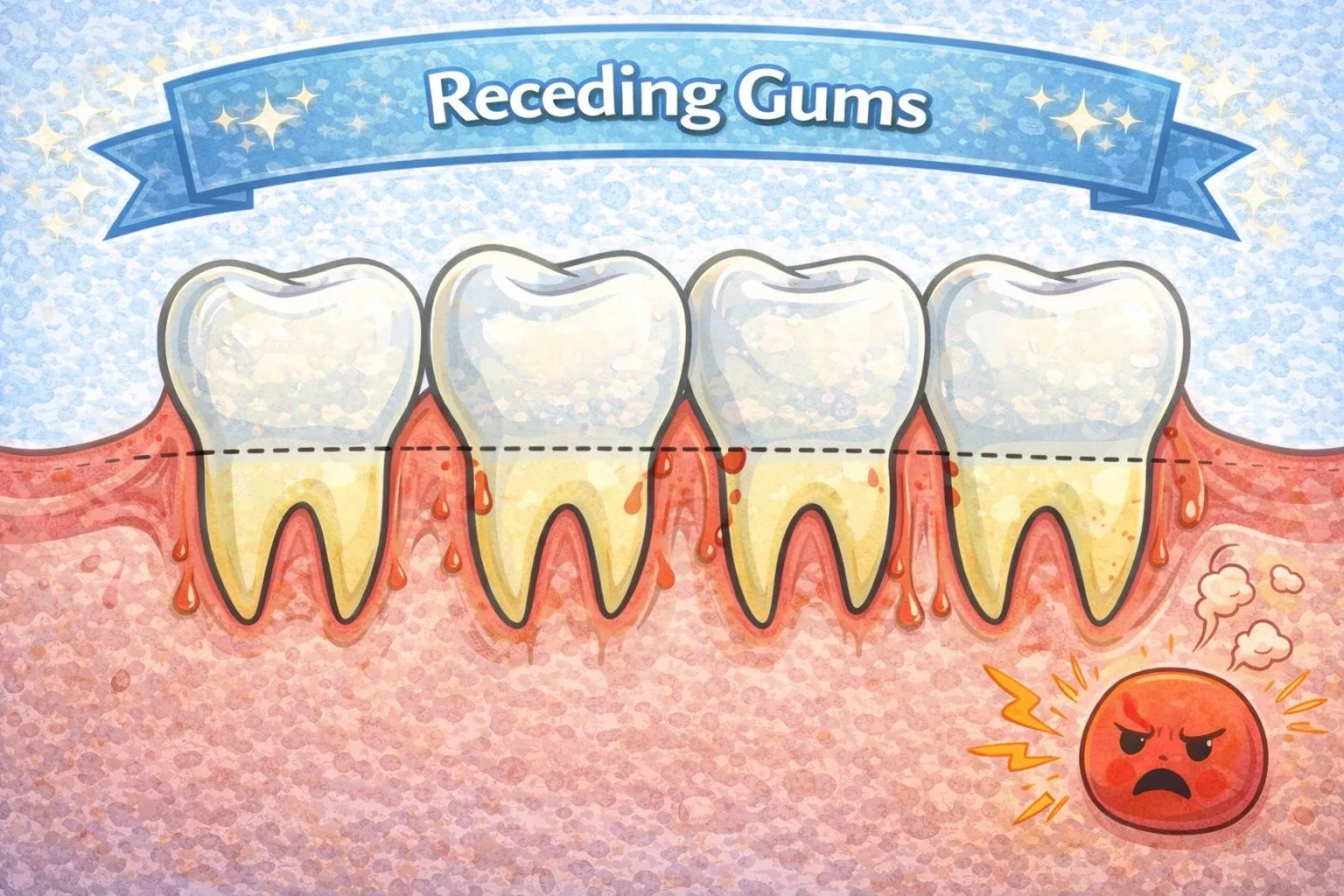
When gums recede, tooth roots become exposed—leading to sensitivity, increased decay risk, and aesthetic concerns. Gum grafting restores lost tissue, protects your teeth, and rejuvenates your smile.
Gum grafting (also called gingival grafting or periodontal plastic surgery) is a procedure that:
- Covers exposed tooth roots
- Restores gum tissue
- Protects teeth from further recession
- Improves smile appearance
Tissue is transplanted to areas where gums have receded, creating a healthier, more natural gumline.
Why Gums Recede
Common Causes
Gum Disease (Periodontitis)
Bacterial infection destroys gum and bone tissue, causing gums to pull away from teeth.
Aggressive Brushing
Brushing too hard or with hard bristles wears away gum tissue over time.
Genetics
Some people are predisposed to thin, fragile gum tissue.
Teeth Grinding (Bruxism)
Excessive forces stress the gums and contribute to recession.
Misaligned Teeth
Teeth out of position may have inadequate gum coverage.
Orthodontic Treatment
Moving teeth can sometimes cause recession if tissue is thin.
Tobacco Use
Smoking damages gum tissue and accelerates recession.
Signs You May Need Gum Grafting
- Visible tooth roots
- Teeth appear "long"
- Sensitivity to hot, cold, or touch
- Notches at the gumline
- Progressive recession
- Aesthetic concerns about gumline
Types of Gum Grafts
Connective Tissue Graft
Most common type.
- Tissue taken from under the palate (roof of mouth)
- Placed over exposed root
- Excellent results for root coverage
- Blends naturally with existing tissue
Free Gingival Graft
For adding tissue thickness.
- Tissue taken directly from palate surface
- Placed at recession site
- Best for thin gums needing reinforcement
- Creates a band of stronger tissue
Pedicle Graft
Using adjacent tissue.
- Tissue from gum next to recession site
- Rotated or stretched to cover root
- No second surgical site
- Requires adequate nearby tissue
Allograft/Xenograft
Donor tissue options.
- Processed tissue from human donors (allograft)
- Or animal tissue (xenograft)
- No palate surgery needed
- Good option when limited tissue available
The Procedure
Before Surgery
- Consultation and treatment planning
- Dental cleaning if needed
- Pre-operative instructions
- Discussion of anesthesia options
During Surgery
- Anesthesia – Local anesthesia numbs the area
- Site preparation – Recession site is prepared
- Tissue harvesting – Graft tissue obtained (if from palate)
- Graft placement – Tissue positioned over roots
- Securing – Sutures hold graft in place
- Dressing – Protective covering may be placed
Duration: 1-2 hours depending on extent
Sedation Options
For anxious patients or multiple sites, sedation is available:
- Nitrous oxide (laughing gas)
- Oral sedation
- IV sedation
Recovery
First Week
- Some swelling and discomfort (normal)
- Soft food diet
- Avoid disturbing the graft site
- Pain medication as needed
- Gentle salt water rinses
- No brushing at graft site
Weeks 2-4
- Swelling subsides
- Sutures dissolve or are removed
- Gradual return to normal diet
- Begin gentle brushing near site
- Healing progresses
Full Healing
Complete healing takes 1-3 months. The graft integrates with existing tissue and matures to match surrounding gums.
Results
What to Expect
- Root coverage (partial to complete depending on recession severity)
- Reduced sensitivity
- Improved appearance
- Protection from further recession
- Healthier gum tissue
Success Rates
Gum grafting has high success rates:
- 90%+ survival of graft tissue
- Good to excellent root coverage in most cases
- Long-lasting results with proper care
Preventing Future Recession
After grafting, protect your investment:
- Gentle brushing – Soft brush, light pressure
- Proper technique – We'll demonstrate
- Night guard – If you grind your teeth
- Regular cleanings – Professional care
- Don't smoke – Smoking damages gum tissue
- Control gum disease – Treat any periodontal issues
Cost and Insurance
Cost Factors
Costs depend on:
- Number of teeth treated
- Type of graft
- Complexity of recession
- Sedation choices
Insurance Coverage
Some dental plans cover gum grafting when medically necessary. We verify your benefits before treatment.
Alternatives to Consider
For Mild Recession
- Improved brushing technique
- Desensitizing treatments
- Monitoring for progression
For Sensitivity Only
- Desensitizing toothpaste
- Fluoride treatments
- Bonding over exposed roots
Grafting is typically recommended when recession is significant or progressing.
Frequently Asked Questions
The procedure itself is painless due to anesthesia. Post-operative discomfort is manageable with medication and usually resolves within a week.
Most patients return to normal activities within a few days. Complete healing takes 1-3 months.
With proper care, grafted tissue is stable long-term. However, if underlying causes aren't addressed, recession can continue in other areas.
Surgical sites heal well with minimal visible scarring. The palate heals completely.
Most recession can be significantly improved. Severe recession may achieve partial rather than complete coverage.
Why Choose BluSky Dental
Expert Periodontal Care
Our experienced team provides comprehensive gum grafting services using the latest techniques for optimal results and patient comfort.
- Experienced periodontal specialists
- Multiple graft technique options
- Sedation available for comfort
- Thorough follow-up care
Restore Your Gumline
Don't let receding gums progress. Schedule a consultation to discuss your options.
At BluSky we BEElieve in bringing life to your smile. 🐝