Sedation & Dental Anxiety FAQs
Dental anxiety is incredibly common—you're not alone.

Understanding Dental Anxiety
Is it normal to be afraid of the dentist?
Absolutely. Dental anxiety affects an estimated 36% of the population, and 12% have severe dental phobia. You're in good company.
Common fears include:
- Fear of pain
- Fear of needles
- Fear of loss of control
- Past negative experiences
- Embarrassment about teeth
- Gag reflex sensitivity
Whatever your concern, we've heard it before and can help.
How do you help anxious patients?
We take a comprehensive approach:
- Listen — We want to understand your specific fears
- Explain — Knowledge reduces fear; we explain everything
- Control — You're always in charge; stop signals respected
- Comfort — Gentle techniques, breaks when needed
- Sedation — Options available when needed
Our goal is to change your relationship with dental care—one positive visit at a time.
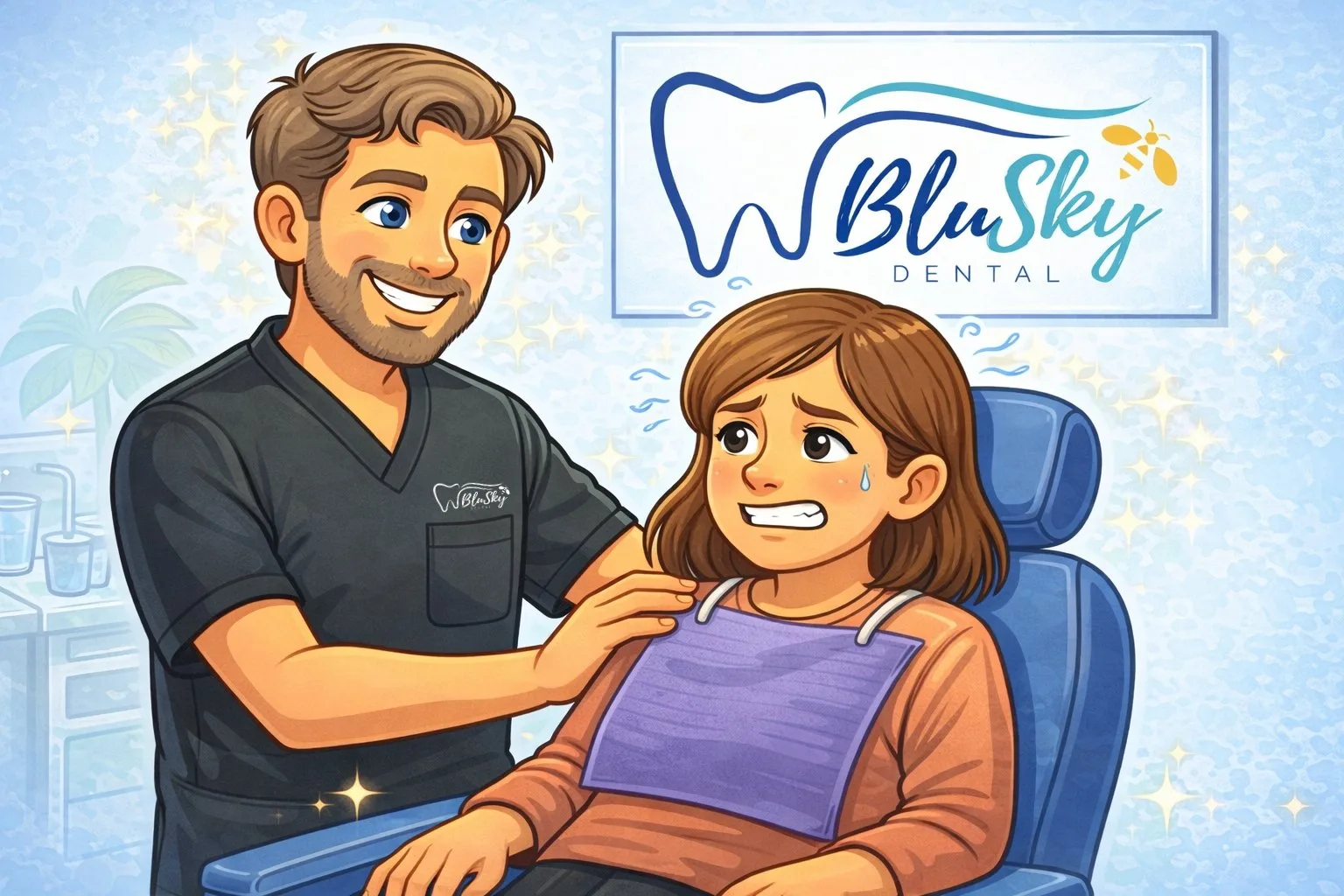
Do you treat patients with severe dental phobia?
Yes. We've successfully treated many patients who hadn't seen a dentist in 10, 20, even 30+ years due to phobia.
For severe cases, we:
- Schedule extra time
- Move at your pace
- Start with just a conversation (no treatment)
- Build trust gradually
- Offer sedation options
- Celebrate every step forward
There's no judgment here—only support.

Sedation Options
What sedation options do you offer?
BluSky Dental offers three levels of sedation:
| Type | Level | Description |
|---|---|---|
| Nitrous Oxide | Mild | Inhaled gas; relaxed but fully aware; wears off in minutes |
| Oral Sedation | Moderate | Pill taken before appointment; drowsy but responsive |
| IV Sedation | Deep | Administered intravenously; twilight state; available at select locations |
We'll recommend the best option based on your anxiety level, medical history, and procedure needs.
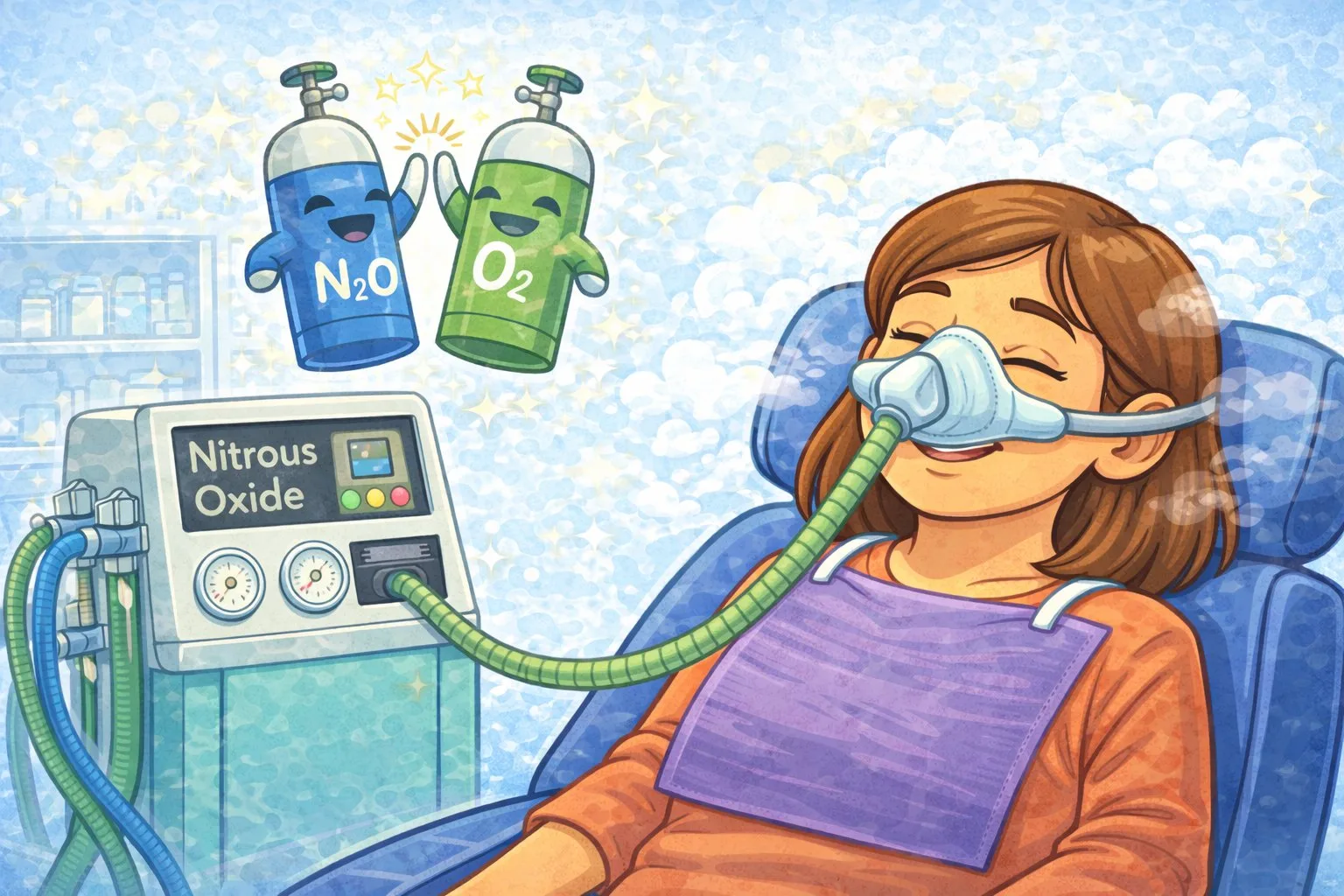
What is nitrous oxide (laughing gas)?
Nitrous oxide is a colorless, odorless gas you breathe through a small mask over your nose.
How it works:
- Effects begin within 2-3 minutes
- Creates relaxation and mild euphoria
- You remain fully conscious and can respond
- Wears off within 5 minutes after mask removal
- You can drive yourself home
Best for:
- Mild to moderate anxiety
- Gag reflex issues
- Shorter procedures
- Patients who need to drive afterward
How does oral sedation work?
With oral sedation, you take a prescription sedative (typically a benzodiazepine) about an hour before your appointment.
What to expect:
- You'll feel drowsy and relaxed
- You may feel sleepy or "foggy"
- You'll remain conscious but less aware
- Many patients have little memory of the procedure
- Effects last several hours
Requirements:
- Someone must drive you to and from the appointment
- No eating or drinking before (as instructed)
- Take the rest of the day off
Is dental sedation safe?
Yes, very safe when administered by trained professionals.
We ensure safety by:
- Reviewing your complete medical history
- Checking for drug interactions
- Monitoring vital signs throughout
- Using appropriate dosing
- Following established protocols
- Having emergency equipment ready
Millions of dental procedures use sedation safely every year.
Will I be unconscious during sedation?
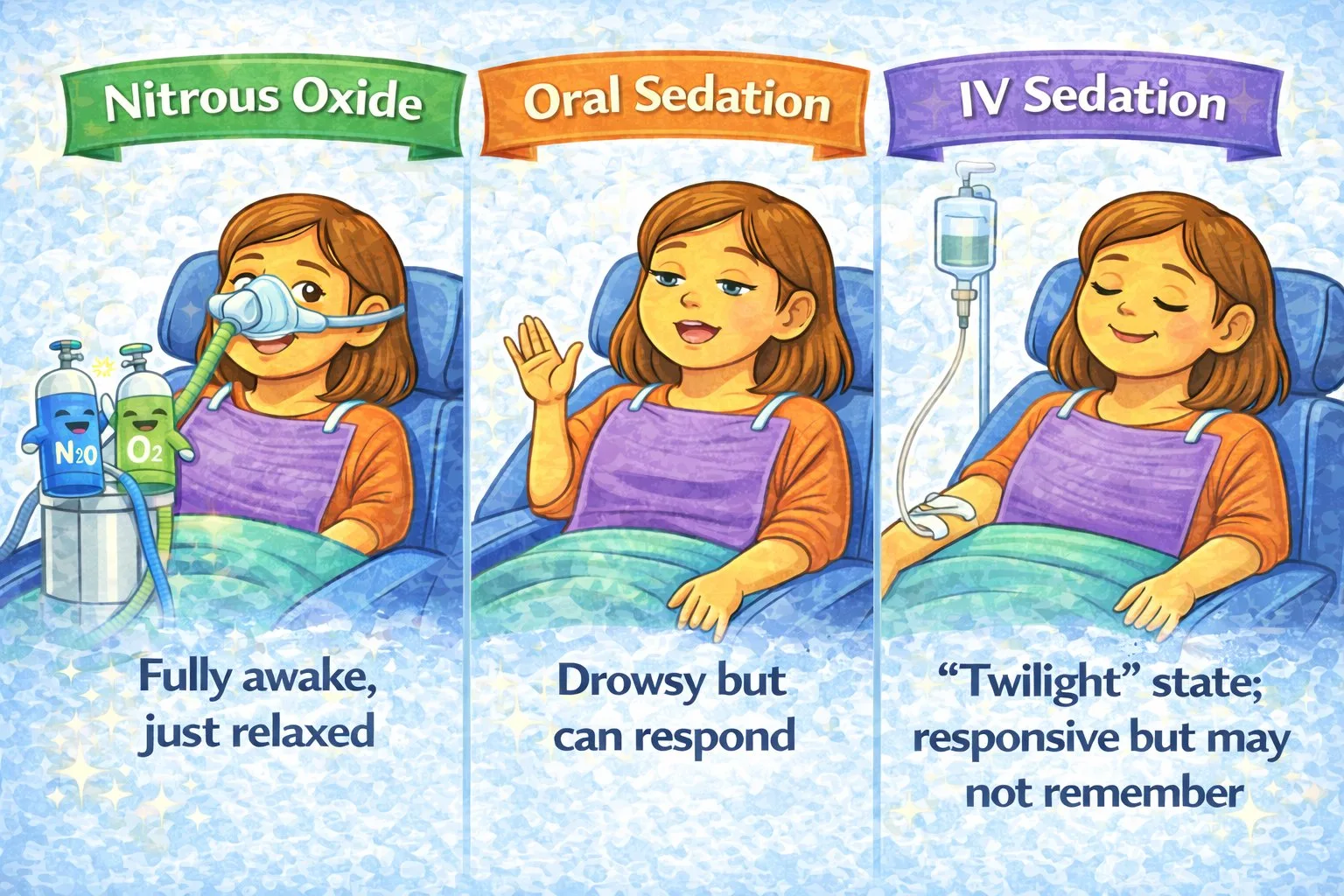
Usually not. Most dental sedation keeps you conscious:
- Nitrous oxide: Fully awake, just relaxed
- Oral sedation: Drowsy but can respond
- IV sedation: "Twilight" state; responsive but may not remember
You can still follow instructions, respond to questions, and breathe normally on your own.
Will I feel pain during treatment?
No. Sedation helps you relax, but we still use local anesthesia (numbing injections) for pain control.
The combination means:
- You're calm and relaxed
- The treatment area is completely numb
- You feel no pain
- Many patients don't remember the procedure
If you're afraid of needles, we can apply numbing gel first and wait until sedation takes effect before any injections.
Can I drive home after sedation?
It depends:
| Sedation Type | Can You Drive? |
|---|---|
| Nitrous oxide | ✓ Yes, immediately |
| Oral sedation | ✗ No — need a driver |
| IV sedation | ✗ No — need a driver |
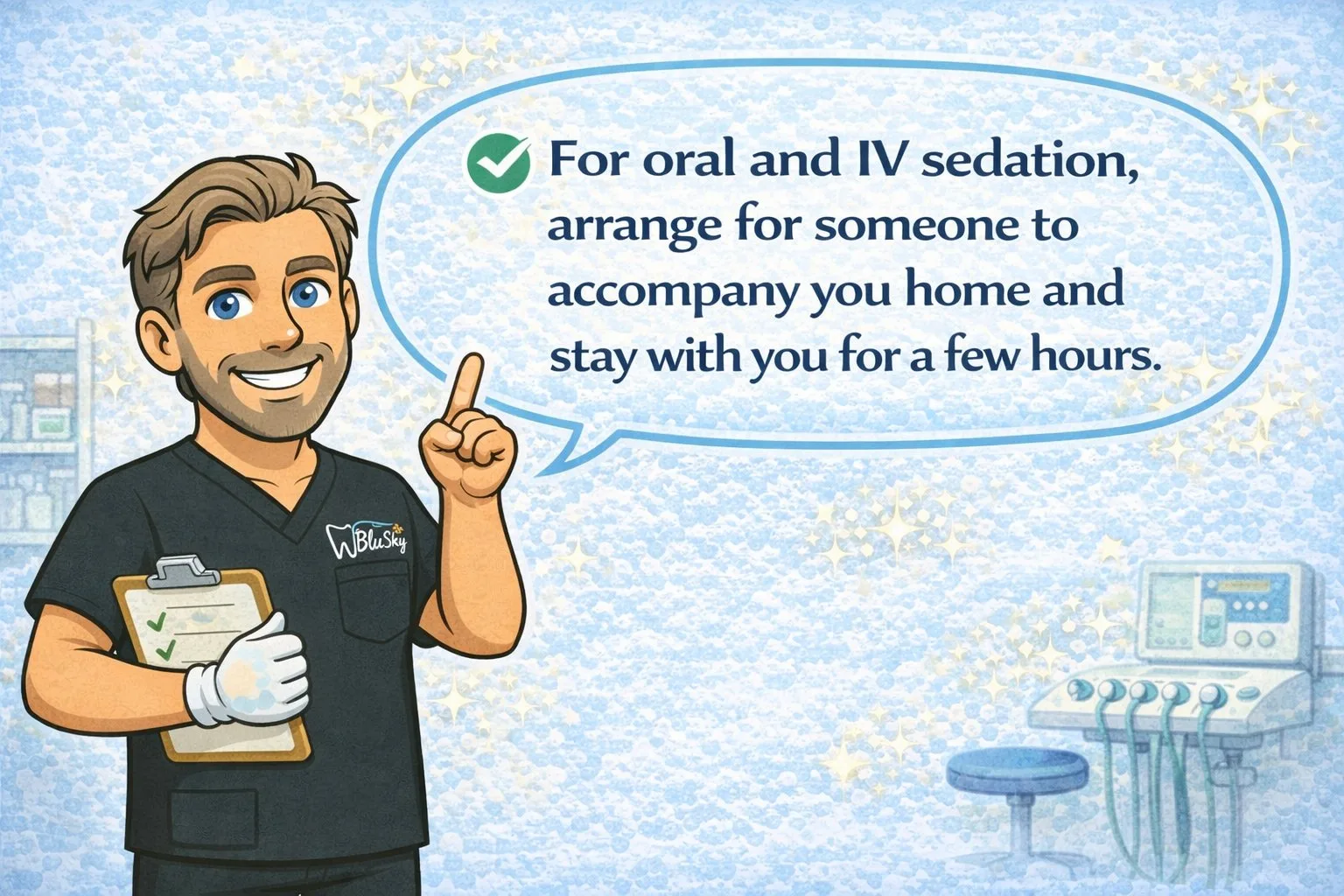
For oral and IV sedation, arrange for someone to accompany you home and stay with you for a few hours.
How much does sedation cost?
Approximate costs:
| Sedation Type | Typical Cost |
|---|---|
| Nitrous oxide | $50-100 added to visit |
| Oral sedation | $100-300 |
| IV sedation | Varies by duration |
Some insurance plans cover sedation, especially for documented anxiety or phobia. We'll verify your benefits.
Non-Sedation Anxiety Management
What can I do to manage anxiety without sedation?
Many techniques help:
Before your visit:
- Schedule morning appointments (less time to worry)
- Get good sleep the night before
- Avoid caffeine on appointment day
- Practice deep breathing exercises
- Listen to calming music on the way
During your visit:
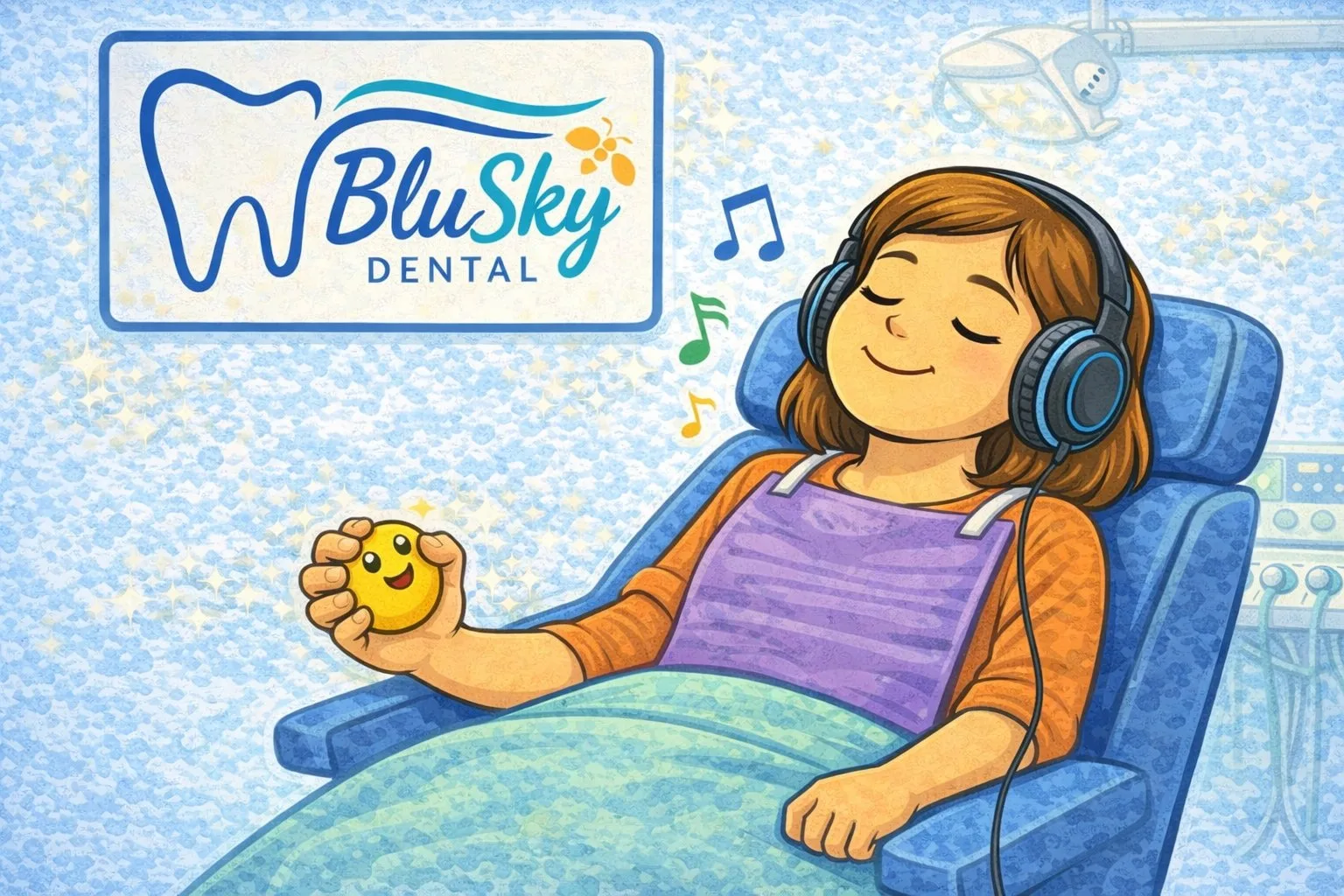
- Bring headphones with music or podcasts
- Use a "stop" signal (raise your hand)
- Take breaks when needed
- Focus on breathing
- Squeeze a stress ball
Communication:
- Tell us exactly what scares you
- Ask questions—understanding reduces fear
- Let us know if anything hurts or bothers you
We're here to help, not judge.
Ready to Take the First Step?
Dental anxiety is manageable. Thousands of anxious patients have received comfortable care at BluSky Dental. Let us help you too.
Call: (613) 728-1511
Address: 20 – 1620 Scott Street, Ottawa, ON K1Y 4S7
At BluSky we BEElieve in bringing life to your smile. 🐝