Tooth Decay Treatment in Ottawa: Stop Cavities Before They Spread

Tooth decay is one of the most common dental problems we treat at BluSky Dental Holland Cross, yet it's also one of the most preventable. Whether you're experiencing tooth sensitivity, have noticed discoloration, or simply want to protect your family's smiles, understanding tooth decay helps you take control of your oral health. Our Westboro dental team provides comprehensive decay treatment and prevention services to patients throughout Ottawa.
Serving Westboro, Hintonburg, Wellington West, Little Italy, and Downtown Ottawa.
What Is Tooth Decay?
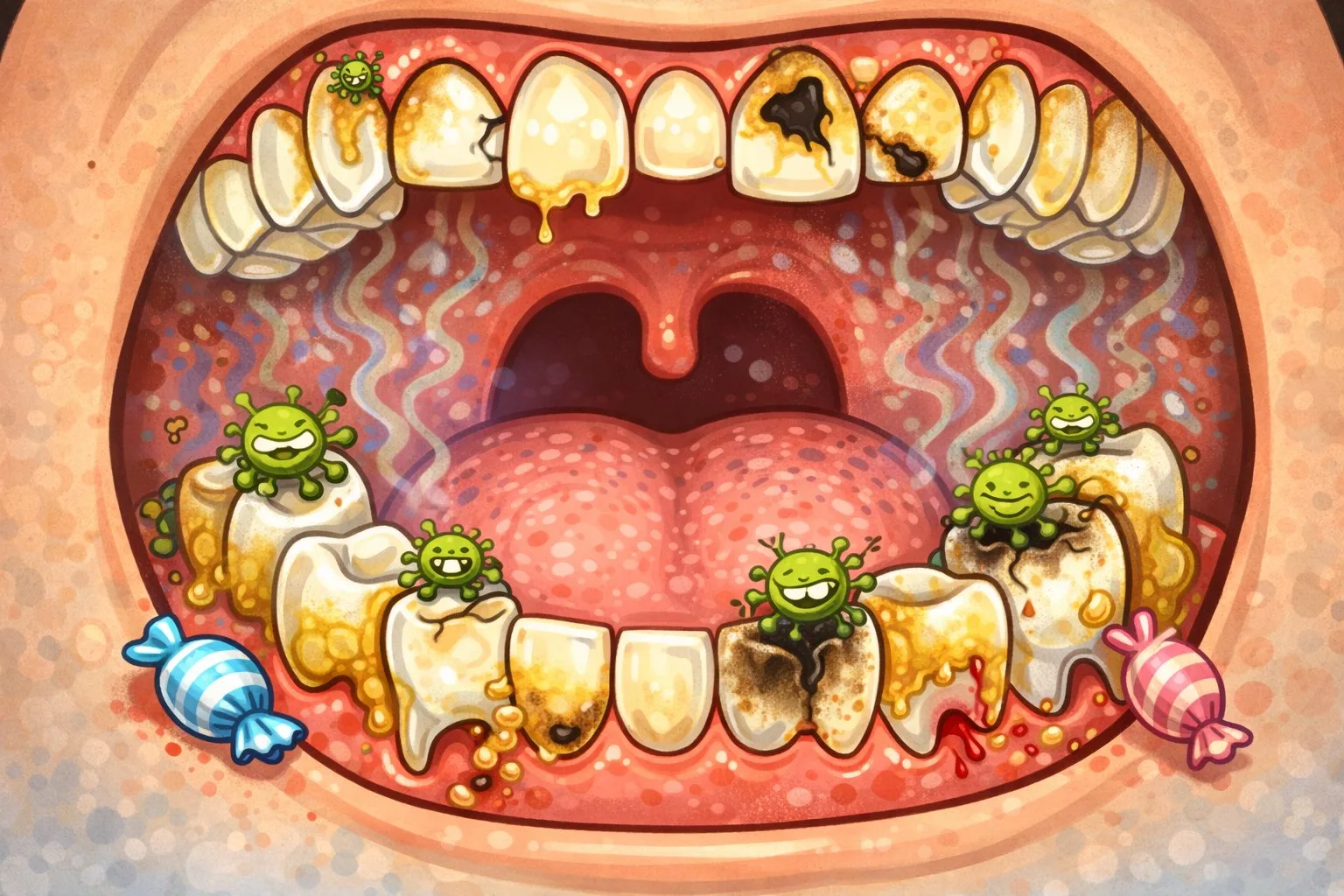
Tooth decay, also called dental caries or cavities, is the permanent damage to your tooth structure caused by acid-producing bacteria. When you eat sugars and carbohydrates, bacteria in your mouth feed on these substances and produce acids that attack your tooth enamel. Over time, repeated acid attacks break down the enamel, creating cavities that progressively worsen without treatment.
Unlike a cut or bruise that heals on its own, tooth decay doesn't repair itself. Once a cavity forms, only professional dental treatment can stop its progression and restore your tooth. That's why prevention and early detection are so critical to maintaining healthy teeth throughout your life.
The Five Stages of Tooth Decay
Understanding how decay progresses helps you recognize early warning signs and seek treatment promptly. At our Holland Cross location, we use advanced diagnostic technology to identify decay at every stage.
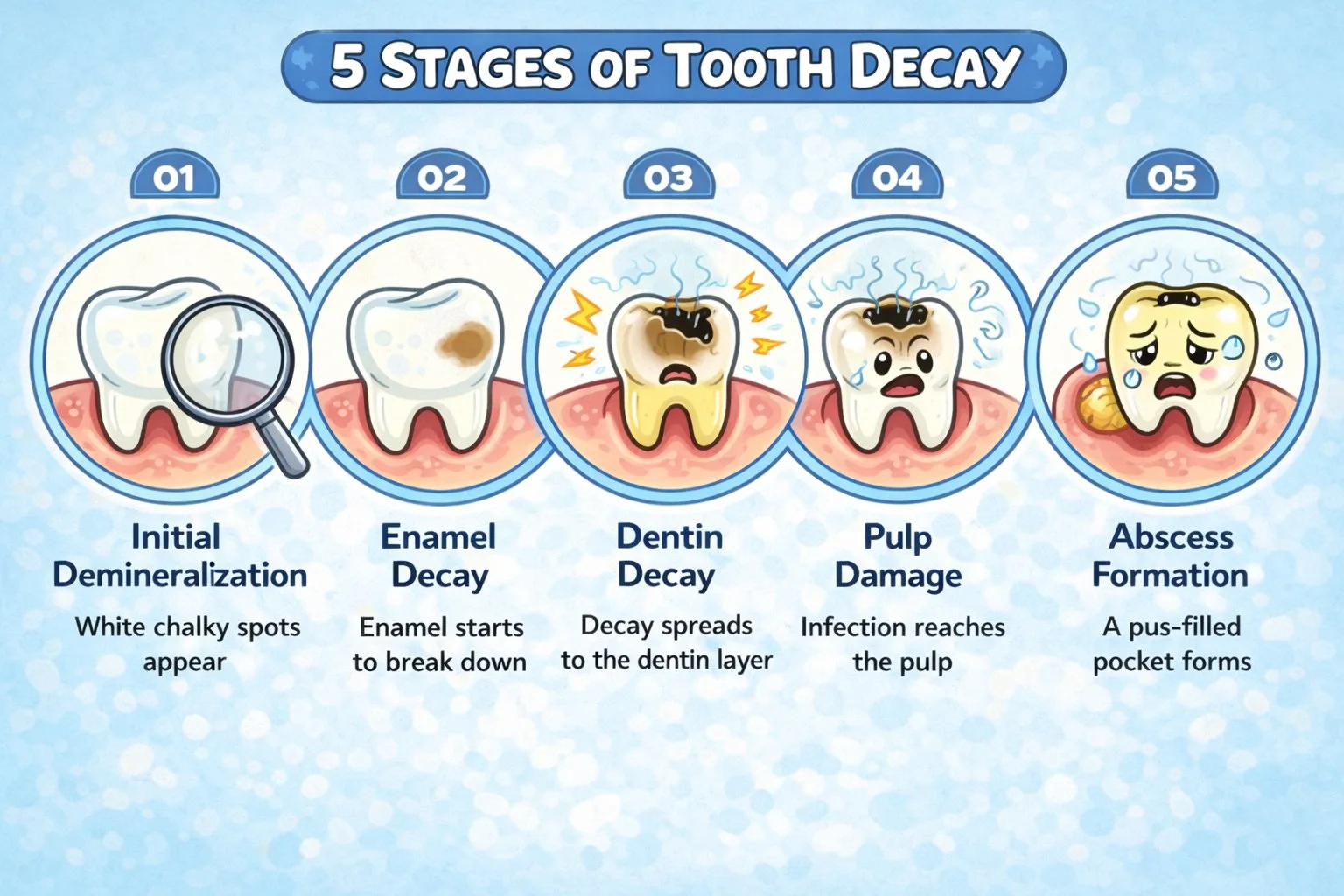
Stage 1: Initial Demineralization
Decay begins when acid causes minerals to leach from your tooth enamel. You may notice white spots on your teeth—areas where enamel is weakening. At this earliest stage, decay is often reversible with fluoride treatment and improved oral hygiene. This is why regular dental checkups matter—we can catch decay before it causes permanent damage.
Learn more about Fluoride Treatments →
Stage 2: Enamel Decay
When demineralization continues, the enamel breaks down, and a cavity forms. The white spots may turn brown, and you might feel slight sensitivity. While the damage is permanent, treatment at this stage is straightforward—typically a simple filling to restore the tooth.
Stage 3: Dentin Decay
Beneath your enamel lies dentin, a softer tissue that decays more rapidly once bacteria reach it. At this stage, you'll likely experience increased sensitivity to hot, cold, and sweet foods. Treatment usually involves a larger filling or possibly an inlay/onlay to restore the tooth structure.
Learn more about Dental Fillings →
Stage 4: Pulp Involvement
When decay reaches the pulp—the innermost part of your tooth containing nerves and blood vessels—you'll experience significant pain. The pulp becomes infected and inflamed, potentially leading to abscess formation. Root canal therapy is typically necessary to save the tooth.
Learn more about Root Canal Treatment →
Stage 5: Abscess Formation
Untreated decay can lead to dental abscess—a pocket of infection at the tooth root. This is a dental emergency causing severe pain, swelling, fever, and potential spread of infection. Immediate treatment is essential, which may include root canal therapy or extraction.
Signs and Symptoms of Tooth Decay
Not all decay announces itself with pain. Many cavities develop silently, which is why regular checkups at our Westboro dental office are essential for early detection.
Early Warning Signs:
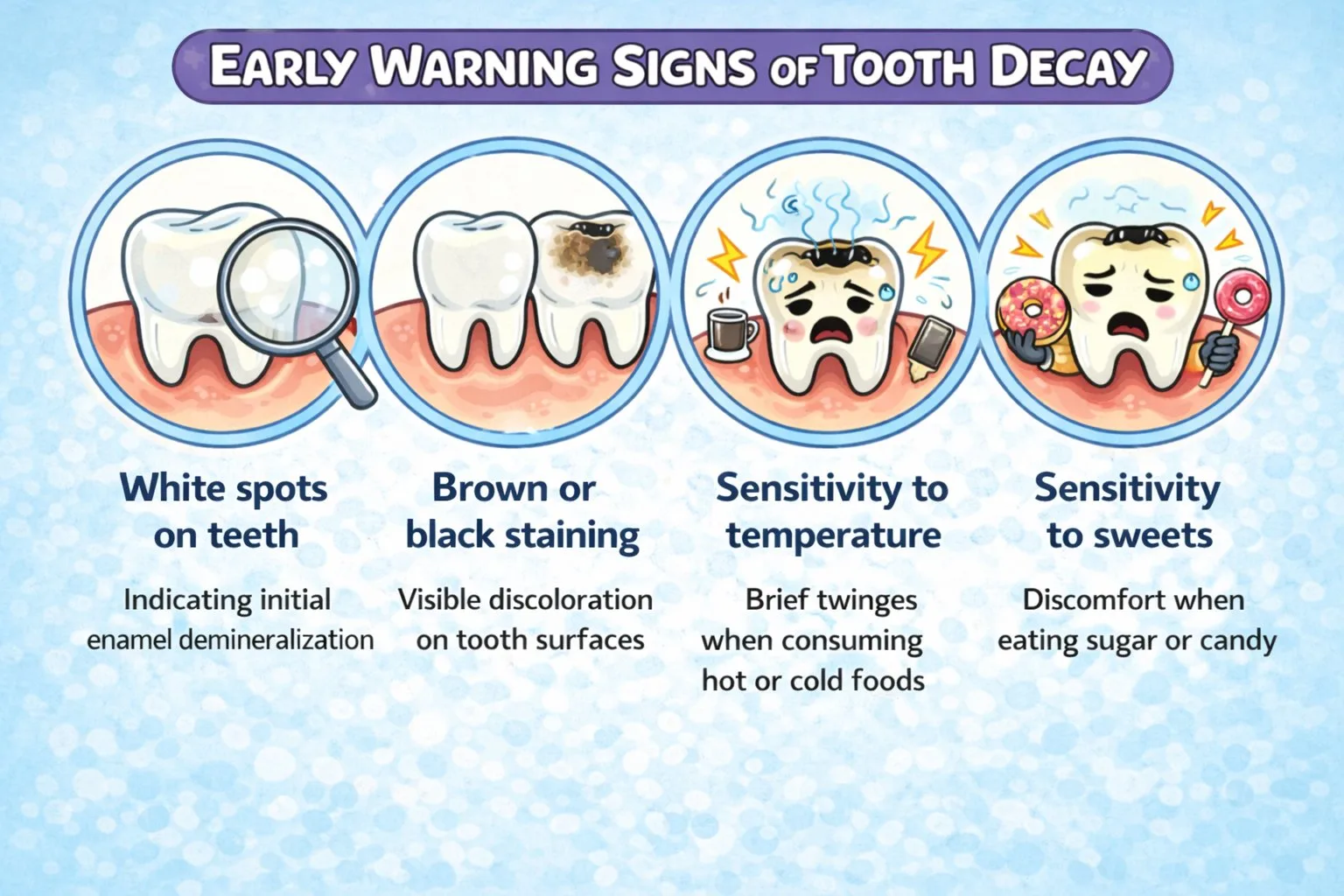
- White spots on teeth – Indicating initial enamel demineralization
- Brown or black staining – Visible discoloration on tooth surfaces
- Sensitivity to temperature – Brief twinges when consuming hot or cold foods
- Sensitivity to sweets – Discomfort when eating sugar or candy
Advanced Symptoms:
- Spontaneous toothache – Pain occurring without an obvious trigger
- Visible holes or pits – Cavities you can see or feel with your tongue
- Pain when biting – Discomfort applying pressure to the tooth
- Swelling near the tooth – Indicating possible infection
If you're experiencing any of these symptoms, don't wait for your next scheduled appointment. Contact BluSky Dental Holland Cross at (613) 728-1511 for prompt evaluation. Our Downtown Ottawa and Westboro-area patients can often be seen the same day for urgent concerns.
What Causes Tooth Decay?
Understanding decay causes helps you prevent future cavities. At BluSky Dental, we educate patients about the factors contributing to dental caries.
Primary Causes:
- Bacteria and plaque – Streptococcus mutans and other bacteria form sticky plaque that produces enamel-attacking acids
- Frequent sugar consumption – Every sugar exposure feeds decay-causing bacteria for 20-30 minutes
- Poor oral hygiene – Inadequate brushing and flossing allows plaque to accumulate
- Dry mouth – Reduced saliva impairs natural decay protection
Contributing Factors:
- Acidic foods and drinks – Citrus, soda, and sports drinks weaken enamel
- Snacking habits – Frequent eating keeps mouth acidic longer
- Medications – Many common medications cause dry mouth
- Acid reflux – Stomach acid reaching the mouth erodes enamel
- Tooth anatomy – Deep grooves and tight contacts trap food and bacteria
How We Diagnose Tooth Decay at BluSky Dental
Our Hintonburg and Westboro patients benefit from comprehensive diagnostic capabilities at our Holland Cross location.
Visual Examination
Our dentists carefully examine each tooth for visible signs of decay, including color changes, soft spots, and structural damage. Using magnification and proper lighting, we can detect many cavities during routine examinations.
Digital X-Rays
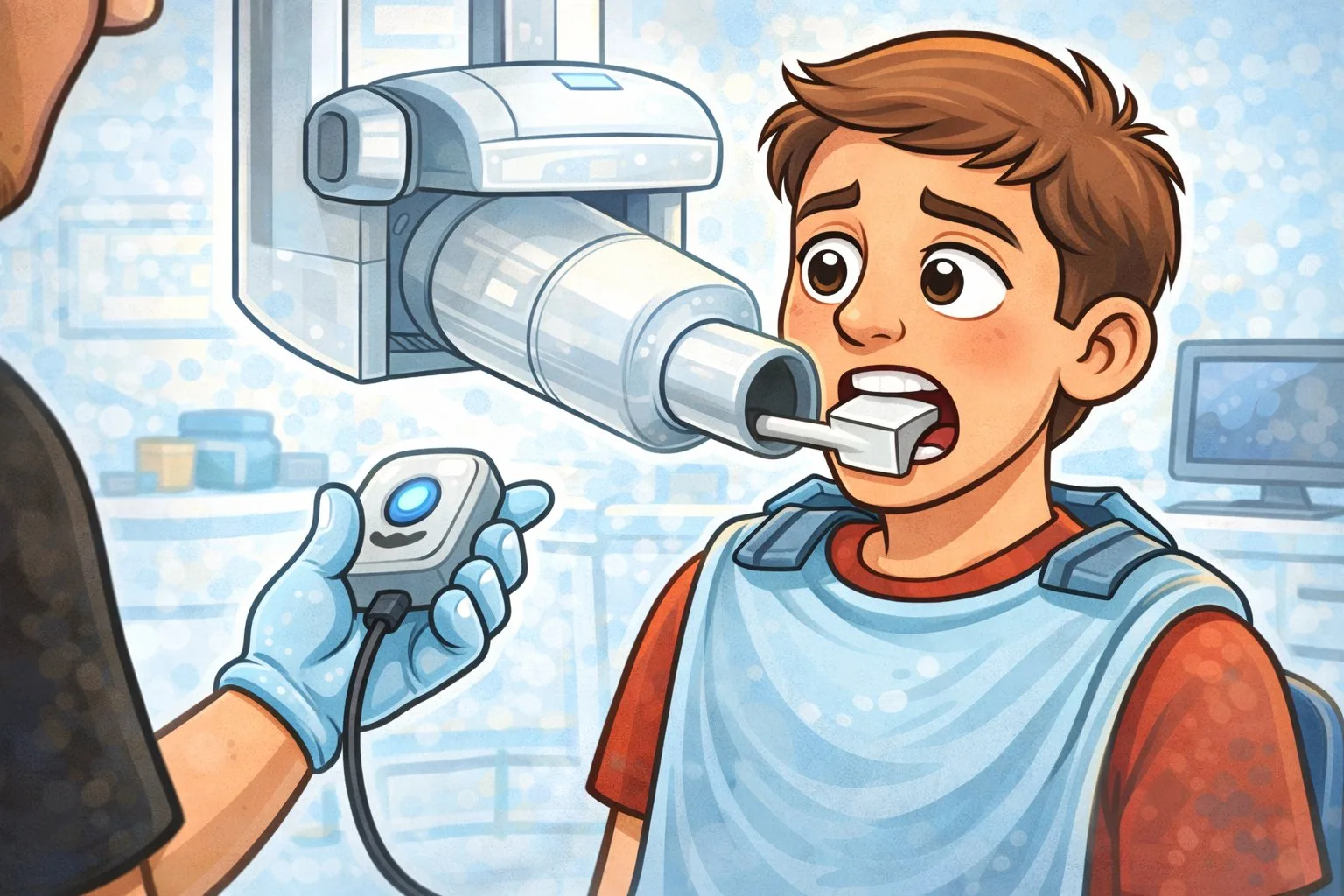
Digital radiography reveals decay between teeth and beneath the surface that visual examination can't detect. Our digital X-rays use 90% less radiation than traditional film while providing clearer images for accurate diagnosis.
Learn more about Digital X-Rays →
Intraoral Cameras
These small cameras provide magnified images of tooth surfaces, helping us show you exactly what we see and explain our findings. Visual confirmation helps you understand treatment recommendations.
Learn more about Intraoral Cameras →
Cavity Detection Technology
We utilize advanced technology to detect decay in its earliest stages, when treatment is simplest and most affordable. Early detection saves you time, money, and discomfort.
Tooth Decay Treatment Options
Treatment depends on decay severity. Our Westboro dental team creates personalized treatment plans tailored to your specific situation.
Fluoride Treatments (Early Decay)
For initial demineralization before a cavity forms, professional fluoride treatments can help remineralize and strengthen enamel. Combined with improved home care, early decay can sometimes be reversed.
Learn more about Fluoride Treatments →
Dental Fillings (Mild to Moderate Decay)
Fillings are the most common treatment for established cavities. We remove decayed tooth structure and fill the space with durable restorative material. At BluSky Dental Holland Cross, we offer tooth-colored composite fillings that blend seamlessly with your natural teeth.
Learn more about Dental Fillings →
Dental Inlays and Onlays (Moderate Decay)
When decay is too extensive for a filling but doesn't require a crown, inlays and onlays provide an ideal solution. These custom restorations precisely fit the affected area, preserving maximum healthy tooth structure.
Learn more about Dental Inlays and Onlays →
Dental Crowns (Extensive Decay)
Severely decayed teeth may require crowns—tooth-shaped caps that cover and protect the entire visible tooth. Our CAD/CAM technology allows us to create same-day crowns, meaning you can complete treatment in a single visit.
Learn more about Dental Crowns →
Learn more about Same-Day Crowns →
Root Canal Therapy (Pulp Involvement)
When decay reaches the tooth's pulp, root canal therapy saves the tooth by removing infected tissue, cleaning the canal system, and sealing against future infection. Our microscope-enhanced root canals provide exceptional precision and outcomes.
Learn more about Microscope Root Canals →
Tooth Extraction (Severe Decay)
In cases where a tooth cannot be saved, extraction may be necessary. We always explore every option to preserve natural teeth, but when extraction is needed, we ensure your comfort throughout the procedure and discuss replacement options.
Preventing Tooth Decay
Prevention is always better than treatment. Our Wellington West, Hintonburg, and Downtown Ottawa patients benefit from comprehensive preventive care at BluSky Dental.
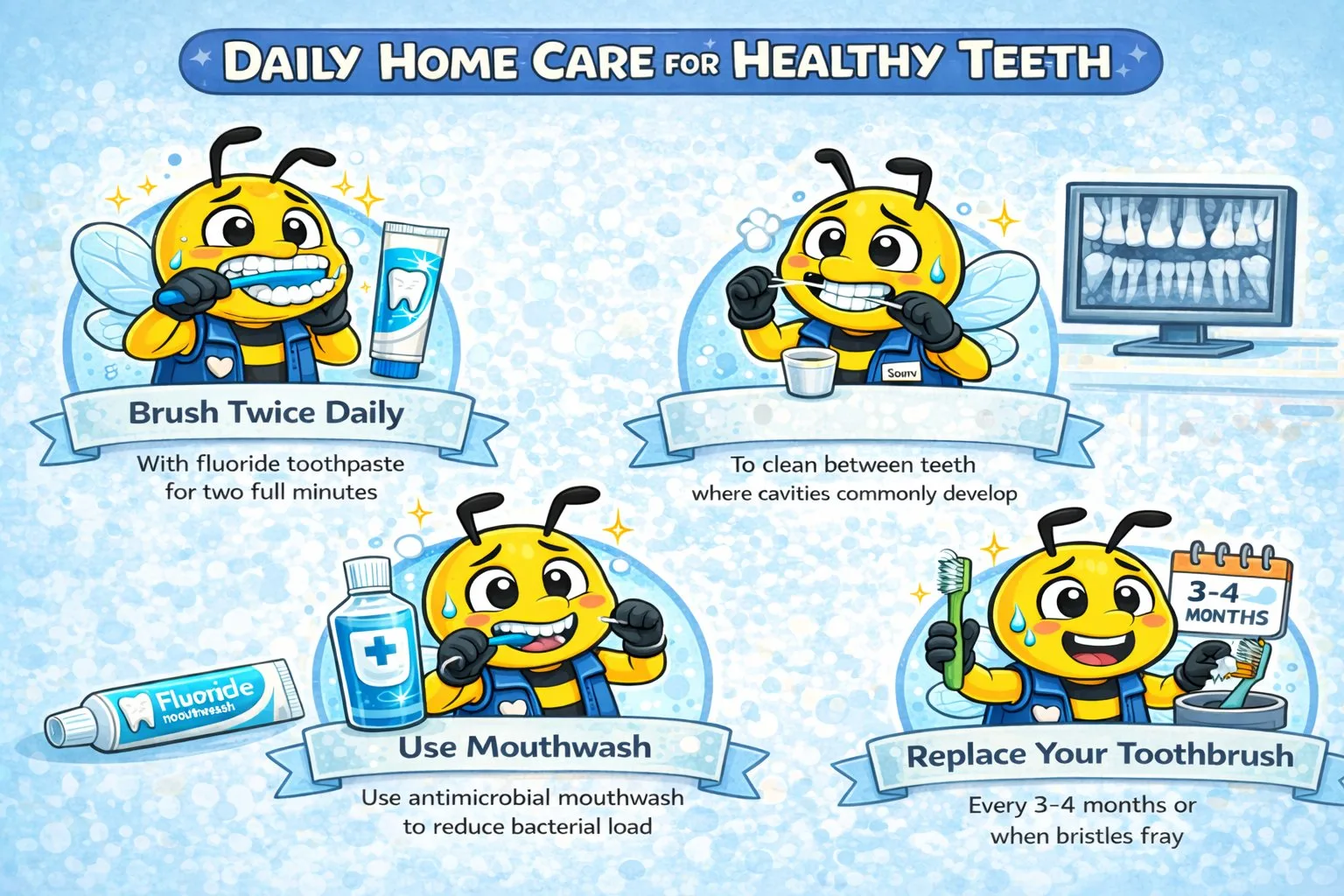
Daily Home Care:
- Brush twice daily with fluoride toothpaste for two full minutes
- Floss once daily to clean between teeth where cavities commonly develop
- Use antimicrobial mouthwash to reduce bacterial load
- Replace your toothbrush every 3-4 months or when bristles fray
Dietary Modifications:
- Limit sugary snacks and beverages especially between meals
- Drink water after meals to rinse away food particles and neutralize acids
- Choose tooth-friendly snacks like cheese, vegetables, and nuts
- Avoid sipping sugary drinks throughout the day
Professional Prevention:
- Regular cleanings every nine months to remove plaque and tartar
- Professional fluoride treatments to strengthen enamel
- Dental sealants to protect vulnerable tooth surfaces
- Regular examinations for early decay detection
Why Choose BluSky Dental for Tooth Decay Treatment
Advanced Diagnostic Technology
Our Holland Cross location features digital X-rays, intraoral cameras, and cavity detection technology that identifies decay in its earliest, most treatable stages. Early detection means simpler, more affordable treatment and better outcomes for your teeth.
Same-Day Treatment Options
We understand that tooth decay doesn't wait, and neither should you. Our Westboro dental team offers same-day appointments for urgent concerns and same-day crown technology for extensive restorations—so you can complete treatment efficiently without multiple visits.
Conservative Treatment Philosophy
We believe in preserving as much natural tooth structure as possible. Our approach focuses on minimally invasive techniques and early intervention that protect your teeth for the long term.
Comprehensive Care Under One Roof
From prevention and early intervention to complex restorations and tooth replacement, our team handles all aspects of decay treatment. You won't need referrals for most procedures—everything happens right here in our convenient Westboro location.
Frequently Asked Questions
Early-stage decay affecting only the enamel can sometimes be reversed with fluoride treatments and improved oral hygiene. Once decay progresses into the dentin and a cavity forms, the damage is permanent and requires professional treatment. This is why regular checkups are so important—we can intervene during the reversible stage.
Cavity formation varies based on diet, oral hygiene, saliva production, and individual factors. Under conditions favorable to bacteria, decay can progress from initial demineralization to a full cavity within 6-12 months. Some cavities develop slowly over years. Regular dental visits catch decay at any stage.
Modern dental techniques make filling treatment comfortable for most patients. We use effective local anesthesia to ensure you don't feel pain during the procedure. Many patients report feeling only pressure and vibration. For anxious patients, we offer sedation options to ensure complete comfort.
Brushing alone may not prevent cavities if you're not flossing, have a high-sugar diet, experience dry mouth, or miss areas during brushing. Technique matters too—brushing should last two full minutes and reach all surfaces. Our hygienists provide personalized instruction to improve your home care routine.
Most people benefit from checkups every nine months. However, if you're prone to cavities, have gum disease, or have other risk factors, we may recommend more frequent visits. Our Westboro team creates personalized preventive schedules based on your individual needs.
Schedule Your Tooth Decay Evaluation
Don't let tooth decay damage your smile. Whether you're experiencing symptoms or simply want to ensure your teeth are healthy, our experienced team at BluSky Dental Holland Cross provides comprehensive evaluations and personalized treatment plans. Early detection and treatment save you time, money, and discomfort—and protect your natural teeth for years to come.
Call: (613) 728-1511
Address: 20 – 1620 Scott Street, Ottawa, ON K1Y 4S7
Email: hollandcrossreception@blusky.dental
Hours: Monday – Friday: 8:00 AM – 5:00 PM
At BluSky we BEElieve in bringing life to your smile. 🐝