What Is a Dental Crown?
Everything you need to know about dental crowns

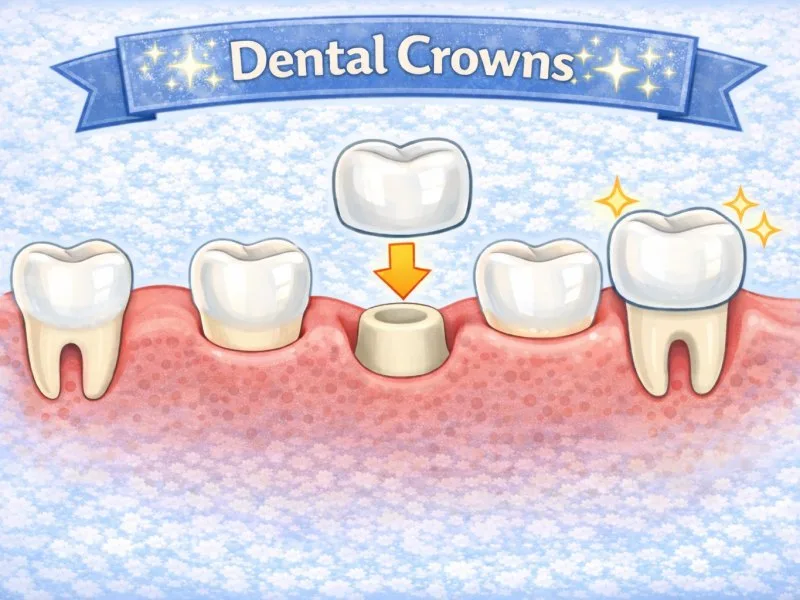
A dental crown is a "cap" that covers a damaged tooth, restoring its shape, size, strength, and appearance. If you've been told you need a crown, here's everything you need to know.
The Basics
Definition
A dental crown is a custom-made restoration that completely covers (or "caps") a tooth from the gumline up. It becomes the tooth's new outer surface.
Why "Crown"?
The visible part of your tooth (above the gumline) is called the "crown." A dental crown replaces this visible portion when the natural crown is damaged.
When Crowns Are Needed
Common Reasons
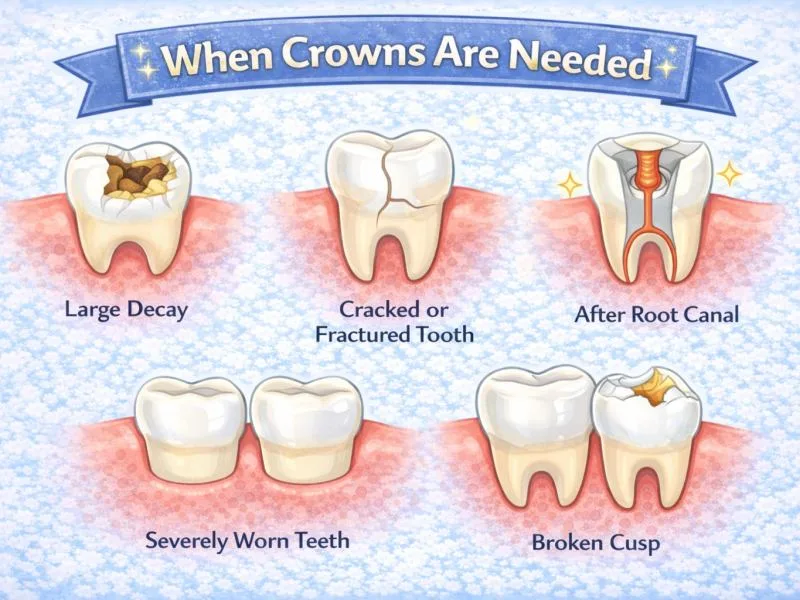
Large Decay
When a cavity is too large for a filling, a crown protects what remains of the tooth.
Cracked or Fractured Tooth
A crown holds a cracked tooth together and prevents further damage.
After Root Canal
Root canal-treated teeth become brittle. A crown protects against fracture.
Severely Worn Teeth
Grinding or acid erosion can wear teeth down. Crowns restore proper shape and function.
Broken Cusp
When a piece of tooth breaks off, a crown may be the best restoration.
Cosmetic Enhancement
Crowns can transform severely discolored, misshapen, or poorly sized teeth.
Supporting a Bridge
Crowns anchor dental bridges on either side of a missing tooth.
Covering Implants
Dental implants are topped with crowns to create visible teeth.
Types of Crowns
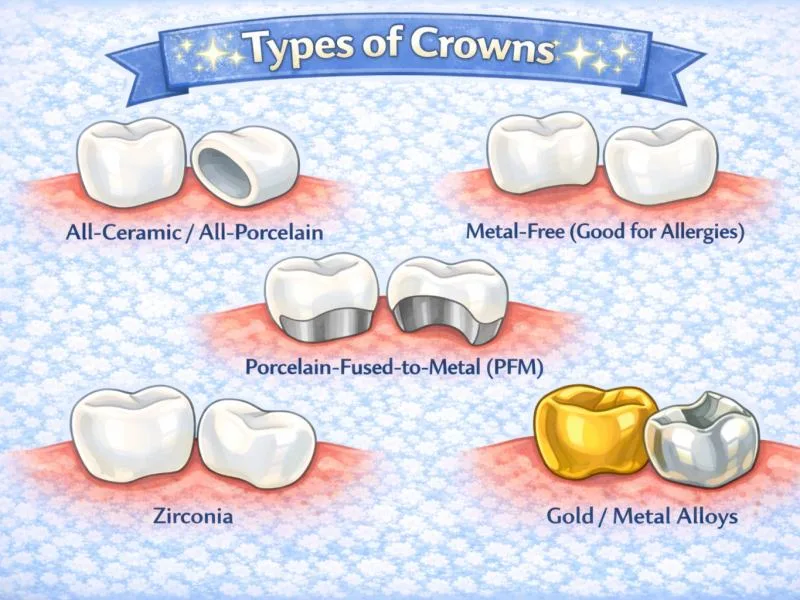
All-Ceramic / All-Porcelain
Best for: Front teeth, visible areas
- Most natural appearance
- Excellent aesthetics
- Metal-free (good for allergies)
- Strong but can chip under heavy force
Porcelain-Fused-to-Metal (PFM)
Best for: Any location
- Metal strength with porcelain appearance
- Durable and aesthetic
- Metal may show at gumline over time
Zirconia
Best for: Any location
- Very strong ceramic material
- Excellent aesthetics
- Metal-free
- Withstands biting forces well
Gold/Metal Alloys
Best for: Back teeth
- Extremely durable
- Gentle on opposing teeth
- Requires less tooth removal
- Visible metal color
Which Is Best?
The right choice depends on:
- Location of the tooth
- Your bite forces
- Aesthetic concerns
- Budget
- Any metal sensitivities
We'll recommend the best option for your situation.
The Crown Procedure
Traditional Process (Two Visits)
Visit 1: Preparation
- Tooth examined and X-rayed
- Anesthesia administered
- Tooth shaped (1-2mm removed all around)
- Impressions taken (digital or traditional)
- Temporary crown placed
- Shade matched for natural appearance
Lab Time: 2-3 weeks (crown made at dental lab)
Visit 2: Placement
- Temporary crown removed
- Permanent crown tried in
- Fit, bite, and color checked
- Adjustments made if needed
- Crown permanently cemented
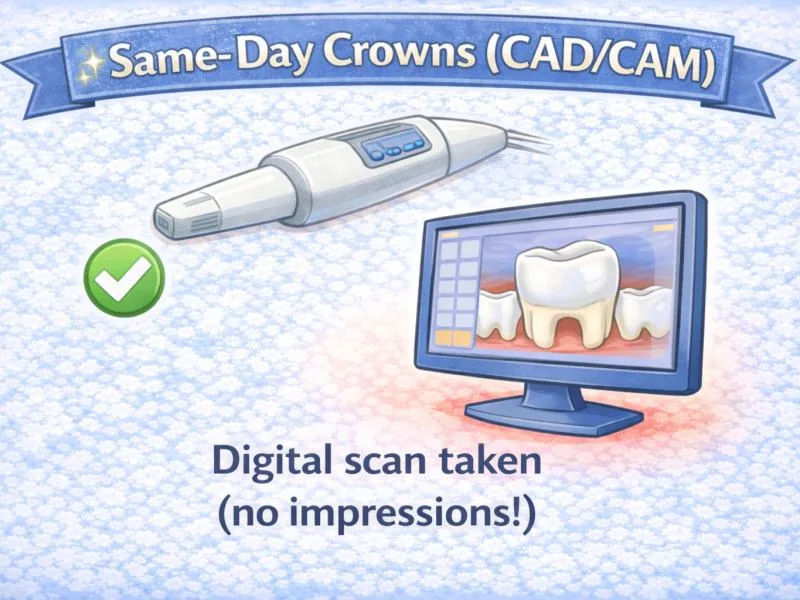
Same-Day Crowns (CAD/CAM)
With our CAD/CAM technology:
- Tooth prepared
- Digital scan taken (no impressions!)
- Crown designed on computer
- Crown milled from ceramic block
- Crown fitted and cemented
Total time: About 2 hours, one visit.
Available at all BluSky Dental locations.
Living with a Crown
The First Few Days
- Some sensitivity (normal, temporary)
- Bite may feel slightly different initially
- Avoid sticky foods for 24 hours (to let cement fully set)
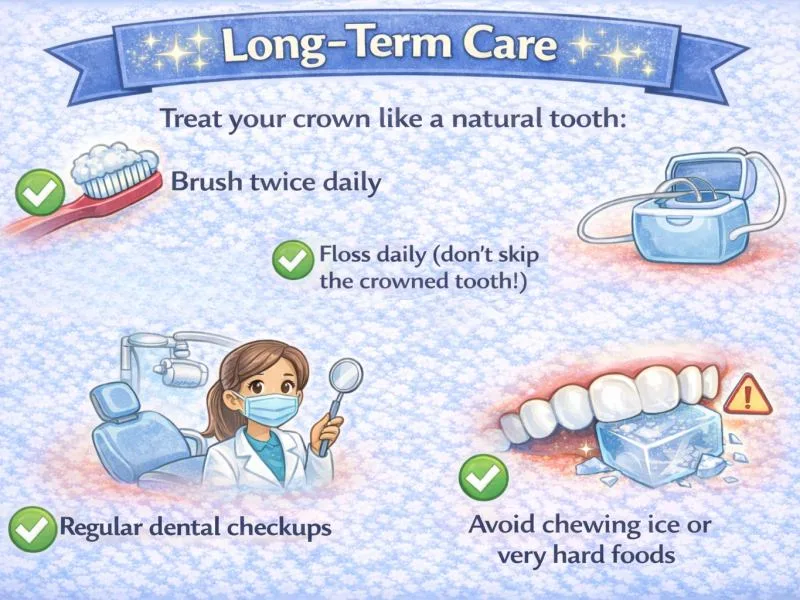
Long-Term Care
Treat your crown like a natural tooth:
- Brush twice daily
- Floss daily (don't skip the crowned tooth!)
- Regular dental checkups
- Avoid chewing ice or very hard foods
How Long Do Crowns Last?
With proper care: 10-15 years or longer
Factors affecting longevity:
- Oral hygiene
- Grinding habits (night guard helps)
- Bite forces
- Crown material
Common Questions
The procedure is done under local anesthesia—you won't feel pain. Some sensitivity afterward is normal and temporary.
Modern crowns match natural teeth excellently. We carefully match shade and shape to your other teeth.
Rarely with proper cementation. If it does, save it and call us—it can often be recemented.
The crown itself can't decay, but the tooth beneath it can if bacteria get under the margins. Good hygiene protects the tooth.
Usually yes. Root canal-treated teeth are more fragile and prone to fracture. A crown provides essential protection.
Call us. Depending on the damage, we may be able to repair it or will need to make a new crown.
Crown Alternatives
Depending on your situation, alternatives might include:
- Large filling – If enough tooth structure remains
- Inlay/onlay – Partial coverage restoration
- Veneer – For front teeth (cosmetic only)
- Extraction – If tooth can't be saved (followed by replacement)
We'll discuss all options and recommend what's best for your tooth.
Cost and Insurance
Crown Cost
Typically: $1,000-$2,500 per crown (varies by type and complexity)
Insurance Coverage
Most dental plans cover crowns at 50% when deemed necessary. Coverage details vary—we verify your benefits.

Why Choose BluSky Dental
Expert Crown Restorations
From traditional lab-made crowns to same-day CAD/CAM crowns, we provide high-quality restorations that look natural and last for years.
- Same-day crown technology available
- Multiple crown material options
- Precise color matching
- Experienced restorative team

Need a Crown?
If you've been told you need a crown—or think you might—schedule a consultation.
At BluSky we BEElieve in bringing life to your smile. 🐝