Wisdom Teeth Removal Recovery
Your complete guide to healing comfortably after wisdom teeth extraction.

← Back to Wisdom Teeth Extraction
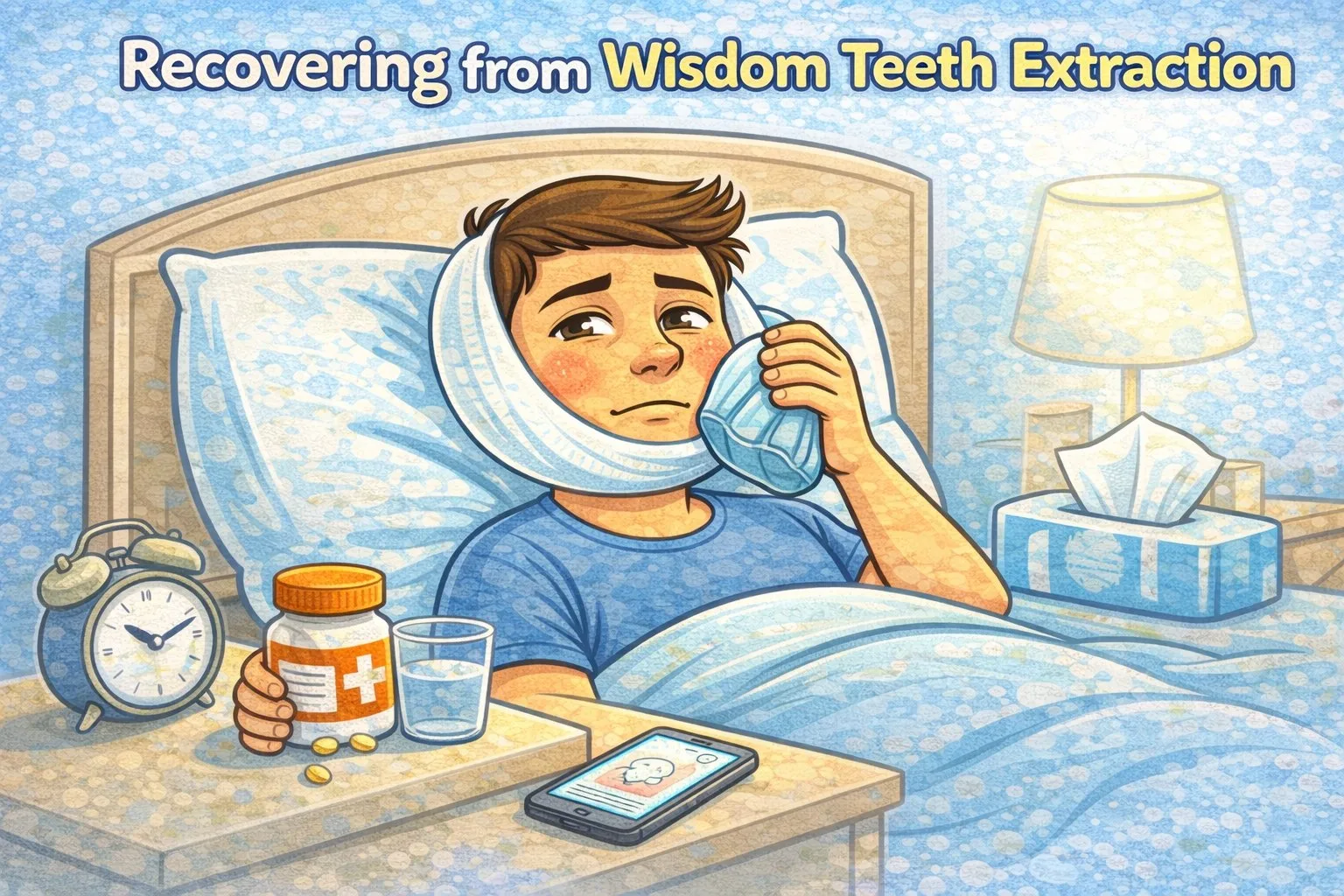
You've had your wisdom teeth removed—now what? Knowing what to expect and how to care for yourself helps ensure a smooth recovery. Here's your complete guide to healing comfortably.
Recovery Timeline
First 24 Hours
What to Expect:
- Bleeding (controlled with gauze)
- Numbness wearing off (2-4 hours)
- Swelling beginning
- Some discomfort as anesthesia fades
What to Do:
- Bite on gauze for 30-45 minutes
- Rest with head elevated
- Apply ice (20 minutes on, 20 off)
- Take prescribed pain medication before numbness wears off
- Eat only soft, cool foods
- No rinsing, spitting, or straws
Days 2-3
What to Expect:
- Peak swelling (usually day 2-3)
- Bruising may appear
- Stiffness in jaw
- Discomfort manageable with medication
What to Do:
- Continue ice packs (first 48 hours)
- Switch to warm compresses after 48 hours
- Begin gentle salt water rinses
- Soft food diet
- Continue pain medication as needed
Days 4-7
What to Expect:
- Swelling decreasing
- Discomfort improving
- Stitches dissolving (if dissolvable)
- Jaw stiffness improving
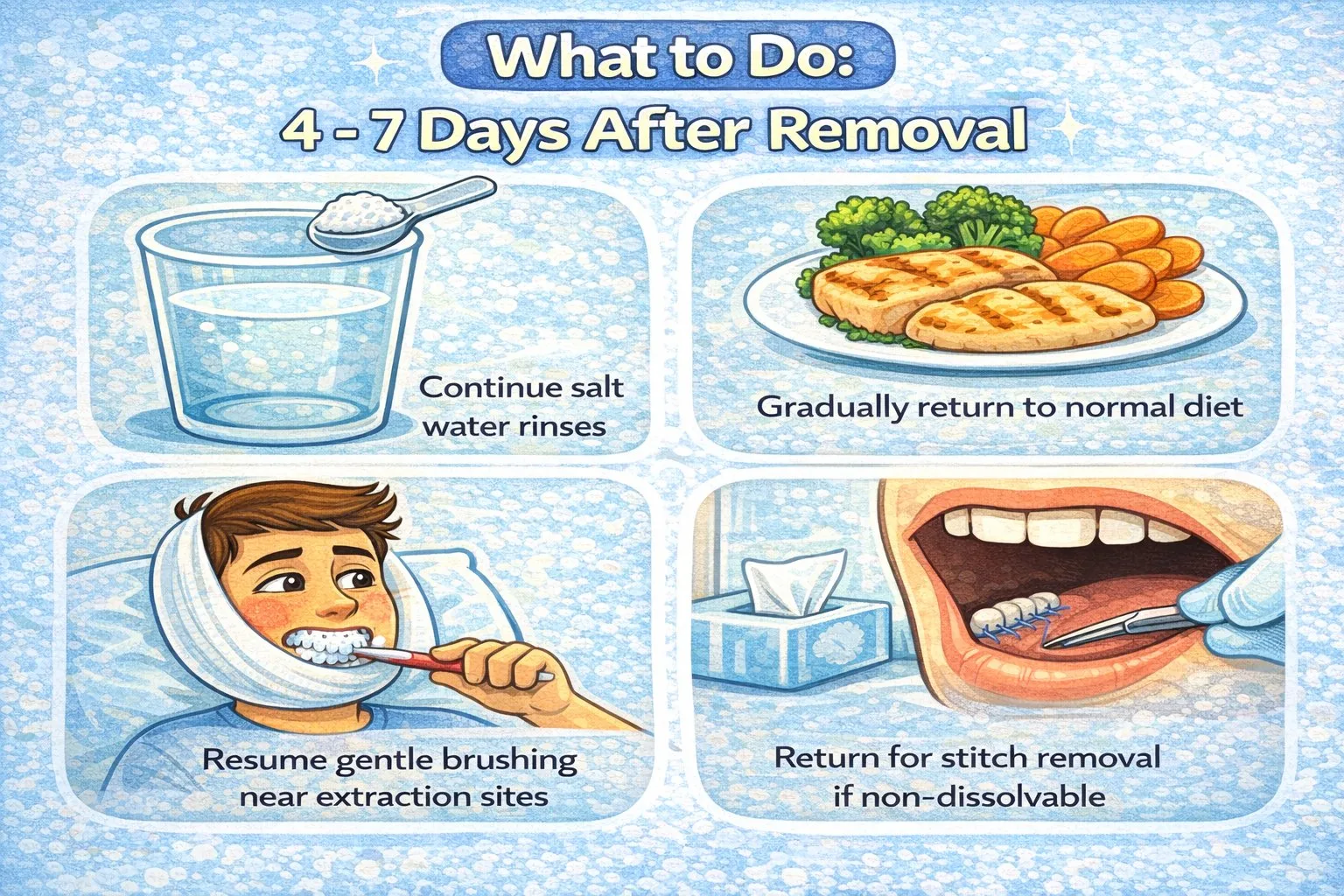
What to Do:
- Continue salt water rinses
- Gradually return to normal diet
- Resume gentle brushing near extraction sites
- Return for stitch removal if non-dissolvable
Week 2
What to Expect:
- Most swelling gone
- Minor discomfort only
- Sockets healing well
- Energy returning to normal
What to Do:
- Resume normal oral hygiene
- Eat normally (still avoid hard foods in sockets)
- Return to normal activities
Week 3-4
What to Expect:
- Sockets mostly closed
- Minimal to no discomfort
- Full healing continuing beneath surface
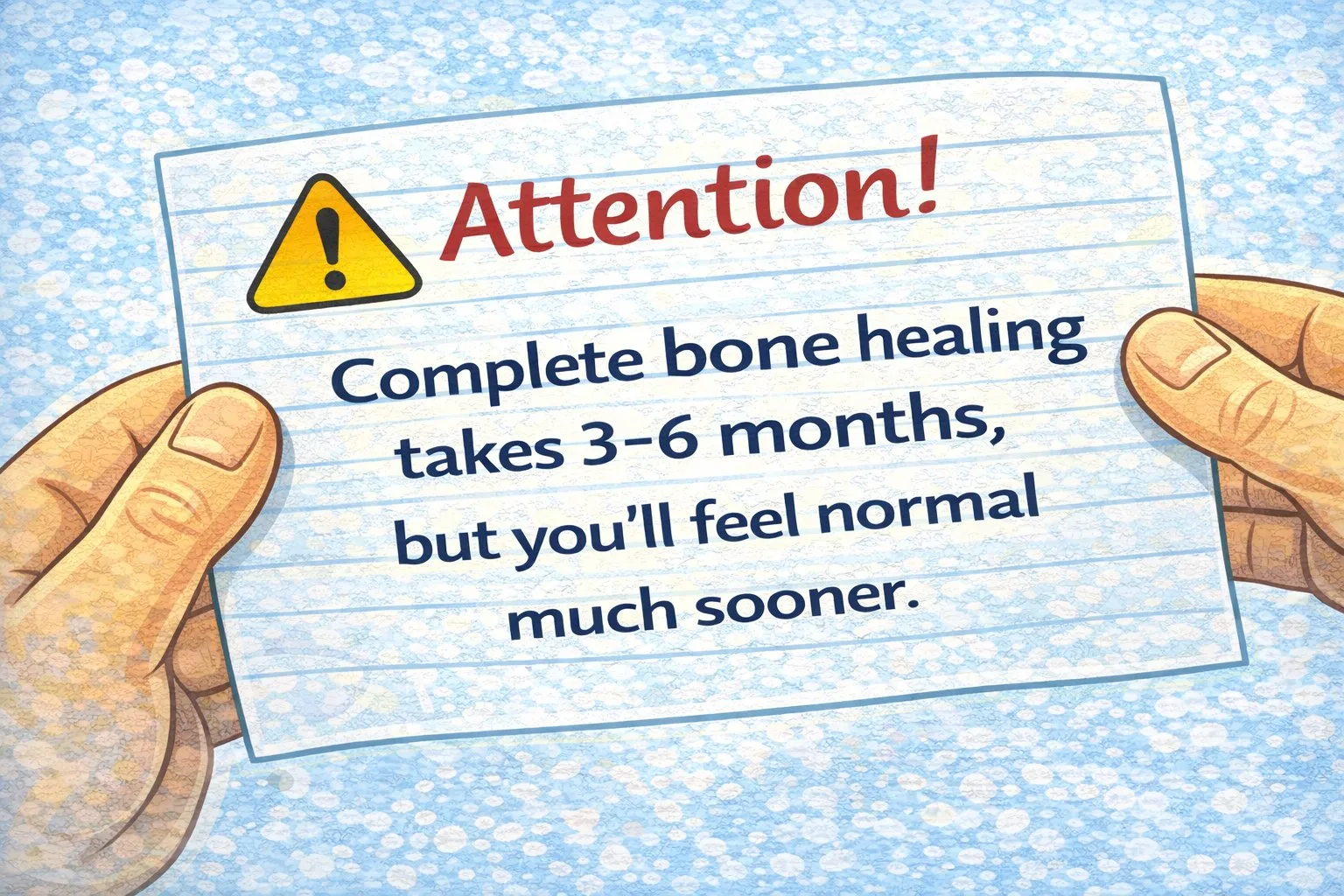
Complete bone healing takes 3-6 months, but you'll feel normal much sooner.
Managing Pain and Discomfort
Medications
Prescription Pain Medication
- Take as directed
- Stay ahead of pain (don't wait until it's severe)
- Take with food to reduce nausea
- Don't drive or operate machinery
Over-the-Counter Options
- Ibuprofen (Advil, Motrin): Reduces pain and swelling
- Acetaminophen (Tylenol): For pain relief
- Can alternate ibuprofen and acetaminophen
Antibiotics (If Prescribed)
- Complete the full course
- Take as directed
- Don't skip doses
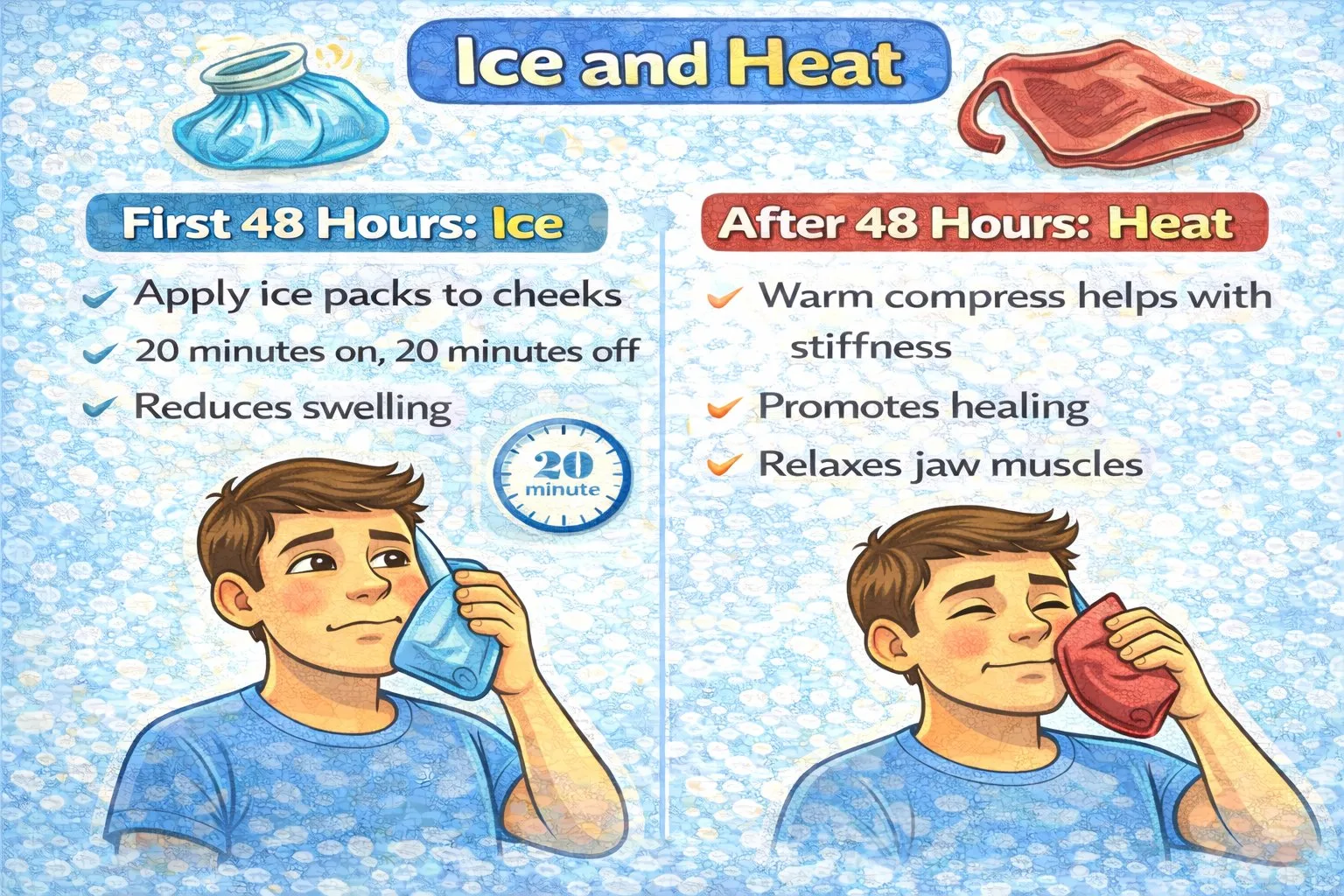
Ice and Heat
First 48 Hours: Ice
- Apply ice packs to cheeks
- 20 minutes on, 20 minutes off
- Reduces swelling
After 48 Hours: Heat
- Warm compress helps with stiffness
- Promotes healing
- Relaxes jaw muscles
What to Eat
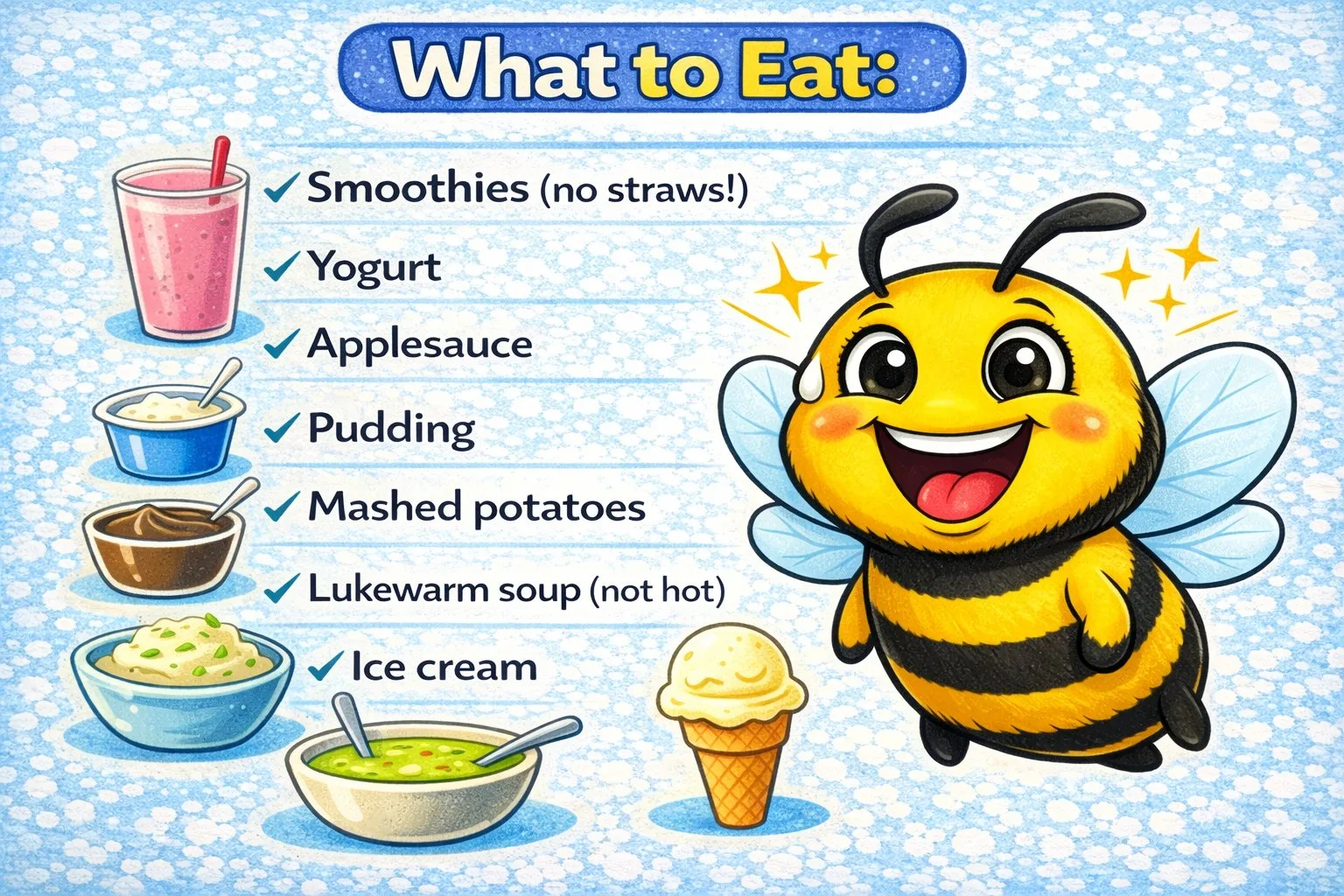
First 24-48 Hours
Stick to:
- Smoothies (no straws!)
- Yogurt
- Applesauce
- Pudding
- Mashed potatoes
- Lukewarm soup (not hot)
- Ice cream
Days 3-7
Add:
- Scrambled eggs
- Oatmeal
- Soft pasta
- Mashed bananas
- Soft fish
- Cooked vegetables
What to Avoid (First Week)
- Hard foods – Chips, nuts, raw vegetables
- Chewy foods – Steak, bread crusts
- Spicy foods – May irritate sockets
- Acidic foods – Citrus, tomatoes
- Hot foods/drinks – Can dissolve blood clot
- Small grains – Rice, quinoa (can get in sockets)
Activity Guidelines
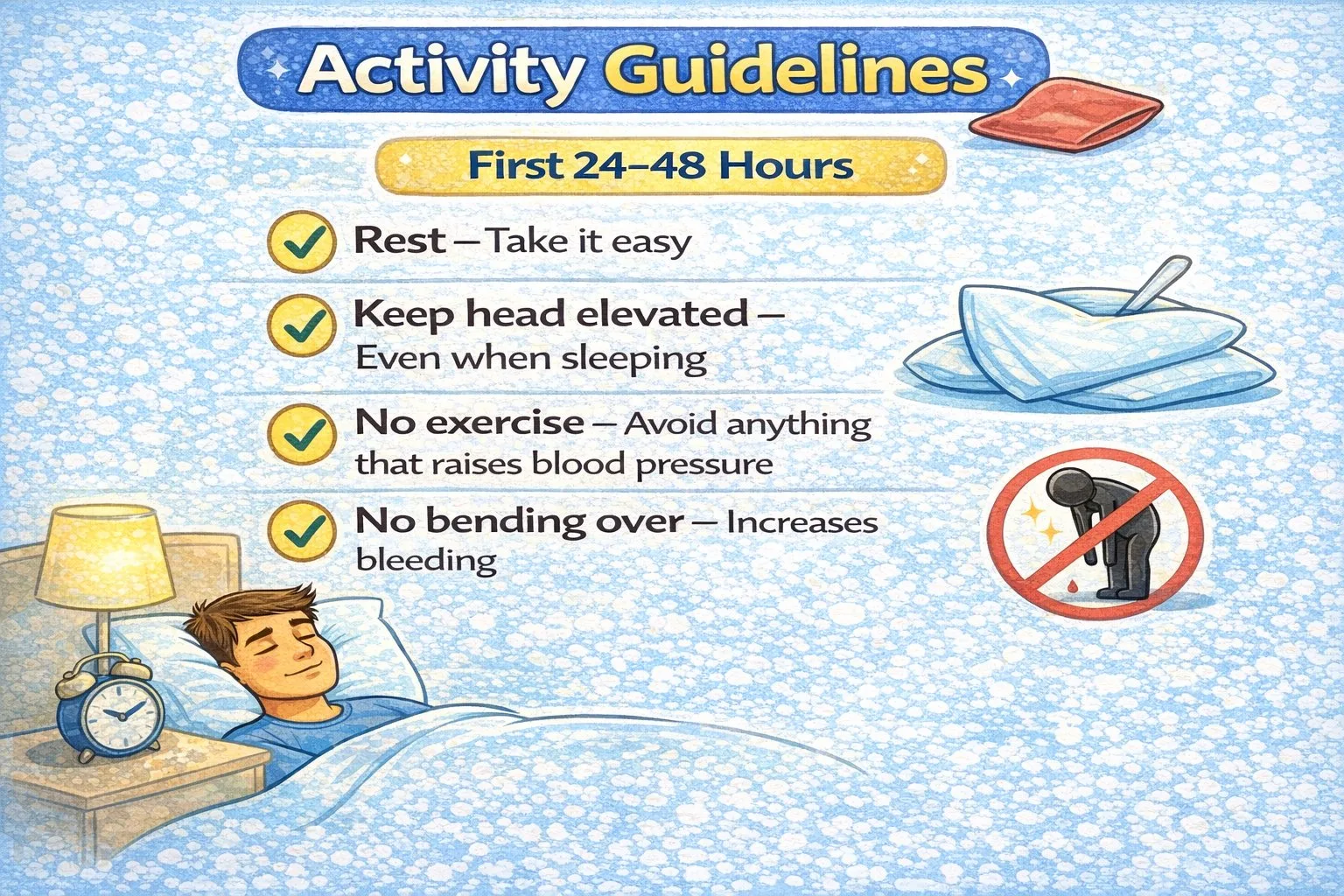
First 24-48 Hours
- Rest – Take it easy
- Keep head elevated – Even when sleeping
- No exercise – Avoid anything that raises blood pressure
- No bending over – Increases bleeding
Days 3-7
- Light activity okay
- No strenuous exercise
- Avoid contact sports
- Listen to your body
After One Week
- Gradually return to normal activities
- Resume exercise when comfortable
- Continue protecting extraction sites
Oral Hygiene During Recovery
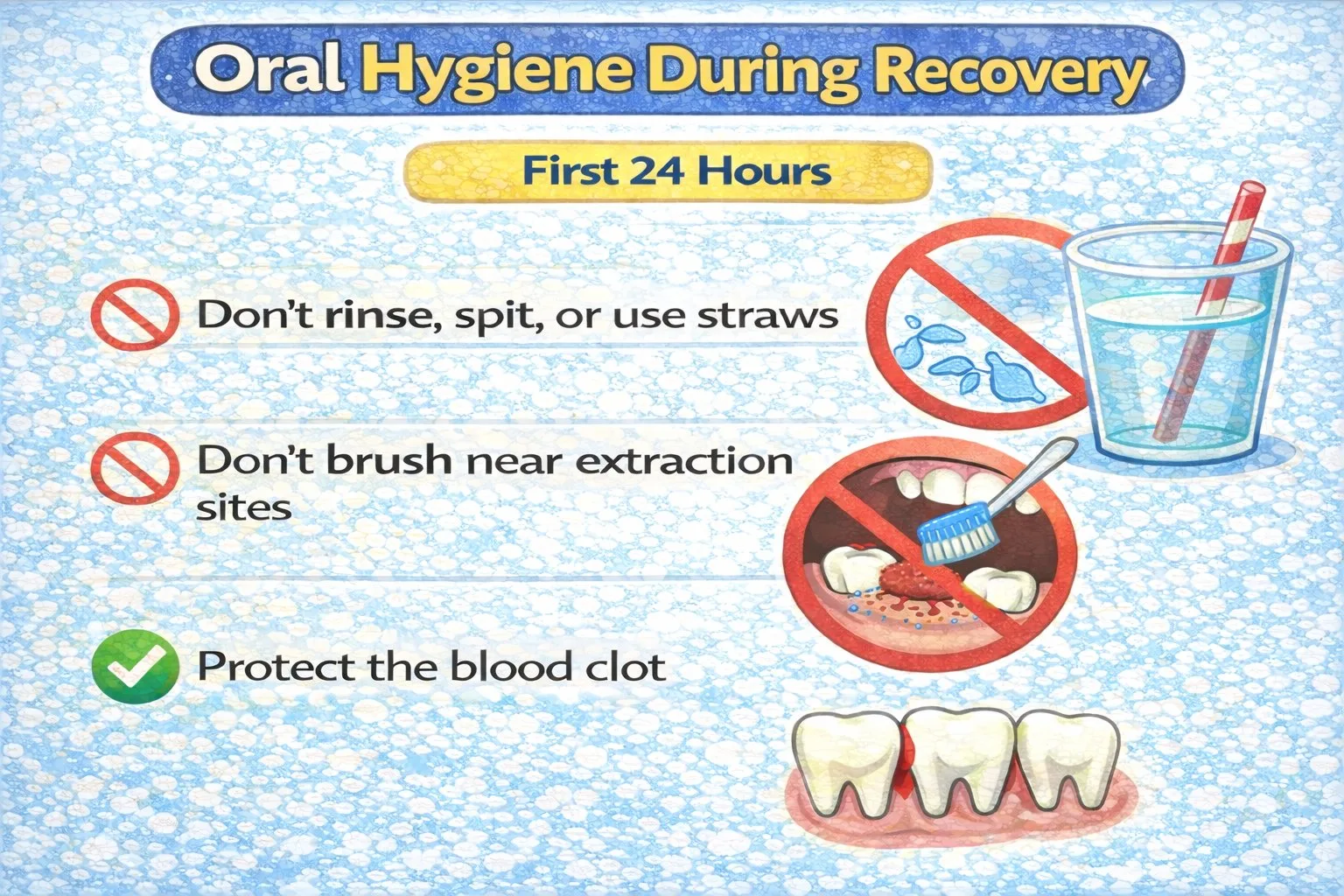
First 24 Hours
- Don't rinse, spit, or use straws
- Don't brush near extraction sites
- Protect the blood clot
After 24 Hours
- Gentle salt water rinses (½ tsp salt in 8 oz warm water)
- Let water fall out of mouth—don't swish vigorously
- Rinse after eating
- Resume brushing other teeth gently
After 3-4 Days
- Brush more normally
- Avoid directly brushing extraction sites
- Continue salt water rinses
Warning Signs: When to Call
Contact us if you experience:
- Severe pain not controlled by medication
- Excessive bleeding that doesn't stop with pressure
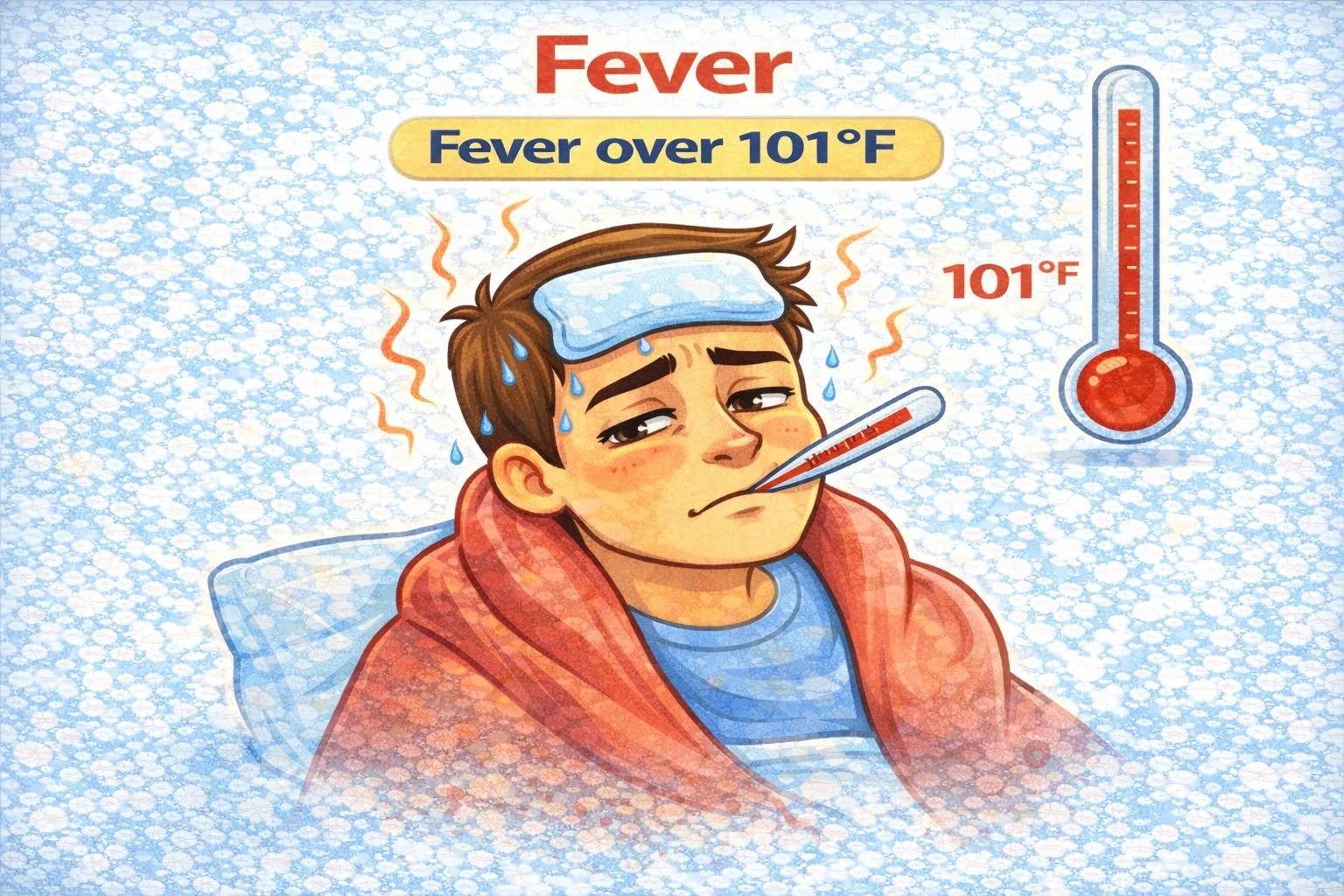
- Fever over 101°F
- Swelling that worsens after day 3
- Difficulty breathing or swallowing
- Numbness lasting more than 24 hours
- Pus or discharge from extraction site
- Dry socket symptoms (see below)
Dry Socket: What to Know
What Is It?
Dry socket occurs when the blood clot dislodges or dissolves before healing is complete, exposing bone.
Symptoms
- Severe pain 2-4 days after extraction
- Pain radiating to ear, eye, or neck
- Visible bone in socket
- Bad breath or unpleasant taste
- Pain not relieved by medication
Risk Factors
- Smoking (biggest risk)
- Using straws
- Spitting forcefully
- Birth control pills
- Poor oral hygiene
- History of dry socket
Treatment
If dry socket occurs:
- Call us promptly
- We'll clean the socket and apply medicated dressing
- Pain relief is usually immediate
- May need several dressing changes
Prevention
- Don't smoke for at least 72 hours (ideally longer)
- Avoid straws for one week
- Don't spit or rinse forcefully
- Follow all post-op instructions
Recovery Tips
Do:
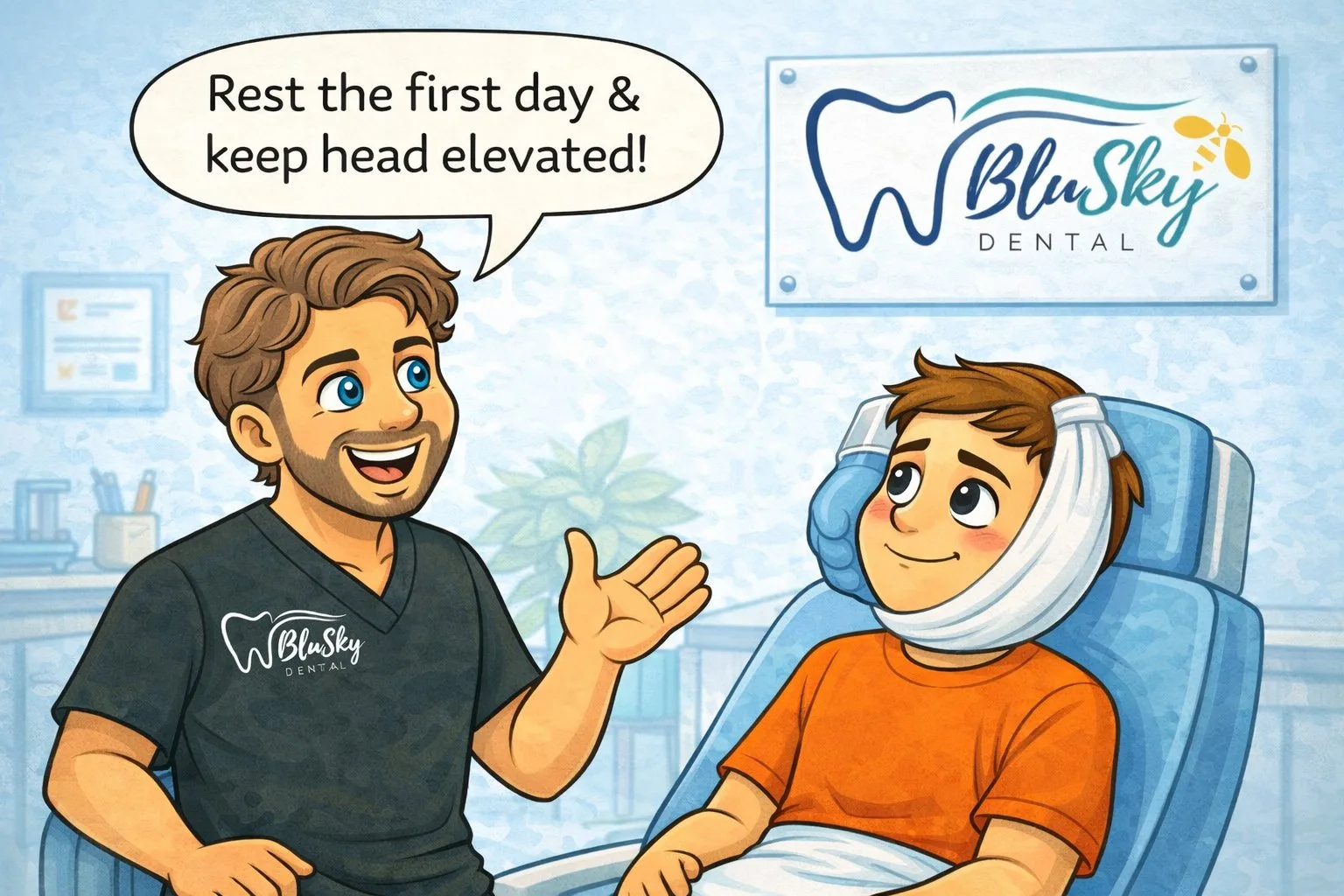
- Rest the first day
- Keep head elevated
- Apply ice for first 48 hours
- Take medications as directed
- Eat soft, nutritious foods
- Stay hydrated
- Rinse gently with salt water (after 24 hours)
Don\'t:
- Smoke or vape
- Use straws
- Spit forcefully
- Touch extraction sites
- Eat hard or crunchy foods
- Skip medications
- Exercise strenuously
Frequently Asked Questions
Most patients return to normal eating within 1-2 weeks. Avoid chewing directly on extraction sites until fully healed.
Many patients return after 2-3 days. Allow extra time if your work is physically demanding.
Yes. Some patients develop bruising on their cheeks or jaw. It resolves within 1-2 weeks.
We strongly recommend waiting at least 72 hours—preferably a full week. Smoking significantly increases dry socket risk.
Questions During Recovery?
We're here to help. Contact us with any concerns.
Call: (613) 728-1511
Address: 20 – 1620 Scott Street, Ottawa, ON K1Y 4S7
At BluSky we BEElieve in bringing life to your smile. 🐝