Myo-Functional Therapy in Ottawa: Orofacial Training at BluSky Dental
Retrain your orofacial muscles for proper function

The way your tongue rests, how you swallow, and whether you breathe through your nose or mouth affects far more than you might realize—including dental health, facial development, sleep quality, and overall wellness. At BluSky Dental Holland Cross, myo-functional therapy retrains your orofacial muscles for proper function, addressing root causes of many common problems.
Serving Westboro, Hintonburg, Wellington West, Little Italy, and Downtown Ottawa with specialized myo-functional therapy services.
What Is Myo-Functional Therapy?
Orofacial myofunctional therapy (OMT), often called myo-functional therapy, is a program of exercises that train the muscles of your face, tongue, and mouth to function correctly. It's like physical therapy for your oral and facial muscles.
The therapy addresses improper habits and muscle patterns that develop over time, including:
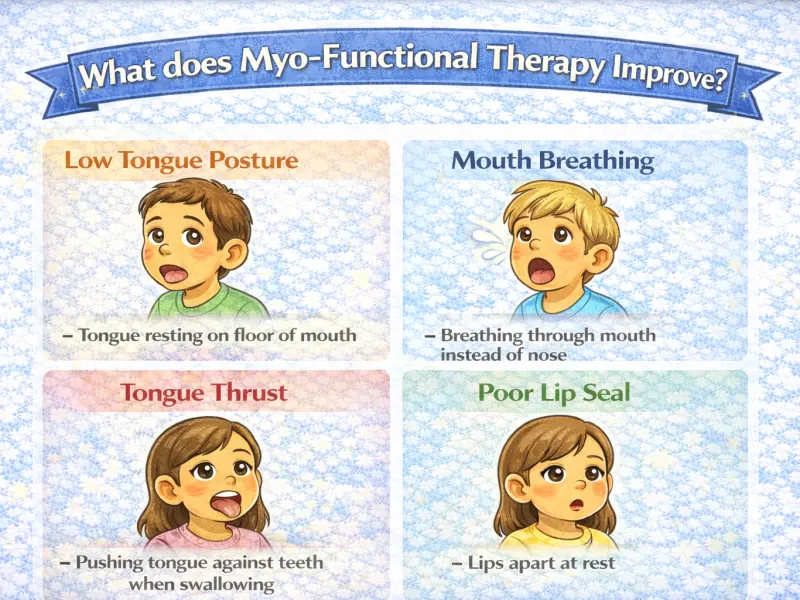
- Low tongue posture - Tongue resting on floor of mouth
- Mouth breathing - Breathing through mouth instead of nose
- Tongue thrust - Pushing tongue against teeth when swallowing
- Poor lip seal - Lips apart at rest
These patterns, though they seem minor, can cause significant problems with dental alignment, facial development, breathing, and sleep.
At our Westboro location, trained therapists guide patients through customized exercise programs that establish proper orofacial function.
Why Tongue Posture Matters
Proper Tongue Posture
When your tongue rests correctly:
- The entire tongue lightly suctions to the roof of your mouth (palate)
- The tip rests just behind your upper front teeth
- The lips are gently closed
- You breathe through your nose
This position:
- Supports proper facial development
- Maintains dental arch width
- Keeps the airway open
- Promotes nasal breathing
Improper Tongue Posture
When the tongue rests low in the mouth:
- The palate doesn't receive proper support
- The dental arch may narrow
- Teeth become crowded
- The airway is more easily blocked
- Mouth breathing becomes habitual
This seemingly small difference has major consequences over time.
Conditions Treated with Myo-Functional Therapy
Tongue Thrust
Tongue thrust is a swallowing pattern where the tongue pushes forward against or between the teeth. This can:
- Push teeth out of alignment
- Create open bites
- Cause orthodontic relapse
- Affect speech sounds (lisping)
Myofunctional therapy establishes correct swallowing pattern.
Mouth Breathing
Chronic mouth breathing:
- Dries oral tissues, increasing cavity risk
- Affects facial development in children
- Reduces nasal nitric oxide benefits
- Contributes to sleep-disordered breathing
Therapy trains nasal breathing as the default pattern.
Learn more about Sleep Apnea →
Sleep-Disordered Breathing
Research shows myofunctional therapy can reduce sleep apnea severity significantly by:
- Strengthening airway muscles
- Establishing tongue posture that opens the airway
- Reducing airway collapse during sleep
It's often used alongside oral appliances for enhanced results.
Learn more about Sleep Apnea Therapy →
TMJ Dysfunction
Improper muscle function can contribute to jaw pain and TMJ problems. Therapy helps:
- Balance facial muscle activity
- Reduce clenching and grinding
- Support proper jaw function
Orthodontic Preparation and Retention
Myofunctional therapy before orthodontics:
- Creates foundation for stable results
- May reduce treatment complexity
After orthodontics:
- Prevents relapse by eliminating forces that moved teeth
- Maintains treatment results long-term
Post-Tongue Tie Release
After tongue tie (frenectomy) procedures, therapy:
- Develops range of motion
- Establishes new movement patterns
- Maximizes surgical benefits
Who Benefits from Myo-Functional Therapy?
Children
Early intervention can:
- Guide proper facial development
- Prevent orthodontic problems
- Establish lifelong healthy habits
- Address speech articulation issues
Learn more about Pediatric Dentistry →
Teens
During growth and development:
- Prepare for orthodontic treatment
- Prevent relapse during retention
- Establish nasal breathing habits
Adults
It's never too late to benefit:
- Adjunct to sleep apnea treatment
- TMJ dysfunction management
- Post-orthodontic stability
- General wellness improvement
The Myo-Functional Therapy Process
Step 1: Comprehensive Evaluation
At our Holland Cross office, we assess:
Current Function
- Tongue posture at rest
- Swallowing pattern
- Breathing pattern (nose vs. mouth)
- Lip competence (seal at rest)
- Muscle tone and strength
Contributing Factors
- Tongue tie or lip tie
- Nasal obstruction
- Allergies
- Sleep issues
- Dental and bite concerns
Goals and Expectations
- Primary concerns
- Treatment objectives
- Commitment to exercises
Step 2: Customized Exercise Program
Based on evaluation, we create your personalized program targeting:
- Tongue posture exercises - Training correct resting position
- Swallowing exercises - Establishing proper pattern
- Breathing exercises - Promoting nasal breathing
- Lip strengthening - Achieving proper lip seal
- Facial muscle exercises - Balancing muscle function
Step 3: Regular Therapy Sessions
Typically weekly or bi-weekly initially:
- Review home exercise progress
- Assess improvement
- Advance to new exercises
- Address challenges
- Maintain motivation
Step 4: Daily Home Practice
Success requires daily commitment:
- 10-15 minutes of exercises
- Multiple brief sessions often work best
- Consistency is key
- Family involvement helps (especially for children)
Step 5: Habit Integration
As exercises become automatic:
- Proper patterns replace old habits
- Sessions become less frequent
- Monitoring continues
- Maintenance exercises as needed
Treatment typically spans 6-12 months for full habit change.
What Does a Therapy Session Look Like?
For Children
- Fun, game-like exercises
- Age-appropriate instruction
- Parent involvement and coaching
- Rewards and motivation systems
- Short attention span accommodated
For Adults
- Professional, efficient sessions
- Clear explanation of rationale
- Progress tracking
- Integration with daily routine
- Troubleshooting challenges
Benefits of Myo-Functional Therapy
Improved Breathing
Nasal breathing becomes natural, providing:
- Better air filtration
- Improved humidification
- Nitric oxide benefits
- Reduced dry mouth
Better Sleep
Proper tongue posture opens the airway:
- Reduced snoring
- Decreased apnea events
- More restful sleep
- Improved daytime energy
Dental Benefits
Proper muscle function supports:
- Stable tooth positions
- Successful orthodontic outcomes
- Reduced grinding/clenching
- Balanced bite forces
Facial Development
In children, proper function promotes:
- Adequate palatal width
- Forward facial growth
- Balanced facial proportions
TMJ Relief
Balanced muscle function can:
- Reduce jaw pain
- Decrease muscle tension
- Support joint health
Why Choose BluSky Dental for Myo-Functional Therapy
Trained Specialists
Our team has specialized training in orofacial myofunctional therapy and understands the connections between oral function and overall health.
Integrated Approach
We address contributing factors—tongue ties, orthodontic issues, sleep problems—as part of comprehensive care.
All Ages Welcome
We work with children, teens, and adults, adapting our approach for each age group.
Collaborative Care
We coordinate with orthodontists, sleep physicians, ENTs, and speech therapists for comprehensive management.

Frequently Asked Questions
Coverage varies. Some medical plans cover it when prescribed for diagnosed conditions like sleep apnea. We help determine your coverage.
Children as young as 4-5 can begin modified programs. The ideal age depends on maturity and cooperation level.
Yes! While it takes commitment, adults successfully establish new patterns. The brain's neuroplasticity allows habit change at any age.
Like any physical training, benefits can diminish without maintenance. We provide strategies for long-term habit retention.
Schedule Your Myo-Functional Evaluation
Proper orofacial function affects more than you realize. At BluSky Dental Holland Cross, myo-functional therapy addresses root causes for lasting improvement. Our Westboro location serves patients of all ages from throughout Ottawa.
Call: (613) 728-1511
Address: 20 – 1620 Scott Street, Ottawa, ON K1Y 4S7
Email: hollandcrossreception@blusky.dental
Hours: Monday – Friday: 8:00 AM – 5:00 PM
At BluSky we BEElieve in bringing life to your smile. 🐝