Inlays and Onlays
Conservative restorations that preserve more natural tooth

When a tooth has too much damage for a filling but not enough for a crown, inlays and onlays offer the perfect middle ground. These custom restorations preserve more natural tooth structure while providing excellent strength and aesthetics.
What Are Inlays and Onlays?
Inlay
An inlay fits within the grooves of a tooth's chewing surface—like a puzzle piece that fills the space between the cusps (the raised points on molars).
Onlay
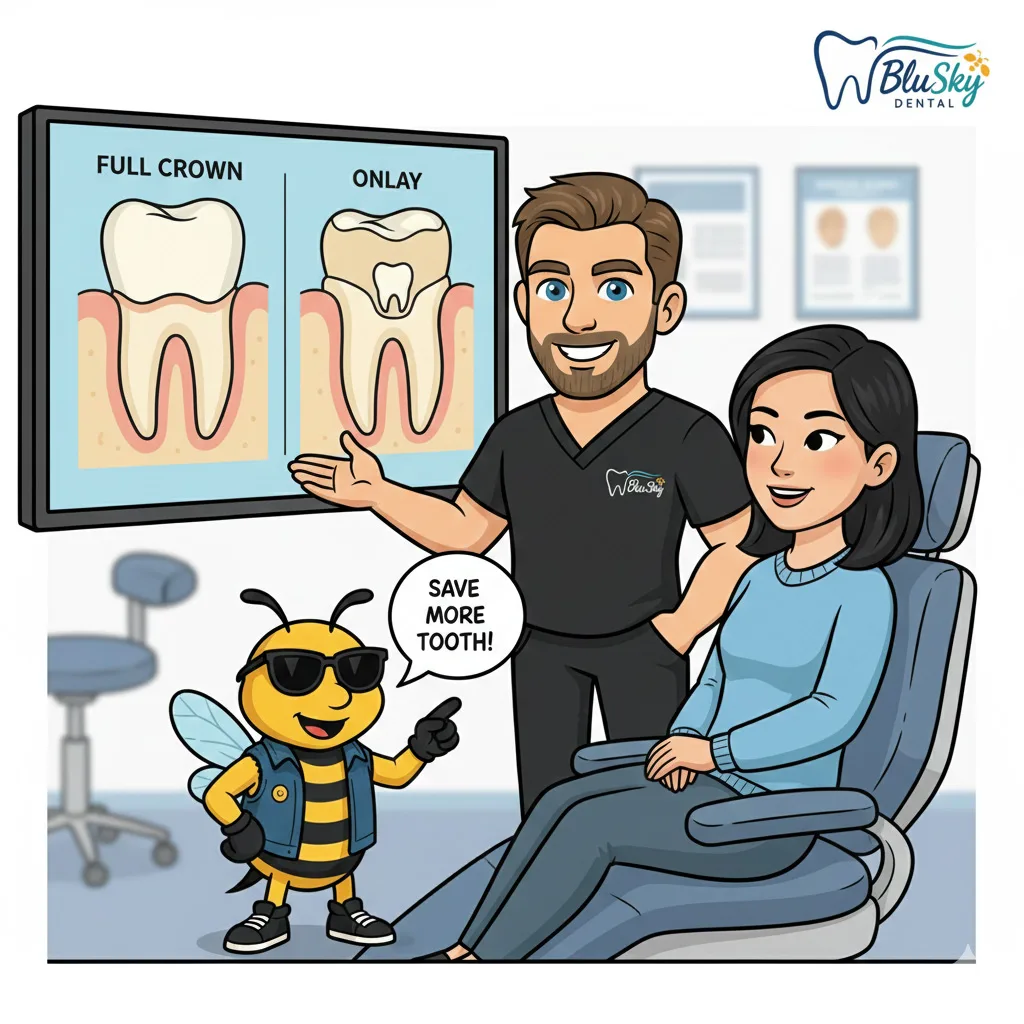
An onlay extends over one or more of the cusps. Sometimes called a "partial crown," it covers a larger area than an inlay but less than a full crown.
How They're Made
Both are fabricated in a dental laboratory (or with CAD/CAM technology) from a precise impression of your tooth, then bonded in place.
Inlays vs. Onlays vs. Crowns vs. Fillings
When to Use What
| Restoration | Damage Level | Coverage |
|---|---|---|
| Filling | Small | Within tooth only |
| Inlay | Moderate | Between cusps |
| Onlay | Moderate-large | Over cusps |
| Crown | Extensive | Entire tooth |
The Conservative Choice
Inlays and onlays require removing less tooth structure than crowns:
- Crown: 60-75% of tooth reduced
- Onlay: Only damaged areas removed
- More natural tooth preserved
This conservative approach is better for long-term tooth health.
When Are They Needed?
Ideal Situations
Large cavities
When decay is too extensive for a filling but cusps are intact or minimally damaged.
Replacing old fillings
Large, failing amalgam fillings are often replaced with inlays or onlays.
Cracked teeth
Cracks that don't extend through the cusps may be restored with onlays.
Fractured cusps
When one or more cusps break, an onlay can restore them.
Worn teeth
Moderate wear from grinding can be restored conservatively.
Materials
Porcelain/Ceramic
- Excellent aesthetics (tooth-colored)
- Strong and durable
- Stain-resistant
- Most popular choice
Composite Resin
- Tooth-colored
- Less expensive than porcelain
- Can be repaired if damaged
- May stain over time
Gold
- Extremely durable
- Gentle on opposing teeth
- Long-lasting
- Visible metal color (not for front teeth)
Zirconia
- Very strong
- Tooth-colored
- Excellent durability
- Good aesthetics
The Procedure
Traditional (Two Visits)
Visit 1:
- Anesthesia administered
- Decay or old filling removed
- Tooth shaped to receive restoration
- Impression taken (digital or traditional)
- Temporary filling placed
- Shade matched
Lab Time: 2-3 weeks
Visit 2:
- Temporary removed
- Inlay/onlay tried in
- Fit and bite checked
- Permanent bonding
- Final polishing
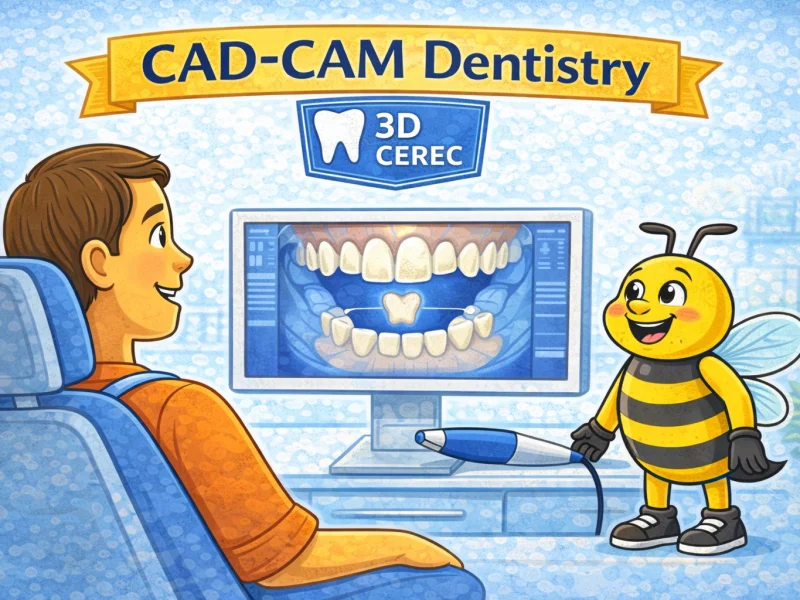
Same-Day (CAD/CAM)
With our technology:
- Tooth prepared
- Digital scan taken
- Restoration designed on computer
- Milled from ceramic block
- Bonded in place
One appointment, about 2 hours.
Advantages
Preserve Natural Tooth
Less drilling = more healthy tooth structure remains. This strengthens the tooth long-term.
Excellent Fit
Lab-fabricated or CAD/CAM milled for precise fit—better than what can be achieved with direct fillings for large restorations.
Durability
Stronger than large fillings. Can last 15-30 years with proper care.
Aesthetics
Tooth-colored materials blend seamlessly with natural teeth.
Strengthen the Tooth
Unlike fillings that can weaken teeth, inlays and onlays actually strengthen the remaining structure.
Stain Resistance
Porcelain and ceramic resist staining better than composite fillings.
Compared to Crowns
| Factor | Inlay/Onlay | Crown |
|---|---|---|
| Tooth removal | Less | More |
| Coverage | Partial | Full |
| Strength | Very good | Excellent |
| When to use | Moderate damage | Extensive damage |
| Cost | Similar | Similar |
| Longevity | 15-30 years | 10-15 years |
When a Crown Is Better
Crowns are preferred when:
- Damage is too extensive
- Tooth structure is severely compromised
- Root canal was performed
- Maximum strength is needed
Cost and Insurance
Typical Cost
Inlays and onlays cost similarly to crowns:
- Inlay: $700-$1,500
- Onlay: $1,000-$2,000
Insurance Coverage
Most plans cover inlays and onlays like other major restorations (typically 50%). We verify your benefits.
Care and Longevity
How Long Do They Last?
With proper care: 15-30 years (often longer than crowns!)
Care Tips
- Brush and floss normally
- Regular dental checkups
- Avoid chewing ice or very hard objects
- Wear a night guard if you grind your teeth
Frequently Asked Questions
No. The procedure is done under local anesthesia. You may have minor sensitivity afterward that resolves quickly.
For large restorations, yes. They're stronger, more durable, and provide better fit than large direct fillings.
They're typically used on back teeth (premolars and molars). Front teeth usually use veneers, bonding, or crowns.
We assess the damage and recommend the most conservative effective option. If an inlay or onlay will work, we prefer it over a crown.
Why Choose BluSky Dental
Conservative, Quality Restorations
When possible, we recommend inlays and onlays to preserve more of your natural tooth while providing excellent results.
- Same-day CAD/CAM technology
- Conservative treatment philosophy
- Quality materials
- Precise, long-lasting results

The Conservative Choice
When possible, we recommend inlays and onlays to preserve more of your natural tooth while providing excellent results.
At BluSky we BEElieve in bringing life to your smile. 🐝