
Crown Lengthening
Expose more tooth structure for restorations or a beautiful smile

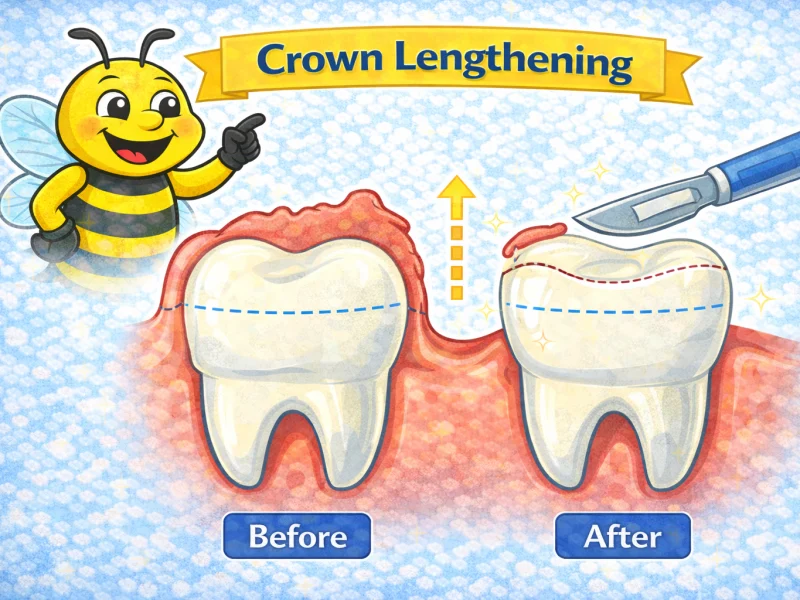
Crown lengthening exposes more of your natural tooth by reshaping gum tissue and sometimes bone. This procedure serves both functional purposes (preparing teeth for restorations) and cosmetic goals (correcting a "gummy" smile).
Two Purposes, One Procedure
Restorative Crown Lengthening
When teeth need more structure exposed for treatment.
If a tooth is:
- Broken below the gumline
- Decayed close to bone level
- Too short for a crown to grip properly
Crown lengthening exposes enough healthy tooth structure for successful restoration.
Cosmetic Crown Lengthening
When gums cover too much of your teeth.
If you have:
- A "gummy" smile
- Teeth that look short or square
- Uneven gumline
- Excess gum tissue hiding your teeth
Crown lengthening reveals more of your natural teeth for a balanced, beautiful smile.
How It Works
The Anatomy
Your teeth are longer than they appear. Gum tissue and bone surround the roots. Crown lengthening removes some of this tissue to reveal more crown (the visible portion of the tooth).
The Procedure
- Anesthesia – Local anesthetic numbs the area
- Incisions – Small incisions in gum tissue
- Tissue removal – Excess gum removed
- Bone reshaping – If needed, small amount of bone contoured
- Suturing – Gums repositioned and secured
- Healing – Tissue heals in new position
Duration: 30-60 minutes for one tooth; longer for multiple teeth
Restorative Applications
Enabling Crowns and Bridges
A crown needs adequate tooth structure to:
- Grip securely
- Create proper seal
- Function long-term
Without enough exposed tooth, crowns fail. Crown lengthening provides the foundation for successful restoration.
After Tooth Fracture
When a tooth breaks at or below the gumline:
- Decay or fracture extends too deep
- Traditional crown can't grip the tooth
- Extraction seems like the only option
Crown lengthening can save the tooth by exposing healthy structure beneath the damage.
Before Other Treatments
Crown lengthening may precede:
- Dental crowns
- Bridges
- Large fillings near the gumline
- Cosmetic veneers (in some cases)
Cosmetic Applications
Correcting a Gummy Smile
A "gummy" smile shows excessive gum tissue when you smile. This can make teeth appear:
- Short or stubby
- Disproportionate to your face
- Less prominent than they should be
Crown lengthening removes excess tissue to reveal your full teeth.
Creating Symmetry
Uneven gumlines can be recontoured for:
- Balanced appearance
- Symmetrical smile
- Proper tooth proportions
The Ideal Result
After cosmetic crown lengthening:
- Teeth appear longer and more proportionate
- Gumline is even and symmetrical
- Smile shows more tooth, less gum
- Results are natural-looking
The Procedure in Detail
Before Surgery
- Consultation and examination
- X-rays to assess bone levels
- Treatment planning
- Discussion of expectations
During Surgery
Anesthesia: Local anesthesia keeps you comfortable. Sedation is available if desired.
Technique:
- Gum tissue carefully reshaped
- Bone contoured if necessary (depends on case)
- Precise attention to aesthetics
- Sutures placed
Comfort: Most patients report minimal discomfort during the procedure.
Recovery
First 1-2 Weeks:
- Some swelling and tenderness (normal)
- Soft food diet
- Avoid disturbing the area
- Pain medication as needed
- Salt water rinses after 24 hours
Weeks 2-4:
- Swelling resolves
- Sutures removed (if non-dissolving)
- Gradual return to normal diet
- Gums begin to heal
Full Healing:
- Gums fully heal in 3-6 months
- Final shape stabilizes
- Ready for crowns or other treatment
Waiting for Restorations
After crown lengthening for restorative purposes, we typically wait 6-8 weeks before placing the final crown. This allows tissue to fully heal and stabilize.
Results
What You Can Expect
Restorative cases:
- Tooth can now support a crown
- Long-term restoration success
- Tooth is saved from extraction
Cosmetic cases:
- More visible tooth structure
- Balanced, symmetrical gumline
- Less gummy appearance
- Natural-looking results
Permanence
Crown lengthening results are permanent. The gum and bone don't grow back, so your new gumline is yours to keep.
Risks and Considerations
Possible Complications
As with any surgery:
- Infection (rare with proper care)
- Bleeding
- Sensitivity (temporary)
- Uneven healing (may need touch-up)
Important Considerations
- Some procedures expose more root, which may increase sensitivity
- Teeth may appear longer than expected
- Final appearance takes months to stabilize
We discuss all considerations before proceeding.
Cost and Insurance
Cost Factors
Costs depend on:
- Number of teeth involved
- Extent of tissue/bone removal
- Restorative vs. cosmetic purpose
Insurance Coverage
- Restorative: Often partially covered as a necessary procedure before restoration
- Cosmetic: Typically not covered (elective)
We verify your benefits and provide estimates.
Frequently Asked Questions
The procedure is done under local anesthesia, so you won't feel pain. Post-operative discomfort is mild and managed with medication.
Most patients return to work in 1-2 days. Full tissue healing takes 3-6 months.
We carefully plan to achieve natural proportions. Before cosmetic cases, we discuss expected outcomes and may show previews.
No. We wait 6-8 weeks for tissue to heal before placing permanent crowns.
Gum contouring removes soft tissue only. Crown lengthening may also reshape bone for more significant changes.
Why Choose BluSky Dental
Expert Periodontal Procedures
Our skilled team performs crown lengthening with precision and artistry, whether you need restorative preparation or cosmetic enhancement.
- Experienced periodontal specialists
- Advanced surgical techniques
- Natural-looking cosmetic results
- Comprehensive follow-up care

Schedule Your Consultation
Whether you need crown lengthening for a restoration or to enhance your smile, we're here to help.
At BluSky we BEElieve in bringing life to your smile. 🐝