Sleep Apnea
Understanding and treating this serious condition

More Than Just Snoring
Sleep apnea is more than just snoring—it's a serious sleep disorder that affects your health, energy, and even your lifespan. At BluSky Dental, we offer effective oral appliance therapy as an alternative to CPAP for many patients.
What Is Sleep Apnea?
Obstructive Sleep Apnea (OSA)
The most common type. During sleep:
- Throat muscles relax
- Airway collapses or becomes blocked
- Breathing stops (apnea event)
- Oxygen levels drop
- Brain wakes you briefly to restart breathing
- Cycle repeats—sometimes hundreds of times per night
You may not remember waking, but your sleep is severely fragmented.
Central Sleep Apnea
Less common. The brain doesn't properly signal breathing muscles. This type requires different treatment approaches.
Severity Levels
Sleep apnea is measured by AHI (Apnea-Hypopnea Index)—events per hour:
| AHI | Severity |
|---|---|
| 5-15 | Mild |
| 15-30 | Moderate |
| 30+ | Severe |
Even mild sleep apnea has health consequences.
Warning Signs and Symptoms
Nighttime Symptoms
- Loud snoring (often heard by partner)
- Gasping or choking during sleep
- Witnessed pauses in breathing
- Restless sleep
- Frequent urination at night
- Night sweats
Daytime Symptoms
- Excessive sleepiness despite adequate sleep time
- Morning headaches
- Difficulty concentrating
- Memory problems
- Irritability or mood changes
- Dry mouth upon waking
- Fatigue that never goes away
Long-Term Effects
Untreated sleep apnea increases risk of:
- Heart disease – 2-4x higher risk
- Stroke – Significantly elevated risk
- High blood pressure – Often resistant to medication
- Type 2 diabetes – Metabolic effects
- Depression – From chronic sleep deprivation
- Accidents – Drowsy driving, workplace injuries
Who's at Risk?
Common Risk Factors
- Excess weight – Fat deposits around airway
- Neck circumference – Larger necks = narrower airways
- Age – More common over 40
- Male gender – Men are 2-3x more likely
- Family history – Genetic component
- Alcohol/sedatives – Relax throat muscles
- Smoking – Increases inflammation and fluid retention
- Nasal congestion – Any cause of restricted nasal breathing
Often Undiagnosed
An estimated 80% of moderate-severe sleep apnea cases are undiagnosed. Many people don't realize their symptoms aren't normal.
Getting Diagnosed
Sleep Study
Diagnosis requires a sleep study (polysomnography):
- In-lab study – Monitored overnight in sleep center
- Home sleep test – Simplified test done at home
The study measures breathing patterns, oxygen levels, heart rate, brain activity (in-lab), and body movements.
Our Role
We can:
- Screen for sleep apnea risk
- Refer you for sleep testing
- Coordinate with sleep physicians
- Provide treatment once diagnosed
Treatment Options
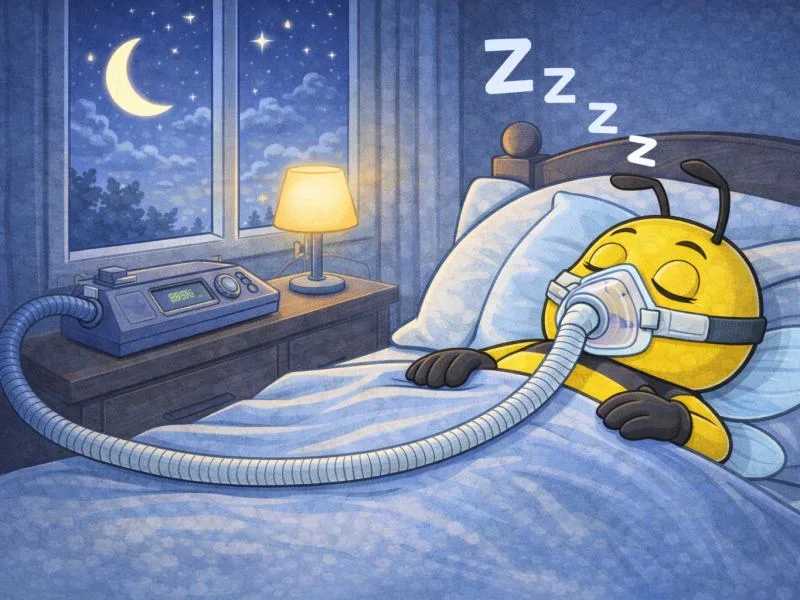
CPAP (Continuous Positive Airway Pressure)
The gold standard for moderate-severe apnea:
- Machine delivers pressurized air through mask
- Keeps airway open during sleep
- Very effective when used consistently
Challenges:
- Many patients find masks uncomfortable
- Compliance rates are often low (30-50%)
- Noise, dry air, claustrophobia issues
- Difficult for travel
Oral Appliance Therapy
A dental solution for mild-moderate apnea (or CPAP intolerance):
- Custom-fitted device worn during sleep
- Moves lower jaw forward
- Opens airway behind tongue
- Comfortable and silent
Advantages:
- More comfortable than CPAP for many
- Higher compliance rates
- Easy travel
- No electricity needed
- Silent operation
Combination Therapy
Some patients benefit from both:
- Lower CPAP pressure + oral appliance
- Improved comfort and compliance
Surgery
For select cases:
- Tissue removal (UPPP)
- Jaw advancement surgery
- Nasal surgery
- Hypoglossal nerve stimulation
Lifestyle Modifications
Supportive measures:
- Weight loss
- Positional therapy (sleeping on side)
- Avoiding alcohol before bed
- Treating nasal congestion
- Quit smoking
Our Approach at BluSky Dental
Screening
We screen patients for sleep apnea during regular visits:
- Epworth Sleepiness Scale questionnaire
- Risk factor assessment
- Partner observations
Coordination
We work with sleep physicians:
- Refer for sleep testing
- Receive diagnosis and prescription
- Provide oral appliance therapy
- Share follow-up results
Treatment
If oral appliance therapy is appropriate:
- Digital impressions of your teeth
- Custom appliance fabrication
- Fitting and adjustment
- Titration (finding optimal jaw position)
- Follow-up sleep study to verify effectiveness
- Ongoing monitoring
McCarthy Location Specialty: Our McCarthy location specializes in dental sleep medicine with advanced training and experience.
Is an Oral Appliance Right for You?
Good Candidates
- Mild to moderate obstructive sleep apnea
- Primary snoring
- CPAP intolerance
- Preference for non-machine option
- Travel frequently
May Need CPAP
- Severe sleep apnea
- Central sleep apnea
- Insufficient teeth for appliance retention
- Significant jaw joint problems
We'll help determine the best option for your situation.
Living with Sleep Apnea
With Treatment
Patients report:
- Dramatically improved energy
- Better concentration and memory
- Improved mood
- Reduced health risks
- Better relationships (partner sleeps better too!)
Compliance Is Key
Any treatment only works if you use it. Oral appliances typically have higher compliance than CPAP because they're more comfortable for many patients.
Frequently Asked Questions
Many medical insurance plans cover oral appliance therapy for diagnosed sleep apnea. We help verify benefits and provide documentation.
A sleep study is required for diagnosis. We can screen you and refer you for testing.
It may improve with significant weight loss or treating underlying causes, but most patients need ongoing treatment.
Yes. Untreated sleep apnea significantly increases risk of heart attack, stroke, and accidents. It's a serious health condition.
Breathe Better. Sleep Better.
Take Sleep Apnea Seriously
Don't ignore the signs. Schedule a consultation to discuss your sleep concerns. Our McCarthy location specializes in dental sleep medicine.
Ready to Sleep Better?
Schedule a consultation to discuss your sleep concerns and explore treatment options.
At BluSky we BEElieve in bringing life to your smile. 🐝