Periodontitis: Stop Advanced Gum Disease Before Tooth Loss
Periodontitis is serious gum infection that, left untreated, destroys the bone supporting your teeth and leads to tooth loss. We provide comprehensive periodontal therapy to stop disease progression and save your teeth.

What Is Periodontitis?
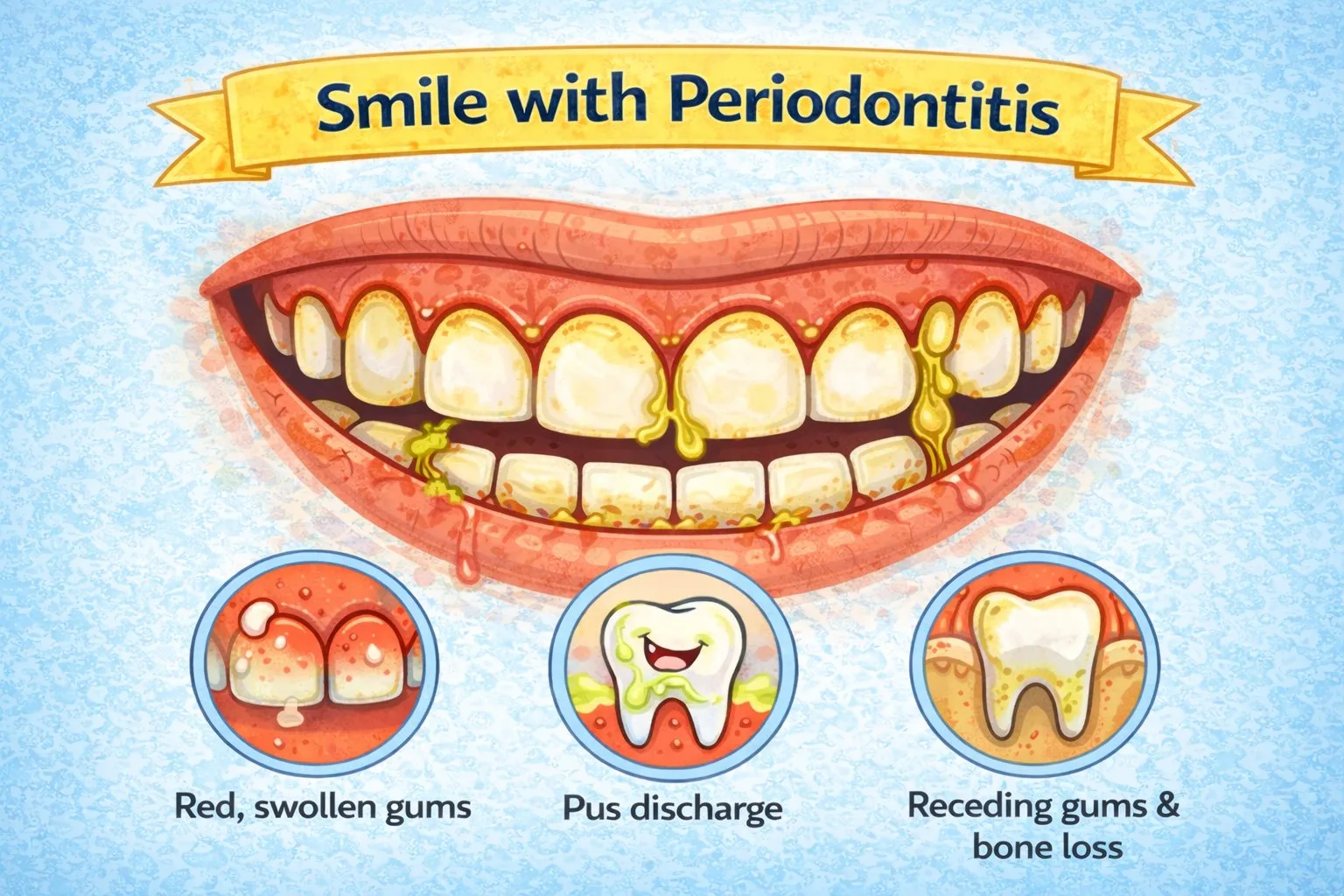
Periodontitis is advanced gum disease that occurs when gingivitis goes untreated. The infection spreads below the gum line, forming pockets between teeth and gums that fill with bacteria. Your body's immune response, combined with bacterial toxins, begins destroying the bone and connective tissue that hold teeth in place.
Without treatment, teeth become loose and may eventually fall out or require extraction.
The sooner you get treatment, the better the outcome. While the damage from periodontitis is permanent, we can stop it from getting worse and often restore significant function.
Periodontitis vs. Gingivitis
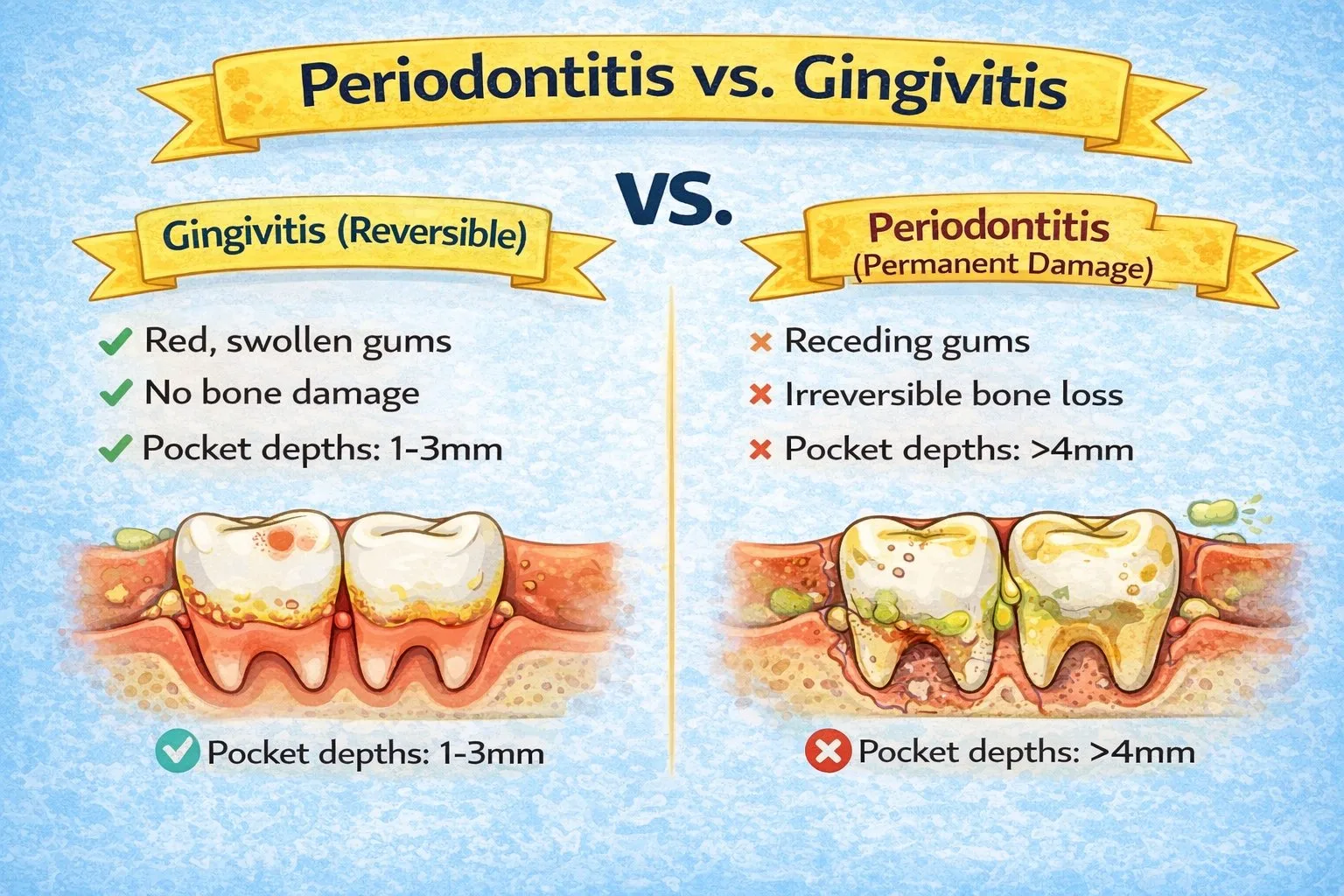
Gingivitis (Reversible)
- Affects only gums
- Causes redness, swelling, bleeding
- No bone damage
- Completely reversible with treatment
- Pocket depths: 1-3mm
Periodontitis (Permanent Damage)
- Affects gums, bone, and supporting tissues
- Gums pull away from teeth
- Bone loss occurs
- Teeth may become loose
- Damage is permanent (but progression can be stopped)
- Pocket depths: 4mm+
Signs and Symptoms
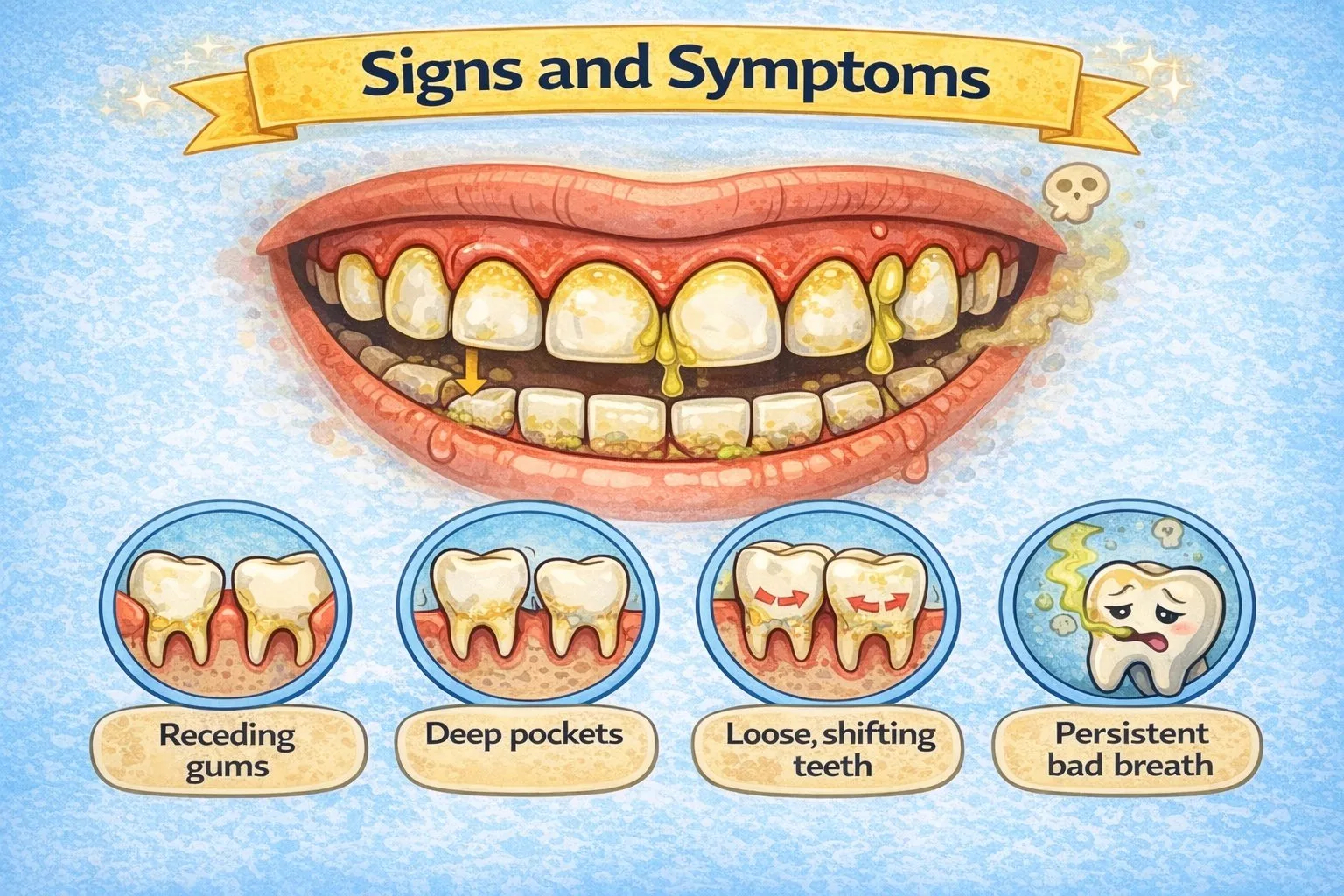
Watch for these warning signs of periodontitis:
- Gums pulling away from teeth (receding gums)
- Deep pockets between teeth and gums
- Loose or shifting teeth
- Changes in your bite or how teeth fit together
- Persistent bad breath that won't improve
- Pus between teeth and gums
- Painful chewing
- Bleeding gums when brushing or flossing
- Swollen, red, or tender gums
- New gaps forming between teeth ("black triangles")
Stages of Periodontitis
Early Periodontitis
- Pockets 4-5mm deep
- Early bone loss visible on X-rays
- Some gum recession
- Teeth still firmly in place
Moderate Periodontitis
- Pockets 6-7mm deep
- Moderate bone loss
- Increased gum recession
- Beginning tooth mobility
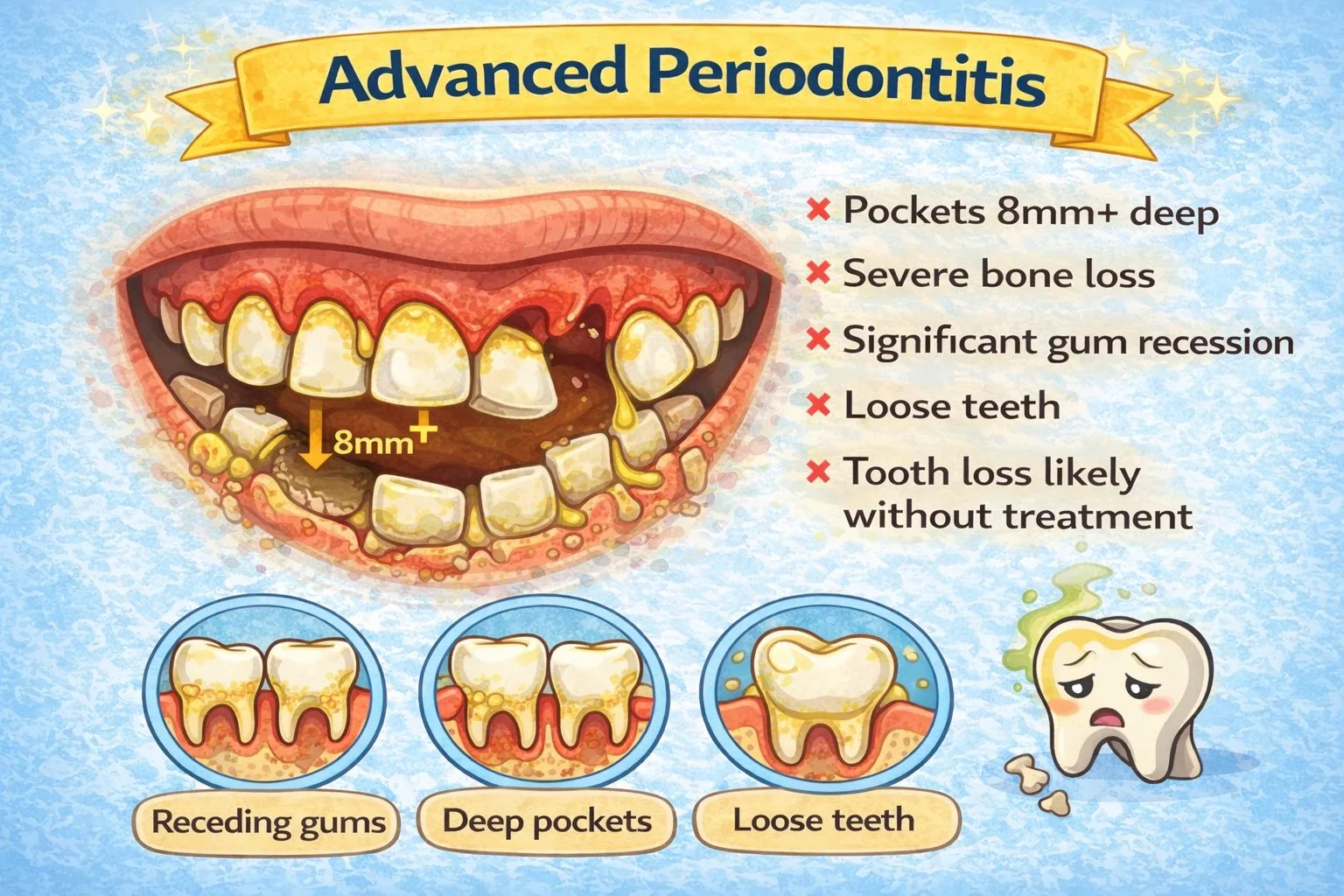
Advanced Periodontitis
- Pockets 8mm+ deep
- Severe bone loss
- Significant gum recession
- Loose teeth
- Tooth loss likely without treatment
What Causes Periodontitis?
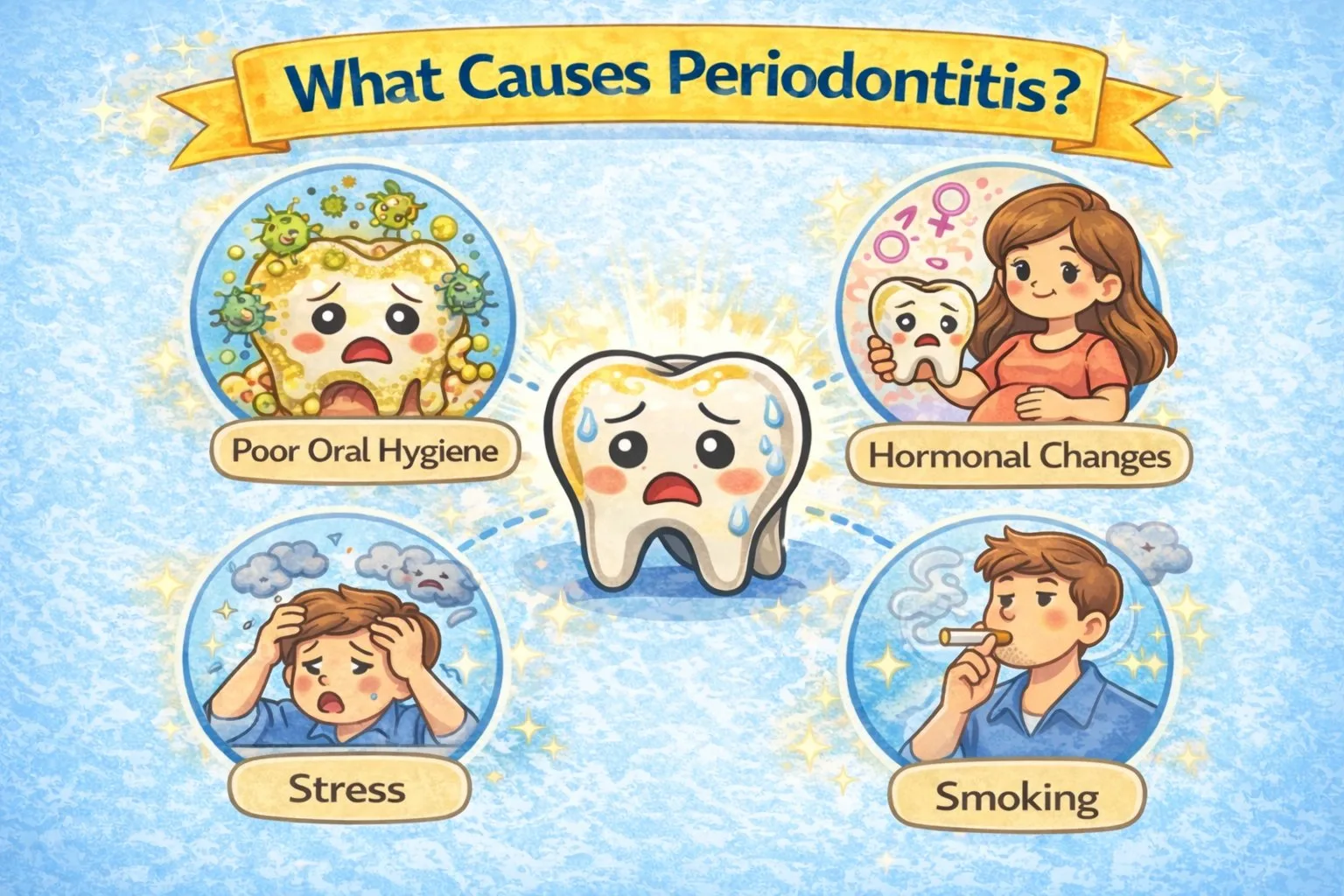
The primary cause is untreated gingivitis that progresses. Risk factors include:
- Poor oral hygiene - allows plaque buildup
- Smoking - most significant risk factor
- Genetics - family history increases risk
- Diabetes - impairs healing and immune response
- Hormonal changes - pregnancy, menopause
- Certain medications - that reduce saliva flow
- Stress - reduces immune function
- Poor nutrition - especially vitamin C deficiency
- Obesity
- Age - risk increases with age
How We Diagnose Periodontitis
Periodontal Examination
- Pocket depth measurement - depths of 4mm+ indicate disease
- Gum recession assessment
- Tooth mobility testing
- Bleeding evaluation
Digital X-Rays
Reveal bone loss around tooth roots—key indicator of periodontitis.
Oral Bacteria Testing
Identifies specific bacteria causing infection for targeted treatment.
Treatment for Periodontitis
Treatment depends on disease severity:
Non-Surgical Treatment
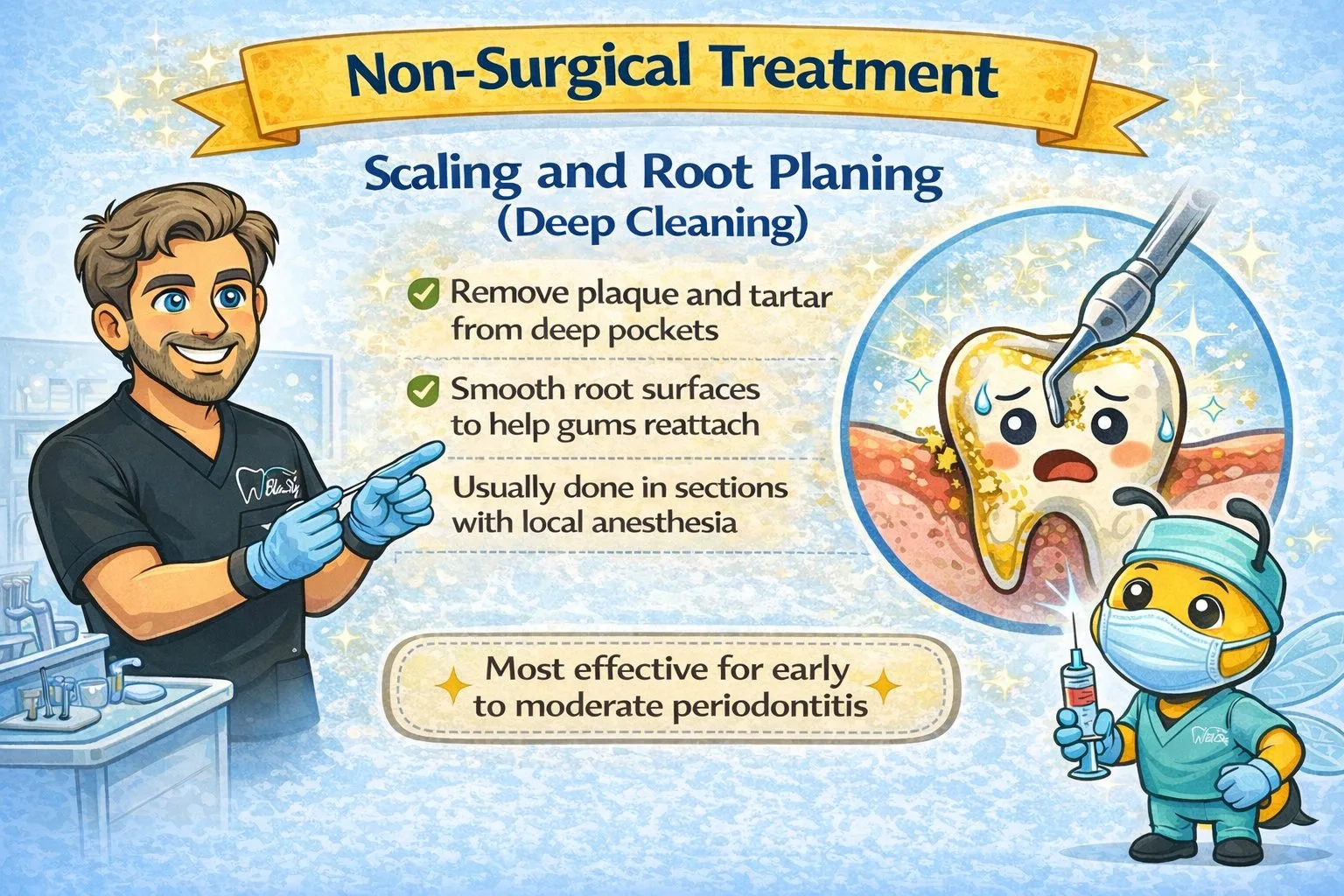
Scaling and Root Planing (Deep Cleaning):
- Remove plaque and tartar from deep pockets
- Smooth root surfaces to help gums reattach
- Usually done in sections with local anesthesia
- Most effective for early to moderate periodontitis
Learn more about Periodontal Care →
Surgical Treatment
For advanced periodontitis or when non-surgical treatment isn't sufficient:
Gum Grafts: Covers exposed roots from recession, reduces sensitivity, improves appearance.
Bone Grafts: Regenerates bone destroyed by periodontitis, stabilizes teeth.
Maintenance Therapy
After active treatment, periodontal maintenance cleanings every 3-4 months are essential to prevent disease recurrence.
Preventing Periodontitis
- Brush twice daily for 2 minutes with soft-bristled brush
- Floss daily - essential for gum health
- Regular dental visits every 6 months (or more if at risk)
- Don't smoke - single most important thing you can do
- Eat balanced diet rich in vitamins
- Manage health conditions like diabetes
- Address teeth grinding
Periodontitis and Overall Health
Research links periodontitis to:
- Heart disease and stroke - bacteria may enter bloodstream
- Diabetes complications - harder to control blood sugar
- Respiratory infections - bacteria breathed into lungs
- Pregnancy complications - premature birth, low birth weight
- Rheumatoid arthritis - may worsen symptoms
Treating gum disease protects your overall health.
Stop Periodontitis Before Tooth Loss
Why Choose BluSky for Periodontitis Treatment?
- Comprehensive non-surgical and surgical options
- Advanced diagnostic technology
- Experienced periodontal team
- Gentle, comfortable care
- Personalized treatment plans
- Sedation options available

Frequently Asked Questions About Periodontitis
Periodontitis cannot be completely reversed, but it can be successfully controlled and managed. While bone and tissue loss is permanent, treatment stops disease progression, reduces pocket depths, and often saves teeth. The key is getting treatment promptly and maintaining excellent home care plus regular periodontal maintenance visits.
Gingivitis is early-stage gum disease affecting only gums, which is completely reversible. Periodontitis is advanced gum disease that has damaged bone and supporting tissues, creating deep pockets. This damage is permanent, though progression can be stopped with treatment.
Not necessarily. With prompt, appropriate treatment and good home care, most people can keep their natural teeth for life despite having had periodontitis. However, untreated periodontitis is the leading cause of tooth loss in adults.
Initial scaling and root planing typically requires 2-4 visits over several weeks. Healing takes 4-6 weeks. Surgical procedures, if needed, add additional time. After active treatment, you'll need periodontal maintenance cleanings every 3-4 months indefinitely.
Schedule Your Periodontal Evaluation
Don't wait for periodontitis to cause tooth loss. Contact BluSky Dental Holland Cross for expert periodontal care.
Call: (613) 728-1511
Address: 20 – 1620 Scott Street, Ottawa, ON K1Y 4S7
Email: hollandcrossreception@blusky.dental
Hours: Monday – Friday: 8:00 AM – 5:00 PM
At BluSky we BEElieve in bringing life to your smile. 🐝