Oral Cancer: Know the Signs
Early detection saves lives.

Every Exam Includes Oral Cancer Screening
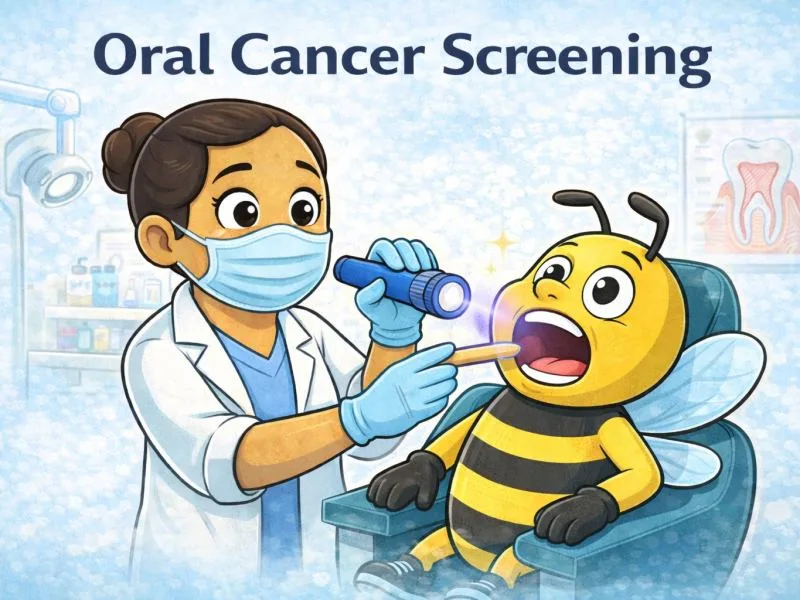
Oral cancer claims thousands of lives each year—but when detected early, survival rates are significantly higher. At BluSky Dental, every dental exam includes oral cancer screening. Knowing the signs yourself adds another layer of protection.
What Is Oral Cancer?
Oral cancer refers to cancers developing in:
- Lips
- Tongue
- Cheeks (inner lining)
- Floor of mouth (under tongue)
- Roof of mouth (hard and soft palate)
- Gums
- Tonsils
- Back of throat (oropharynx)
Warning Signs to Watch For
Visual Signs
- White patches (leukoplakia) that don't wipe off
- Red patches (erythroplakia)
- Red and white mixed patches
- Sore that doesn't heal within 2 weeks
- Lump or thickening in cheek or neck
- Unusual growth anywhere in mouth
Physical Symptoms
- Persistent mouth pain
- Difficulty swallowing or feeling something stuck
- Difficulty chewing or moving jaw/tongue
- Numbness in tongue, lip, or mouth area
- Loose teeth without obvious cause
- Dentures that no longer fit
- Ear pain without hearing loss
- Chronic sore throat or hoarseness
- Unexplained weight loss
Important Timeline
Any sore, lump, or unusual patch that doesn't heal within 2 weeks should be evaluated.
Most oral changes are NOT cancer, but only examination can determine this.
Risk Factors
Major Risk Factors
Tobacco Use
- Smoking (cigarettes, cigars, pipes)
- Chewing tobacco
- Snuff
- Risk increases with amount and duration
Alcohol Use
- Heavy drinking significantly increases risk
- Combined with tobacco, risk multiplies dramatically
HPV (Human Papillomavirus)
- HPV-related oral cancers are increasing
- Particularly affects younger, non-smoking individuals
- HPV vaccination can help prevent
Sun Exposure
- Risk factor for lip cancer
- Use lip balm with SPF
Other Risk Factors
- Previous oral cancer
- Family history
- Poor nutrition
- Weakened immune system
- Age (risk increases over 55, though HPV-related cancers affect younger people)
- Gender (men historically at higher risk, gap narrowing)
Our Screening Process
At Every Exam
Oral cancer screening is part of your routine dental checkup:
- Visual examination — We examine all oral tissues for abnormalities
- Physical examination — We feel for lumps or irregularities
- Neck examination — Checking lymph nodes
- Patient history — Asking about any symptoms you've noticed
If We Find Something
Most abnormalities are NOT cancer. However, if we find a suspicious area:
- We may monitor it for 2 weeks
- We may recommend biopsy
- We'll refer to an oral surgeon or specialist as needed
- We ensure proper follow-through
Self-Examination
Check your mouth monthly:
How to Self-Examine
- Face a mirror in good lighting
- Check lips — Look and feel for bumps or color changes
- Pull out cheeks — Examine inner lining
- Examine gums — Look for color changes, swelling
- Stick out tongue — Look at top, bottom, sides
- Look at roof of mouth
- Feel floor of mouth — Under tongue
- Feel neck — Check for lumps
What to Look For
- Color changes (white, red, dark patches)
- Lumps or thickening
- Sores that don't heal
- Rough or crusty areas
- Numbness or tenderness
Prevention
Lifestyle Choices
- Don't use tobacco — Or quit if you do
- Limit alcohol — Don't drink excessively
- Protect lips from sun — Use SPF lip balm
- Eat healthy — Fruits and vegetables may be protective
- Practice good oral hygiene
Medical Prevention
- HPV vaccination — Discuss with your doctor
- Regular dental exams — Screening catches problems early
The Importance of Early Detection
| Stage at Diagnosis | 5-Year Survival Rate |
|---|---|
| Localized (early) | ~84% |
| Regional spread | ~68% |
| Distant spread | ~40% |
Early detection dramatically improves outcomes. This is why screening at every dental visit matters.
Get Screened at BluSky Dental
Comprehensive Oral Cancer Screening
Oral cancer screening is included in every exam—there's no extra charge, and it takes just minutes. Don't skip your checkups.
- Screening at every routine exam
- Thorough visual and physical examination
- Referral coordination when needed
- Patient education on self-examination

Frequently Asked Questions
Early oral cancer is often painless, which is why visual screening is so important. Pain typically develops as the disease progresses.
Yes, especially when caught early. Treatment may include surgery, radiation, chemotherapy, or combinations. Early-stage cancers have high cure rates.
Yes, though your risk is lower. HPV-related oral cancers can affect non-smokers and non-drinkers. Everyone should have regular screenings.
We screen at every dental exam (typically every 9 months). High-risk individuals may need more frequent monitoring.
Schedule Your Oral Cancer Screening
Oral cancer screening is included in every exam—there's no extra charge, and it takes just minutes. Don't skip your checkups.
At BluSky we BEElieve in bringing life to your smile. 🐝