
Heart Disease and Oral Health: The Connection
A healthy mouth supports a healthy heart.

Your Mouth and Your Heart Are Connected
Your mouth is connected to your body in more ways than you might realize. Growing research shows links between gum disease and heart disease—your oral health may affect your cardiovascular health. At BluSky Dental, we believe treating your mouth helps protect your whole body.
The Research Connection
What Studies Show
Multiple studies have found associations between periodontal (gum) disease and:
- Heart disease (atherosclerosis, coronary artery disease)
- Stroke
- Heart attack
- Endocarditis (infection of heart lining)
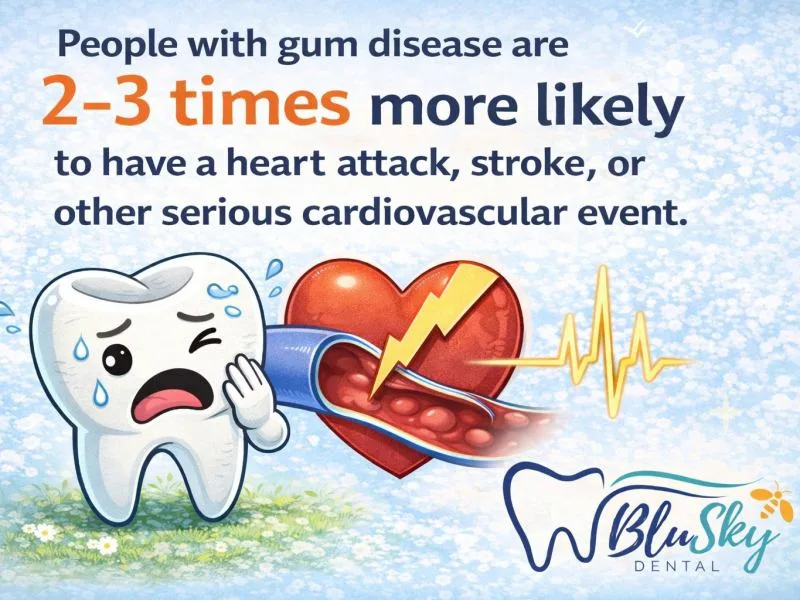
People with gum disease are 2-3 times more likely to have a heart attack, stroke, or other serious cardiovascular event.
Correlation vs. Causation
Important note: Research shows an association—people with gum disease have higher rates of heart disease. This doesn't prove gum disease causes heart disease. They may share common risk factors (smoking, diabetes, poor diet), or the relationship may be more direct.
Research is ongoing, but the connection is significant enough that medical and dental organizations recommend treating gum disease as part of overall health.
How Might They Be Connected?
Theory 1: Inflammation
Gum disease is a chronic inflammatory condition. Chronic inflammation:
- Damages blood vessels
- Contributes to plaque buildup in arteries
- May trigger cardiovascular events
Treating gum disease reduces inflammatory markers throughout the body.
Theory 2: Bacterial Spread
Bacteria from infected gums can enter the bloodstream:
- Travel to other parts of the body
- Attach to damaged areas in blood vessels
- Contribute to arterial plaque formation
- Cause infection of heart valves (endocarditis)
Theory 3: Shared Risk Factors
Gum disease and heart disease share risk factors:
- Smoking
- Diabetes
- Poor diet
- Obesity
- Age
- Genetics
These overlapping factors may explain some of the connection.
Who Should Be Concerned?
Higher Risk Groups
Pay special attention to oral health if you have:
- Existing heart disease
- History of heart attack or stroke
- Heart valve problems
- Artificial heart valves
- Diabetes
- Family history of heart disease
- Multiple cardiovascular risk factors
Endocarditis Risk
Patients with certain heart conditions may need antibiotics before dental procedures to prevent bacterial infection of the heart. Tell us about:
- Artificial heart valves
- Previous endocarditis
- Certain congenital heart defects
- Heart transplant with valve problems
We'll coordinate with your cardiologist if needed.
What You Can Do
Control Gum Disease
The most important step:
- Brush twice daily — Remove plaque before it hardens
- Floss daily — Clean between teeth
- Regular dental cleanings — Professional removal of tartar
- Treat gum disease promptly — Don't let it progress
Learn more about Gum Disease →
Learn more about Periodontal Treatment →
Manage Shared Risk Factors
- Quit smoking — Benefits both oral and heart health
- Control diabetes — Affects gum disease and heart disease
- Eat a healthy diet — Good for gums and arteries
- Exercise regularly — Improves overall health
- Maintain healthy weight
Keep Up with Both Doctors
- Regular dental exams and cleanings
- Regular medical checkups
- Tell your dentist about heart conditions
- Tell your doctor about gum disease
- Follow treatment recommendations from both
Our Role in Your Heart Health
At BluSky Dental, we:
Screen for Gum Disease
Every exam includes periodontal assessment:
- Measuring gum pocket depths
- Checking for bleeding and inflammation
- Evaluating bone levels
- Assessing overall gum health
Treat Gum Disease
If gum disease is present:
- Professional cleaning to remove bacteria and tartar
- Scaling and root planing for advanced disease
- Ongoing maintenance to prevent recurrence
- Education on home care
Coordinate Care
For patients with heart conditions:
- Communicate with your cardiologist when needed
- Prescribe prophylactic antibiotics if required
- Ensure safe, appropriate dental treatment
The Bigger Picture: Oral-Systemic Health
The mouth-heart connection is just one example of how oral health affects overall health. Research also links gum disease to:
- Diabetes (two-way relationship)
- Respiratory disease
- Pregnancy complications
- Alzheimer's disease
- Rheumatoid arthritis
Your dentist is part of your healthcare team, not separate from it.
Protect Your Heart—Start with Your Mouth
Comprehensive Care for Your Whole Health
Comprehensive dental care is part of protecting your overall health. Don't neglect your gums.
- Thorough periodontal assessments
- Evidence-based gum disease treatment
- Coordination with medical providers
- Focus on prevention and maintenance

Frequently Asked Questions
Studies suggest treating gum disease may improve cardiovascular markers and reduce inflammation. While we can't guarantee it prevents heart disease, it removes a potential contributing factor.
Absolutely. We need to know about heart conditions, medications, and any special precautions your cardiologist recommends.
Some heart conditions require antibiotic premedication before dental procedures. We follow current guidelines and coordinate with your cardiologist.
At minimum, every 9 months. If you have gum disease, more frequent visits (every 3-4 months) help keep it controlled.
Schedule Your Periodontal Evaluation
Comprehensive dental care is part of protecting your overall health. Don't neglect your gums.
At BluSky we BEElieve in bringing life to your smile. 🐝