Best Foods for Healthy Teeth
Eat your way to a healthier smile

You know brushing and flossing matter—but did you know your diet plays a major role in oral health too? The right foods strengthen enamel, fight bacteria, and keep gums healthy. Here's what to eat (and what to limit) for a healthier smile.
Foods That Love Your Teeth
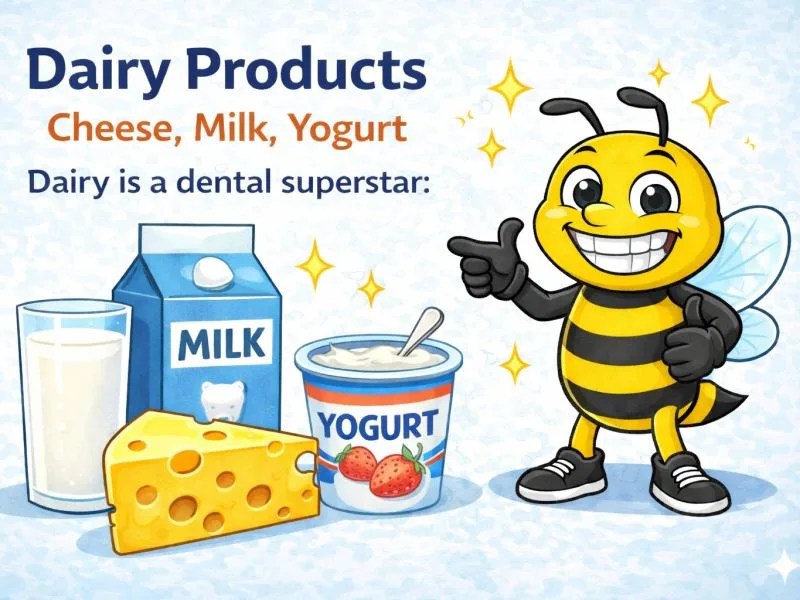
Dairy Products
Cheese, Milk, Yogurt
Dairy is a dental superstar:
- Calcium strengthens enamel
- Phosphorus helps remineralize teeth
- Casein protein stabilizes and repairs enamel
- Cheese raises mouth pH (less acidic = less decay)
Tip: End meals with a small piece of cheese to neutralize acids.
Crunchy Fruits and Vegetables
Apples, Carrots, Celery, Cucumbers
Nature's toothbrushes:
- Fiber stimulates saliva production
- Crunchy texture scrubs tooth surfaces
- Water content dilutes sugars
- Vitamins support gum health
Tip: These make great snacks that clean as you chew.
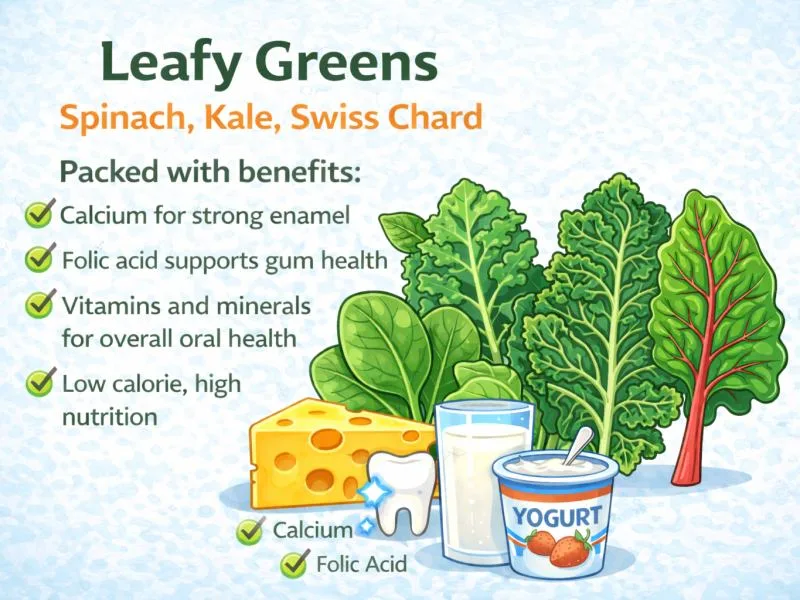
Leafy Greens
Spinach, Kale, Swiss Chard
Packed with benefits:
- Calcium for strong enamel
- Folic acid supports gum health
- Vitamins and minerals for overall oral health
- Low calorie, high nutrition
Lean Proteins
Chicken, Fish, Eggs, Legumes
Building blocks for oral health:
- Phosphorus works with calcium to strengthen teeth
- Protein supports tissue repair
- Omega-3s (in fish) reduce gum inflammation
Nuts and Seeds
Almonds, Walnuts, Sesame Seeds
Small but mighty:
- Calcium and phosphorus
- Low in sugar
- Stimulate saliva
- Healthy fats for tissue health
Tip: Almonds are particularly good—high in calcium, low in sugar.
Water
The Ultimate Dental Drink
Water benefits teeth by:
- Washing away food particles
- Diluting acids
- Keeping mouth moist (saliva is your natural defense)
- Fluoridated water strengthens enamel
- Zero sugar, zero acid
Tip: Drink water throughout the day and after meals.
Green and Black Tea
Unsweetened
Tea offers:
- Polyphenols that fight bacteria
- Fluoride (naturally occurring)
- Compounds that may reduce plaque
Note: Can stain teeth over time—rinse with water after drinking.
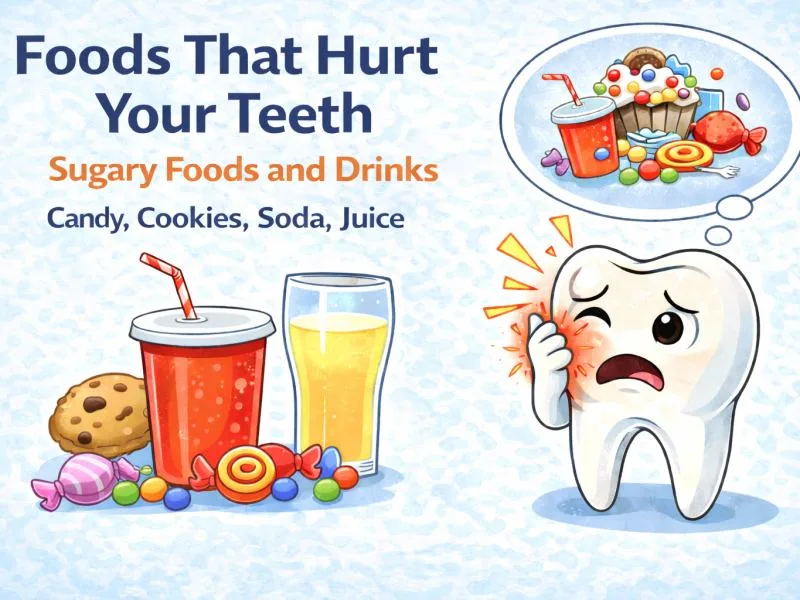
Foods That Hurt Your Teeth
Sugary Foods and Drinks
Candy, Cookies, Soda, Juice
Sugar is the enemy:
- Bacteria feed on sugar
- Produce acid as byproduct
- Acid erodes enamel
- Leads to cavities
Worst offenders: Sticky candies, hard candies (prolonged exposure), sugary drinks sipped throughout day.
Acidic Foods and Drinks
Citrus, Tomatoes, Vinegar, Soda
Acid erodes enamel directly:
- Softens enamel
- Makes teeth vulnerable
- Wears down tooth structure
Tip: Don't brush immediately after acidic foods—wait 30 minutes for enamel to reharden.
Starchy Foods
Chips, Bread, Crackers
Starches break down into sugars:
- Get stuck in teeth crevices
- Feed bacteria
- Prolonged exposure increases damage
Dried Fruits
Raisins, Dried Apricots, Dried Cranberries
Seems healthy but:
- Concentrated sugar
- Very sticky
- Clings to teeth
- Worse than fresh fruit for teeth
Better choice: Fresh fruit.
Alcohol
Wine, Beer, Spirits
Alcohol affects oral health:
- Dries out mouth (less saliva)
- Often acidic
- Red wine stains teeth
- Mixers add sugar
Building a Tooth-Friendly Diet
Smart Swaps
| Instead of... | Try... |
|---|---|
| Soda | Water or sparkling water |
| Candy | Cheese cubes |
| Chips | Carrot sticks |
| Dried fruit | Fresh fruit |
| Sports drinks | Water |
| Sugary cereal | Eggs or yogurt |
Timing Matters
Snacking Frequency
Every time you eat, mouth becomes acidic for ~30 minutes. Constant snacking = constant acid exposure.
Better: Eat meals rather than grazing all day.
After Meals
- Rinse with water
- Chew sugar-free gum (stimulates saliva)
- Wait 30 minutes before brushing (especially after acidic foods)
Bedtime
Never eat after brushing at night. Saliva decreases during sleep, leaving teeth vulnerable.
The Worst Combinations
- Sipping soda all day – Constant acid bath
- Sucking on hard candy – Prolonged sugar exposure
- Sticky + sugary – Clings and feeds bacteria
- Acidic + sugary – Double damage
Foods for Specific Concerns
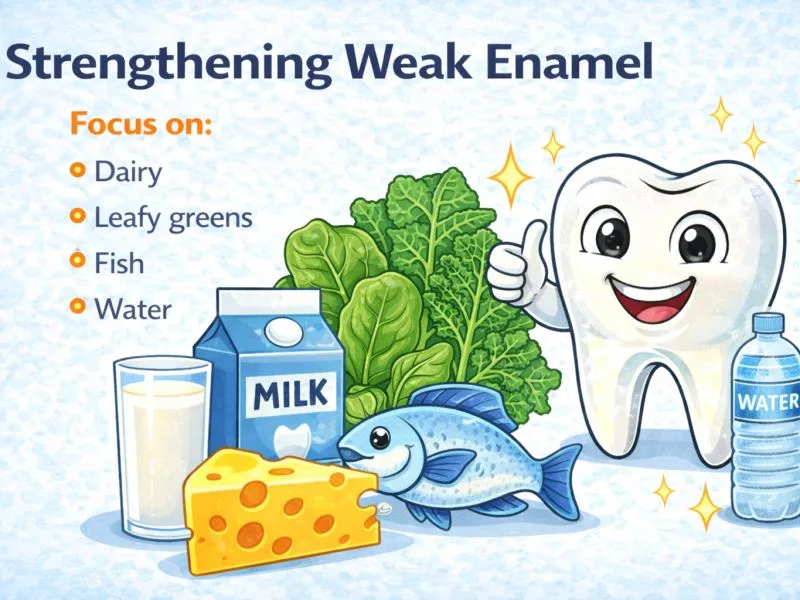
Strengthening Weak Enamel
Focus on:
- Dairy (calcium, phosphorus)
- Leafy greens (calcium)
- Fish (vitamin D helps absorb calcium)
- Water (especially fluoridated)
Supporting Gum Health
Prioritize:
- Vitamin C (citrus, peppers, broccoli—rinse after)
- Omega-3s (fatty fish)
- Leafy greens (folic acid)
- Crunchy vegetables (massage gums)
Fresh Breath
Choose:
- Water (hydration)
- Crunchy fruits and vegetables
- Sugar-free gum
- Green tea
- Fresh herbs (parsley, mint)
A Day of Tooth-Friendly Eating
Breakfast
Greek yogurt with fresh berries, scrambled eggs
Lunch
Grilled chicken salad with leafy greens, cheese, water
Snack
Apple slices, handful of almonds
Dinner
Salmon, steamed broccoli, brown rice, water
After Dinner
Small piece of cheese, herbal tea

Questions About Diet and Dental Health?
Small dietary changes can make a big difference for your oral health. Combined with good brushing, flossing, and regular checkups, a tooth-friendly diet helps keep your smile healthy for life.
Frequently Asked Questions
Fresh fruit is fine in moderation—the fiber and water help. Limit juice (concentrated sugar without fiber) and dried fruit (sticky, concentrated sugar).
Yes! Enjoy treats occasionally, with meals rather than as standalone snacks. Rinse with water afterward.
Yes. Sugar-free gum (especially with xylitol) stimulates saliva, which neutralizes acids and washes away particles.
Most are acidic and sugary—bad for teeth. Water is the best hydration for your mouth and body.
Your Diet, Your Smile
Small dietary changes can make a big difference for your oral health. Combined with good brushing, flossing, and regular checkups, a tooth-friendly diet helps keep your smile healthy for life.
Call: (613) 728-1511
Address: 20 – 1620 Scott Street, Ottawa, ON K1Y 4S7
At BluSky we BEElieve in bringing life to your smile. 🐝